AI tools did not enter education because schools were ready for them. They entered because pressure made them unavoidable.
Rising class sizes, administrative overload, uneven student outcomes, and chronic staffing shortages created space for automation long before generative AI became mainstream. What changed after 2023 was not intent, but scale.
By 2025, AI tools are no longer experimental add-ons in education. They function as quiet infrastructure across tutoring, assessment, lesson planning, and student support, often without consistent training or policy alignment.
This article focuses on how AI tools are actually being used in education today, what evidence supports those uses, and where the cracks are forming.
A snapshot of adoption before interpretation
Before discussing tools, it helps to look at behavior rather than intent.
| Indicator | What the data shows (2025) |
| Global AI in education market | $7.5 billion, up roughly 46 percent year over year |
| Student usage (higher education) | 86 percent globally, 92 percent in the UK |
| Faculty usage (regular) | Roughly 22 percent |
| Teachers using GenAI (K-12) | Around 83 percent |
| Institutions with formal AI guidance | About two thirds |
The gap here is not access. It is coordination.
Students are moving faster than institutions. Teachers are adopting tools faster than policy. Faculty training is lagging behind classroom reality.
This imbalance explains both the appeal and the controversy of AI tools in education.
Where AI tools are actually deployed
Instead of grouping tools by vendor category, it is more accurate to group them by educational pressure point.
1. Personalized tutoring and guided practice

Tools in this category attempt to simulate one-to-one support at scale.
Khan Academy’s AI tutor, Khanmigo, is a representative example. It uses guided questioning rather than direct answers, attempting to preserve learning agency while adapting to student pace.
What works:
● Scalable support in under-resourced settings
● Immediate feedback without grading delays
● Consistency across large cohorts
Where it breaks:
● Quality depends heavily on student input
● Subject coverage remains uneven
● Misconceptions can persist if not surfaced by a human
These systems reduce friction. They do not replace instructional judgment.
2. Lesson planning and instructional design

Planning is one of the most time-intensive and least visible parts of teaching. AI tools here target time, not pedagogy.
Education Copilot and MagicSchool AI are commonly cited in this space. Both generate lesson plans, differentiated activities, and assessments aligned to standards.
What works:
● Documented reductions in prep time of around 30 percent
● Faster iteration on materials
● Support for differentiation at scale
What surfaces quickly:
● Output homogenization
● Risk of shallow alignment to learning objectives
● Over-reliance when pedagogical intent is unclear
These tools function best as drafting assistants, not decision makers.
3. Assessment, grading, and integrity checks
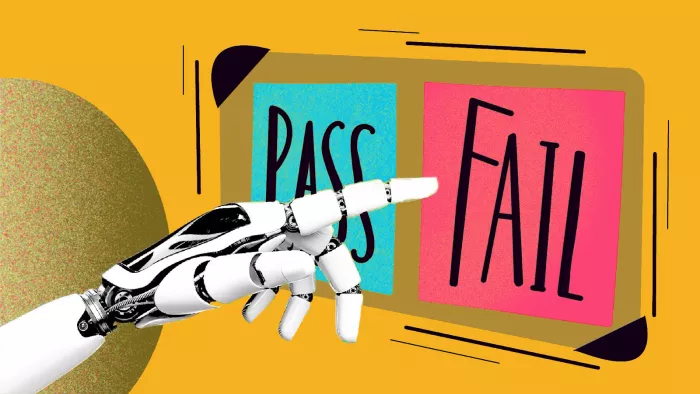
Assessment is where AI adoption becomes politically sensitive.
Turnitin remains widely used for plagiarism detection and AI-generated content analysis. At the same time, tools like Quizizz automate quiz creation and feedback loops.
Observed benefits:
● Faster turnaround on formative assessment
● Scalable integrity checks
● Reduced administrative load
Persistent issues:
● False positives in AI detection
● Limited transparency in scoring logic
● Tension between surveillance and trust
Institutions often adopt these tools defensively, which shapes how students perceive them.
4. Student services and administrative load

Some of the most impactful AI deployments are invisible to students.
AI chat systems used for enrollment questions, scheduling, and academic support reduce response times and staff burnout. Capacity is one example of this category, integrating with student information systems and learning platforms.
Outcomes reported:
● Fewer missed deadlines
● Higher response consistency
● Reduced support ticket volume
Tradeoffs:
● High setup and integration costs
● Risk of deflection instead of resolution
● Dependence on accurate institutional data
These tools shift labor, not responsibility.
Case evidence instead of anecdotes
Several large-scale implementations illustrate what happens when AI tools are embedded systematically.
At Georgia State University, predictive analytics and automated outreach helped prevent thousands of course failures by identifying students at risk early and intervening before academic collapse.
In Australian secondary education, adaptive math platforms adjusted pacing and content in real time, improving engagement and performance without increasing instructional hours.
In the UK, AI-assisted data analysis reduced administrative overhead, allowing schools to reallocate time toward direct student support.
Across these cases, one pattern repeats: impact follows integration, not experimentation.
The less discussed costs
AI tools in education introduce constraints that rarely appear in vendor materials.
Privacy and data governance
Student data is persistent, contextual, and sensitive. AI systems increase both collection and inference, raising questions about consent, retention, and secondary use.
Bias and representation
Training data reflects historical inequities. Without intervention, AI-driven recommendations can reinforce gaps rather than close them.
Skill atrophy
When AI handles drafting, summarizing, or feedback, students and educators risk losing fluency in those same skills.
Relationship erosion
A quarter of teachers report concern that AI weakens teacher-student connection. That concern is not abstract. It reflects daily classroom dynamics.
Regulation is reacting, not leading
UNESCO, the OECD, and national education bodies now emphasize AI literacy, transparency, and equity. The US Department of Education issued guidance in 2025 tying ethical AI use to federal funding considerations. India has introduced literacy and disclosure requirements around AI usage in education projects.
These frameworks exist, but implementation remains uneven. Policy lags practice, and enforcement lags adoption.
What AI tools are not fixing
Despite rapid growth, AI tools have not resolved:
● Structural underfunding
● Teacher shortages
● Curriculum fragmentation
● Assessment validity debates
They redistribute effort. They do not remove systemic constraints.
This distinction matters, because expectations shape disappointment.
Conclusion: AI tools are now part of education’s baseline, not its future
AI tools in education are no longer speculative. They are embedded, unevenly governed, and imperfectly understood.
Their value does not come from novelty, but from how deliberately they are constrained. The institutions seeing real gains are not the ones using the most tools, but the ones setting the clearest boundaries around them.
For students, this means learning how to work with AI without surrendering authorship.
For educators, it means using automation without outsourcing judgment.
For institutions, it means treating AI tools as infrastructure that requires maintenance, oversight, and revision.
The question is no longer whether AI belongs in education.
It is whether education is building the capacity to use it without losing what made learning human in the first place.
Comments