Table of Contents
- Introduction: Why Live AI Courses Are the Defining Career Move of 2026
- The 2026 AI Education Market in Numbers
- The Broader AI Industry the Courses Feed Into
- What Learners Earn After Completing AI Programs
- Part 2: Why Live, Mentored Courses Outperform Self-Paced Alternatives
- Part 3: How to Evaluate Any Live AI Course
- Part 4: The 10 Best Live AI Courses Online in 2026
- 3. Stanford Artificial Intelligence Professional Program (Stanford Online)
- 4. Johns Hopkins Certificate Program in Agentic AI (Johns Hopkins University)
- 5. IBM AI Engineering Professional Certificate (IBM via Coursera)
- 6. IBM Generative AI Engineering Professional Certificate (IBM via Coursera)
- 7. MIT Applied Generative AI for Digital Transformation (MIT Professional Education)
- 8. MIT Applied AI and Data Science Program (MIT Professional Education with Great Learning)
- 9. fast.ai Practical Deep Learning for Coders (fast.ai)
- 10. DataCamp Associate AI Engineer Career Track (DataCamp)
- Comparative Summary Table
- Part 6: A Decision Framework for Choosing the Right Live Course
- Part 7: Common Mistakes to Avoid
- Part 8: What the Next Two Years Look Like
- Conclusion: Putting It Into Practice
$9.58B Global AI in education market size, 2026 (Precedence Research) | 26% Projected job growth for AI roles, 2023-2033 (US BLS) |
25%+ Pay premium for AI-skilled vs non-AI technical roles (PwC) | 5-10x Higher completion rate for live cohort vs self-paced courses |
Introduction: Why Live AI Courses Are the Defining Career Move of 2026
Artificial intelligence has moved from a specialized research domain into the operating system of the global economy. According to the Stanford 2025 AI Index Report, the share of U.S. job postings requiring AI skills has risen from 1.4% in 2023 to roughly 1.8% by early 2026, a small percentage on paper that translates to millions of new openings across every industry. The U.S. Bureau of Labor Statistics projects 26% job growth for AI-related roles between 2023 and 2033, more than six times faster than the all-occupations average of 4%.
This rapid expansion has created an urgent, measurable demand for structured AI education. Self-taught experimentation with ChatGPT or open-source notebooks is no longer enough for professionals who want to be hired, promoted, or trusted with production systems. The market has responded with a wave of live, instructor-led AI courses that combine real-time mentorship, peer cohorts, project-based assessment, and verified certificates.
This guide pulls together current market research from Precedence Research, Grand View Research, Stanford HAI, the World Economic Forum, the U.S. Bureau of Labor Statistics, Coursera investor disclosures, McKinsey, PwC, and several specialist recruitment firms tracking real signed offers. It then translates that data into a curated list of the ten most respected live AI courses available today, with verified details on curriculum, instructors, duration, credentials, and target audience.
The 2026 AI Education Market in Numbers
Before evaluating individual courses, it helps to understand the scale of the industry pulling learners in. The numbers below are drawn from publicly available market research and investor disclosures published between late 2024 and Q1 2026.
The Global AI Education Market
| Metric | Value | Source |
|---|---|---|
| AI in Education market size, 2025 | USD 7.05 billion | Precedence Research |
| AI in Education market size, 2026 (projected) | USD 9.58 billion | Precedence Research |
| AI in Education market size, 2035 (projected) | USD 136.79 billion | Precedence Research |
| CAGR, 2026 to 2035 | 34.52% | Precedence Research |
| Alternative 2030 market size | USD 32.27 billion | Grand View Research |
| North America market share, 2025 | 38% | Precedence Research |
| Cloud deployment share, 2025 | 57% | Precedence Research |
| Machine learning technology share, 2025 | 64% | Precedence Research |
Different research firms use different segmentation models, which is why the headline numbers vary. What every report agrees on is direction: the AI education market is compounding at roughly 30 to 35% annually, well above the global EdTech average.
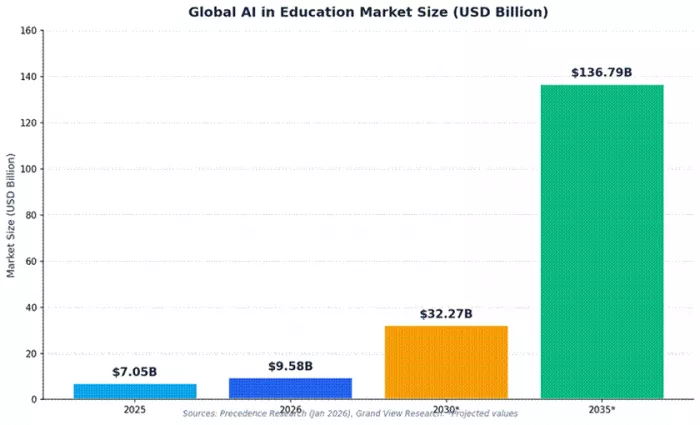
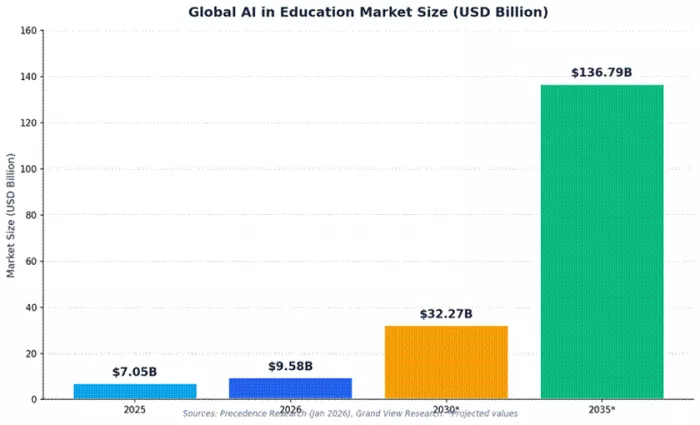
Figure 1: Global AI in Education market size from 2025 to 2035, in USD billions
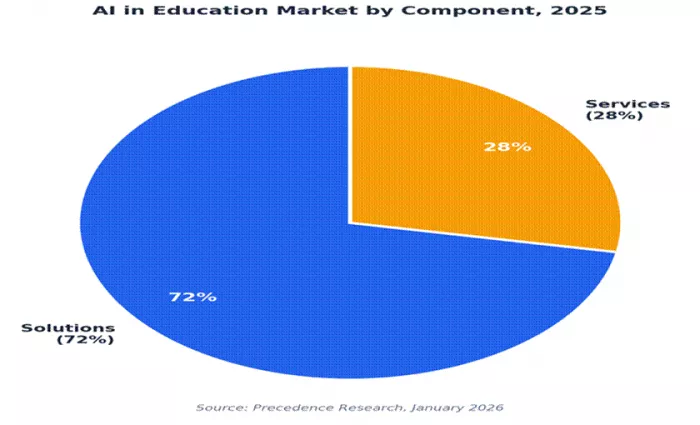
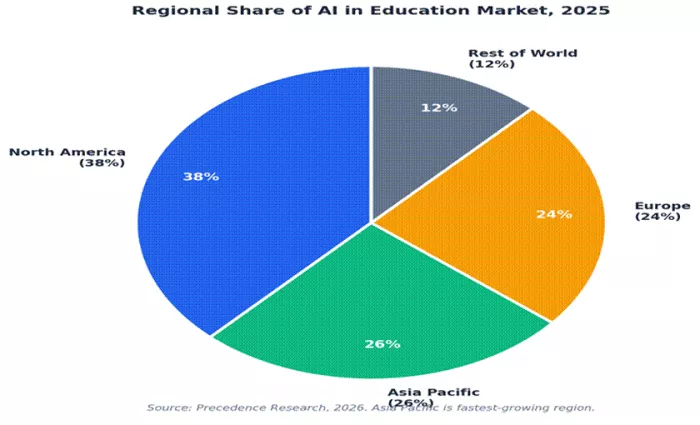
Figure 3: Regional share of AI in Education market, 2025
The Broader AI Industry the Courses Feed Into
According to Statista, the global artificial intelligence market reached approximately USD 305.9 billion in 2024 and is projected to grow at a CAGR of 15.83% to reach USD 738.8 billion by 2030. PwC estimates AI could contribute up to USD 15.7 trillion to the global economy by 2030, a figure larger than the combined output of China and India today. Microsoft research published in 2025 found that 75% of global knowledge workers now use AI at work in some form, and a 2024 LinkedIn Learning survey found that four in five professionals want to learn how to apply AI in their own role.
Enterprise spending on AI talent and tooling reflects this. According to Acceler8 Talent and MRJ Recruitment data published in early 2026, AI-skilled workers earn up to 25% more than equivalent non-AI technical roles, and 91% of companies plan to increase AI spending in learning and development through 2026.
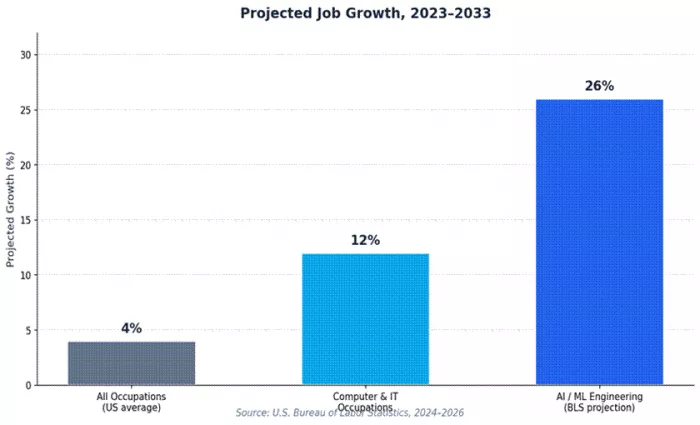
Figure 4: Projected job growth, 2023 to 2033, comparing AI roles with national average
What Learners Earn After Completing AI Programs
Salary data is the single most-asked question among prospective AI learners, so it deserves careful sourcing. The numbers below are drawn from publicly disclosed databases as of Q1 2026.
| Salary Source | AI Engineer Base (US) | Notes |
|---|---|---|
| Glassdoor (April 2026) | USD 141,993 average | Based on 892 anonymous self-reports |
| Built In (2026) | USD 184,757 average | Heavily tech-hub weighted |
| Levels.fyi (Jan 2026) | USD 211,000 median base | 9,500+ profiles, Big Tech skew |
| ZipRecruiter | USD 116,949 average | Broader posting base |
| U.S. BLS (median, 2024) | USD 145,080 | Government data |
| MRJ senior median (2026) | USD 230,625 | Real placement data |
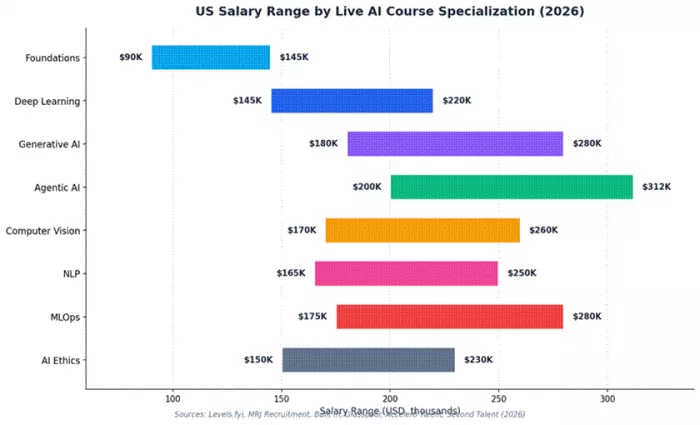
The spread is wide because the title "AI Engineer" covers many sub-roles. Specialized practitioners earn far more. According to Second Talent and Rise AI Talent Report data published in early 2026, LLM fine-tuning specialists earn 25 to 40% above the USD 160,000 US median, computer vision and NLP research engineers earn 30 to 50% premiums over generalists, and AI safety and alignment roles have seen a 45% premium increase since 2023.
Part 2: Why Live, Mentored Courses Outperform Self-Paced Alternatives
The single most important data point in online learning research is the gap in completion rates between self-paced and live, cohort-based formats. This gap matters because a course you do not finish does not produce skills, certificates, or job opportunities, no matter how good the curriculum looks.
Completion Rate Evidence
| Course Format | Typical Completion Rate | Source |
|---|---|---|
| Free self-paced MOOCs | 3 to 6% | Harvard and MIT, MOOC research, 2019 |
| Paid self-paced courses | 10 to 20% | Learning Revolution, 2025 |
| Cohort-based live programs | 70 to 90% | Thinkific, BloggingX, 2024 to 2025 |
| Coaching and live-support programs | 70%+ | Harvard Business Review reference, 2023 |
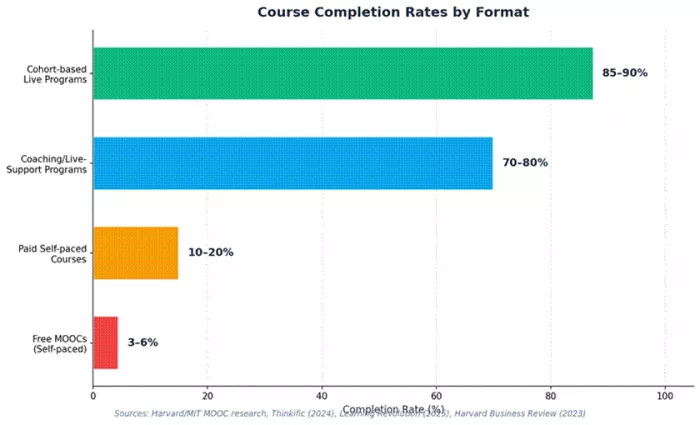
Figure 7: Course completion rates by format
Researchers from Harvard and MIT, in a peer-reviewed analysis of large-scale MOOC enrollments, found completion rates of 3.13% across 5.63 million learners enrolled in 12.67 million courses between 2017 and 2018. A 2020 study published on arXiv by Beth Porter and Burcin Bozkaya measured the effect of adding live interactions and live feedback to an online course and found "positive correlations with strong statistical significance between live interactions and all performance measures studied."
The reason is structural rather than mysterious. Live cohorts add four mechanisms that self-paced courses lack: scheduled accountability through weekly deadlines; real-time clarification when learners get stuck; peer cohorts that normalize difficulty and provide social pressure; and mentor feedback on real work from people who have shipped production AI systems.
Part 3: How to Evaluate Any Live AI Course
Before evaluating the ten specific courses below, it helps to apply a consistent quality framework. Seven criteria predict course quality reliably:
- Curriculum currency. Has the syllabus been updated to cover transformers, retrieval-augmented generation, agentic workflows, and modern MLOps? A 2026 course teaching only classical machine learning is not preparing you for the 2026 job market.
- Mentor credentials. Are the live mentors practitioners at companies that ship AI to production, or are they purely academic? Both have value, but for a job-focused course, you want at least some mentors who have built and deployed.
- Project depth. How many end-to-end projects will you complete? A portfolio of three to five real, deployable projects matters more than a certificate.
- Cohort size and mentor ratio. Live courses with 500 students per session are essentially recorded lectures with a chat window. Genuine mentorship requires ratios closer to one mentor per 15 to 30 learners.
- Verified certification. Is the certificate issued by a recognized institution, university, or industry body, and can employers verify it digitally? LinkedIn-listable, blockchain-verifiable, or university-issued credentials carry the most weight.
- Career support. Resume reviews, mock interviews, hiring partner networks, and post-completion mentor access materially affect job outcomes.
- Refund and re-enrollment policies. Reputable programs let you defer or repeat at no extra cost if life intervenes.
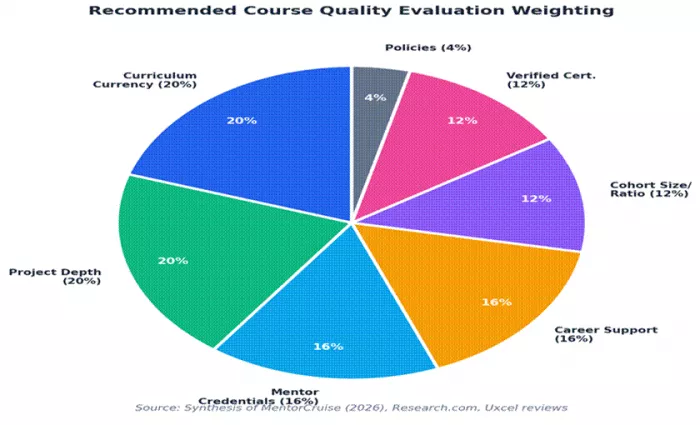
Figure 9: Recommended quality evaluation weighting across seven criteria
Part 4: The 10 Best Live AI Courses Online in 2026
The ten courses below cover the major paths into AI: foundations, deep learning, generative AI, agentic AI, MLOps, computer vision, executive AI, and applied AI engineering. Each entry includes verified information on the provider, instructors, format, duration, curriculum, and credential.
Machine Learning Specialization (DeepLearning.AI and Stanford Online)
What it does and how. This is the most enrolled foundational AI course in the world. It is a three-course specialization created by DeepLearning.AI in collaboration with Stanford Online, taught by Andrew Ng (Founder of DeepLearning.AI, Co-founder of Coursera, Adjunct Professor at Stanford). The original version of this course launched in 2012, has been taken by over 4.8 million learners, and was rebuilt in 2022 into the current beginner-friendly three-course format. It carries a 4.9-star rating across 38,000+ reviews on its primary distribution platform.
Who it is for. Beginners with basic coding knowledge (for-loops, functions) and high-school-level math. Career changers, recent graduates, and analysts moving into ML.
Curriculum. Course 1 covers supervised learning with linear and logistic regression, building ML models with NumPy and scikit-learn. Course 2 covers neural networks with TensorFlow, decision trees, and tree ensemble methods including random forests and XGBoost. Course 3 covers unsupervised learning, clustering, anomaly detection, recommender systems with collaborative filtering, and deep reinforcement learning.
Live and mentored components. Hands-on lab assignments with auto-graded code, weekly quizzes, and active discussion forums. Co-instructors include Eddy Shyu, Aarti Bagul, and Geoff Ladwig.
Credential. Specialization Certificate from DeepLearning.AI and Stanford Online, shareable on LinkedIn.
Duration. Approximately three months at 9 hours per week.
Deep Learning Specialization (DeepLearning.AI)
What it does and how. A five-course program that has become the standard intermediate-to-advanced deep learning curriculum globally. Taught by Andrew Ng with Kian Katanforoosh (CEO of Workera, lecturer at Stanford CS) and Younes Bensouda Mourri. As of 2026 the program has accumulated over 147,000 reviews with a 4.8-star rating, making it one of the most reviewed technical courses on any major platform.
Who it is for. Learners with intermediate Python and basic ML knowledge who want to specialize in neural networks.
Curriculum. Five courses covering: Neural Networks and Deep Learning; Improving Deep Neural Networks (hyperparameter tuning, regularization, optimization); Structuring Machine Learning Projects; Convolutional Neural Networks (image classification, object detection, face recognition); Sequence Models (RNNs, LSTMs, attention, Transformers, NLP, speech recognition).
Live and mentored components. Programming assignments graded with detailed feedback, lab notebooks, and active mentor-supported community forums.
Credential. Deep Learning Specialization Certificate from DeepLearning.AI.
Duration. Three to six months at 8 to 10 hours per week.
3. Stanford Artificial Intelligence Professional Program (Stanford Online)
What it does and how. This is the closest thing to a Stanford graduate AI education available remotely without admission to the on-campus program. Courses are based on Stanford graduate AI courses (CS221, CS229, CS230, CS224N, CS231N, etc.) but adapted for working professionals. According to Stanford Online's official program page, courses use pre-recorded faculty lecture videos paired with live Course Facilitator support, where each course has approximately one Course Facilitator per 20 learners. Course Facilitators have completed the original graduate course and work in industry, and they hold scheduled office hours and offer 1-on-1 calls.
Who it is for. Working professionals with proficiency in Python, college-level calculus and linear algebra, and probability theory. Each course requires a short application.
Curriculum. Seven courses to choose from, including: AI Principles and Techniques (CS221), Machine Learning (CS229), Deep Learning (CS230), Natural Language Processing with Deep Learning (CS224N), Convolutional Neural Networks for Visual Recognition (CS231N), Reinforcement Learning, and Mining Massive Data Sets.
Live and mentored components. Slack community with active facilitator participation, scheduled office hours, 1-on-1 calls with facilitators, and faculty Q&A sessions when available.
Credential. Digital Stanford Professional Certificate in Artificial Intelligence from the Stanford School of Engineering, verified on the blockchain. Awarded after completing any three courses in the program.
Duration. Each course runs 10 weeks; full certificate requires three courses (about 30 weeks total) at 10 to 15 hours per week.
4. Johns Hopkins Certificate Program in Agentic AI (Johns Hopkins University)
What it does and how. A 16-week online program offered by Johns Hopkins University in collaboration with Great Learning. As reported on the official Johns Hopkins lifelong learning portal, the program combines recorded video lectures from JHU faculty, live faculty-led masterclasses, live mentor sessions with industry experts, and a dedicated Program Manager for academic support. Johns Hopkins is consistently ranked among the top 10 U.S. universities by U.S. News and World Report.
Who it is for. Technical professionals with prior experience in programming, mathematics, or system design. Data scientists, AI engineers, and ML practitioners looking to develop autonomous agent systems.
Curriculum. Pre-Work covers the landscape of AI, GenAI, and Agentic AI. Core modules cover agentic architectures, reasoning models, multi-agent systems, reinforcement learning, and LLM-based agent design. Three hands-on projects: a Smart Data Processing Agent (automating expense bill processing); an Automated Research Agent (synthesizing information from multiple data sources); and a Customer Support Chatbot with knowledge base integration. Participants receive OpenAI API keys provided by Great Learning.
Live and mentored components. Live faculty masterclasses, scheduled live mentor sessions with practitioners from leading AI companies, dedicated Program Manager, peer discussion forums, and study groups.
Credential. Certificate Program in Agentic AI from Johns Hopkins University.
Duration. 16 weeks, typically 6 to 10 hours per week.
5. IBM AI Engineering Professional Certificate (IBM via Coursera)
What it does and how. As of late 2025, IBM updated this into a 13-course professional certificate program designed to make learners job-ready as AI engineers in under six months. The curriculum focuses heavily on hands-on, real-world generative AI applications including building and deploying neural networks, CNNs, transformers, and LLM-based applications. The program has accumulated over 99,000 reviews with a 4.7-star rating on its primary distribution platform.
Who it is for. Data scientists, machine learning engineers, software engineers, and other technical professionals looking to break into AI engineering. Some Python familiarity helpful.
Curriculum. Foundations of ML and deep learning with Python and NumPy; Keras, PyTorch, and TensorFlow for neural networks; computer vision, NLP, and recommender systems; generative AI architectures, transformers, GPT, BERT, LLaMA; Hugging Face Transformers, RAG, LangChain; building production GenAI applications; capstone project building a question-answering bot using LangChain and an LLM.
Live and mentored components. Hands-on labs in cloud-based notebooks, peer-graded projects, and active discussion forums. Has ACE recommendation, eligible for college credit at participating U.S. institutions.
Credential. IBM AI Engineering Professional Certificate plus an IBM Digital Badge issued via Acclaim, shareable on LinkedIn.
Duration. Approximately six months at 4 to 6 hours per week.
6. IBM Generative AI Engineering Professional Certificate (IBM via Coursera)
What it does and how. A focused, faster-track certificate launched in 2025 covering only the generative AI portion of the AI engineering curriculum. Designed for learners who already have working knowledge of Python and ML and want to specialize in LLM-based applications.
Who it is for. Aspiring gen AI engineers, AI developers, data scientists, ML engineers, and AI research engineers with Python familiarity.
Curriculum. Generative AI fundamentals; prompt engineering principles and patterns; data analysis and ML with Python; deep learning with PyTorch; transformer architectures; building apps with BERT, GPT, and LLaMA; tokenization and language modeling; Hugging Face Transformers; PyTorch for fine-tuning; retrieval-augmented generation; LangChain for app development; vector databases; building question-answering bots with LangChain and Gradio; capstone project deploying a working RAG-based application.
Live and mentored components. Hands-on labs, project rubrics, IBM Skills Network community access, and discussion forums with active TA support.
Credential. IBM Generative AI Engineering Professional Certificate with IBM Digital Badge. ACE recommendation for college credit.
Duration. Approximately three to four months at 4 to 6 hours per week.
7. MIT Applied Generative AI for Digital Transformation (MIT Professional Education)
What it does and how. An eight-week live online course delivered through MIT Professional Education, taught by MIT faculty including Professor John R. Williams (former director of MIT's Auto-ID Laboratory where the Internet of Things was invented) and Professor Abel Sanchez. According to the official MIT Professional Education catalog, this course is part of MIT's Professional Certificate in Digital Transformation in the AI Age and runs in cohorts throughout the year.
Who it is for. Senior executives, technology leaders, senior and mid-level managers, innovation managers, sales and product managers, marketing and customer experience professionals, and investors evaluating GenAI opportunities.
Curriculum. Generative AI history, foundations, and capabilities; identifying high-impact AI opportunities and designing adoption roadmaps; evaluating feasibility, risks, and ROI across business functions; prompt engineering for executives; AI governance frameworks; ethical risk evaluation; mapping governance requirements to recognized frameworks; designing prioritized AI opportunity maps with risks, dependencies, and success metrics.
Live and mentored components. Live online sessions with MIT faculty and industry experts, peer discussion in cohort, structured assignments and feedback.
Credential. MIT Professional Education Certificate of Completion, plus MIT Continuing Education Units (CEUs).
Duration. Eight weeks online, typically 6 to 8 hours per week.
8. MIT Applied AI and Data Science Program (MIT Professional Education with Great Learning)
What it does and how. A 14-week live online program from MIT Professional Education delivered in partnership with Great Learning. Faculty includes Munther Dahleh, Stefanie Jegelka, Devavrat Shah, Caroline Uhler, and John Tsitsiklis. According to MIT's official program catalog, the program is structured around live online sessions with MIT faculty supplemented by weekly mentor sessions from data science and AI industry experts.
Who it is for. Working professionals seeking AI and data science skills, technical management professionals, business intelligence analysts, and data science managers.
Curriculum. Python and data fundamentals; statistics and probability for ML; supervised learning (linear regression, logistic regression, KNN, Bayesian methods, cross-validation); unsupervised learning (clustering, dimensionality reduction with PCA and t-SNE, network analysis); deep learning and neural networks; computer vision; natural language processing; recommendation systems; time series analysis; modern generative AI modules covering transformers, RAG, prompt engineering, and agentic AI.
Live and mentored components. Weekly live online sessions with renowned MIT faculty for interactive insights; weekly mentor sessions with data science and AI industry experts; 50+ case studies, projects, and a capstone project; dedicated program manager support.
Credential. Certificate of completion from MIT Professional Education and 16 Continuing Education Units (CEUs).
Duration. 14 weeks at approximately 8 to 10 hours per week.
9. fast.ai Practical Deep Learning for Coders (fast.ai)
What it does and how. A free, world-renowned course taught by Jeremy Howard, founding President and Chief Scientist of Kaggle, two-time #1-ranked global Kaggle competitor, founder of Enlitic (named one of the world's smartest companies by MIT Tech Review), and honorary professor at the University of Queensland where the course is recorded. Co-developed by fast.ai with Sylvain Gugger (now researcher at Hugging Face). The course has been studied by hundreds of thousands of learners and was featured by The Economist for its "treating AI like a craft" approach. fast.ai also developed the ULMFiT algorithm on which much of modern LLM training is based.
Who it is for. Learners with at least one year of coding experience (preferably Python) and high-school-level math. Designed to be accessible without a PhD or research background.
Curriculum. Part 1 (Practical Deep Learning for Coders) covers building computer vision, NLP, tabular, and collaborative filtering models with PyTorch and the fastai library, transfer learning, fine-tuning, deployment as web applications, and ethics. Part 2 (From Deep Learning Foundations to Stable Diffusion) covers building neural networks from scratch, GPU optimization, implementing diffusion models including DDPM and DDIM, textual inversion, and Dreambooth.
Live and mentored components. Free recorded video lessons, the official "Deep Learning for Coders with fastai and PyTorch" book by Howard and Gugger, a large active Discord community, the fastai forums with thousands of practitioners, and live cohort offerings during launch periods.
Credential. No formal certificate, but completion is widely recognized in the AI practitioner community. Many graduates report career outcomes including offers from top companies and published research.
Duration. Each part is approximately 8 weeks at 10 hours per week of focused study.
10. DataCamp Associate AI Engineer Career Track (DataCamp)
What it does and how. An applied, intermediate-level career track that DataCamp ranked as its top AI course for 2026. The track is offered in two specialization paths (for Data Scientists and for Developers) and focuses on production-ready AI engineering skills with up-to-date coverage of modern LLM tooling. Praised for hands-on rigor and adaptive, personalized learning. Note: this is primarily a self-paced track with optional live workshop components, included here to give learners with limited time and budget a credible structured option.
Who it is for. Developers and data scientists moving into applied AI engineering roles. Some Python proficiency required.
Curriculum. OpenAI API and prompt engineering; Hugging Face model hub and Transformers library; LangChain for building LLM applications, prompts, chains, and agents; Pinecone vector database for similarity search; building chatbots, recommendation engines, and semantic search systems; for the Data Scientist track, additional content on training and evaluating ML models with scikit-learn and PyTorch, fine-tuning Llama 3, and foundational MLOps; Python testing with pytest and unittest.
Live and mentored components. Interactive in-browser exercises, real-world projects, periodic live workshop events (DataCamp Data and AI Toolkit), DataCamp community access, and certified-professional community access after certification.
Credential. DataCamp Associate AI Engineer Certification (separate from track completion); shareable on LinkedIn.
Duration. Approximately 26 to 80 hours of content depending on the track variant; flexible self-paced timeline.
Comparative Summary Table
For ease of reference, the table below summarizes the ten courses side by side.
| # | Course | Provider | Duration | Level | Credential |
|---|---|---|---|---|---|
| 1 | ML Specialization | DeepLearning.AI / Stanford | ~3 mo | Beginner | Specialization Cert. |
| 2 | Deep Learning Specialization | DeepLearning.AI | 3-6 mo | Intermediate | Specialization Cert. |
| 3 | AI Professional Program | Stanford Online | 30 wk | Int.-Adv. | Stanford Cert. |
| 4 | Agentic AI Certificate | Johns Hopkins University | 16 wk | Advanced | JHU Certificate |
| 5 | AI Engineering Prof. Cert. | IBM | ~6 mo | Beg.-Int. | IBM Cert + Badge |
| 6 | Gen AI Engineering Cert. | IBM | 3-4 mo | Intermediate | IBM Cert + Badge |
| 7 | Applied Generative AI | MIT Professional Education | 8 wk | Beg.-Int. | MIT Cert + CEUs |
| 8 | Applied AI & Data Science | MIT / Great Learning | 14 wk | Intermediate | MIT Cert + 16 CEUs |
| 9 | Practical Deep Learning | fast.ai | 8 wk | Intermediate | Community recognized |
| 10 | Associate AI Engineer Track | DataCamp | 26-80 hr | Intermediate | DataCamp Cert. |
Part 6: A Decision Framework for Choosing the Right Live Course
If you are new to coding. Start with course #1, the Machine Learning Specialization. Three months, structured, gentle on the math, and produced by the most recognizable name in AI education. Once complete, decide between depth (course #2) or breadth (courses #5 or #8).
If you have software engineering experience but no ML. Course #2 (Deep Learning Specialization) or course #6 (IBM Generative AI Engineering) get you to applied work fastest. If you want academic depth, start course #3 (Stanford AI Professional Program) instead.
If you already work in ML and want to grow. Course #4 (Johns Hopkins Agentic AI) for the most current frontier skill, or course #9 (fast.ai Part 2) for from-scratch implementations of state-of-the-art architectures.
If you are a working professional in a non-technical role. Course #7 (MIT Applied Generative AI for Digital Transformation) is designed exactly for this audience and produces a recognized MIT credential.
If you want a credential from a top-tier US university. Courses #3 (Stanford), #4 (Johns Hopkins), #7 and #8 (MIT) all produce university-issued certificates suitable for resumes targeting employers who value academic prestige.
If budget is a primary constraint. Course #9 (fast.ai) is free and rigorous; courses #1, #2, #5, #6, and #10 are accessible through standard subscription pricing on their respective platforms.
Part 7: Common Mistakes to Avoid
After surveying learner feedback across multiple programs, the same handful of mistakes appear over and over.
| Buying credential, not skill. A certificate from a famous brand without project work behind it does not move the needle in technical interviews. Hiring managers ask what you built, not what you watched. |
| Ignoring the math. AI is built on linear algebra, calculus, probability, and statistics. Courses that promise you can "skip the math" produce graduates who cannot debug their own models. The math does not need to be elegant, but it needs to be there. |
| Choosing length over depth. A 12-week course that covers ten topics shallowly is usually worse than an 8-week course that covers four topics deeply. |
| Skipping the project portfolio. GitHub is the resume in this industry. A LinkedIn certificate without a public, working project repository to back it up is much weaker than a graduate of a less famous program who can show three deployed systems. |
| Going alone. The biggest single predictor of completion in any cohort study is community. Pick a program with a real, active peer group, not just a Slack channel that nobody posts in. |
| Treating live as a marketing word. Some courses marketed as "live" have one mentor session per month with 200 students. That is not live, it is a webinar. Ask the program directly: how many live hours per week, how many mentors, what cohort size? |
Part 8: What the Next Two Years Look Like
A few trends are reshaping the live AI course market through 2027.
AI tutors inside AI courses. Per Coursera's Q4 2025 disclosure, the company added 6.8 million new learners in a single quarter alongside a 45% year-over-year catalog expansion, much of it driven by AI-assisted tutoring tools. A 2025 randomized trial in Scientific Reports found that students using personalized AI tutors outperformed fixed-problem control groups by the equivalent of six to nine months of additional schooling over a five-month period.
Agentic AI becomes the new core skill. The 2025 "Agentic Surge" reported by MRJ Recruitment, which drove a 9.2% jump in mid-level AI salaries, is unlikely to be the peak. Course curricula are being rewritten to put agents and tool use at the center rather than as an advanced add-on. Course #4 above is one example of how universities are responding.
University and industry credential blending. Major research universities are increasingly partnering with online education companies to issue joint certificates. Johns Hopkins and Great Learning, MIT and Great Learning, Stanford Online's professional program, and DeepLearning.AI's collaborations are all examples of an architecture that has now become standard.
Pay transparency accelerates the market. Multiple US states and the EU's Pay Transparency Directive have begun requiring posted salary ranges. JobsPikr's 2026 reporting confirms this is producing more transparent benchmarks, which feed back into how courses market their job outcome claims.
The cost question. According to entrepreneurshq's 2026 online learning report, online courses cost 50 to 80% less than equivalent in-person programs while learning takes 40 to 60% less time. Live, mentored programs sit at a premium above pure self-paced courses but well below traditional master's degrees.
Conclusion: Putting It Into Practice
The data points in this guide tell a coherent story. The AI in education market is on a trajectory from USD 9.58 billion in 2026 to USD 136.79 billion by 2035 because the underlying labor market values AI skills with measurable, sustained pay premiums of 25% or more over comparable non-AI roles. Live, mentored courses outperform self-paced alternatives at completion rates that are typically five to ten times higher, which is why they have become the default format for serious learners.
The ten courses above cover the major paths into modern AI work: foundations from DeepLearning.AI and Stanford; deep learning from DeepLearning.AI; full graduate-style theory from Stanford Online; agentic systems from Johns Hopkins; production AI engineering from IBM; executive and applied programs from MIT; from-scratch frontier work from fast.ai; and applied tooling from DataCamp. Each has a clear target audience, a verified curriculum, and an established credential. The right starting point depends on where you are coming from and where you want to end up, but the framework is the same for everyone: pick a program with a current curriculum, real practitioner mentors, deep projects, a manageable cohort size, a verifiable certificate, and a community you can actually rely on.
The hardest part of the AI learning journey is not picking the smartest tool or the deepest specialization. It is staying with the work long enough for the skills to compound. A live cohort with experienced mentors solves that problem better than any other format the industry has produced so far. As you evaluate your options, look for programs that pair structured curriculum with real human accountability, and pay attention to the small details: how many live hours per week, how active the community is, whether the projects ship to GitHub, whether the certificate is verifiable.
For learners weighing where to invest their next several months, communities like Timtis are part of the wider ecosystem that has emerged around mentor-led, cohort-based AI learning, alongside university-issued certificates and verified credentials. Whatever path you choose, make sure the program meets the seven criteria laid out earlier, build a portfolio that any hiring manager can inspect on GitHub, and treat the certificate as a byproduct of the skills rather than the destination. The market is large, fast moving, and well paid; with the right live course, the right mentors, and the right discipline, the path from where you are now to a working AI role is shorter and more navigable than it has ever been.
Comments