HeyGen and D-ID are now among the most talked‑about AI avatar video tools, and both promise the same headline benefit: turn a script or a photo into a talking presenter in minutes. Look closer, though, and you’ll find that they are built for slightly different creative workflows, budgets, and end goals, which is exactly where your article can help readers decide which one deserves their time and money.
Let's take a look at HeyGen as a full AI video “studio,” then unpack D-ID as a lean, fast talking‑avatar engine. After that, we will compare their features, strengths, limitations, pricing and best use cases, and end with a clear verdict on who should pick which tool.
HeyGen: AI Video Studio Built Around Avatars
HeyGen positions itself as an end‑to‑end AI video creation platform that happens to use avatars as the face of your content. Its core promise is simple: give it a script, choose or create a presenter, and walk away with a polished, brand‑ready video that can work in marketing, sales, or training contexts.
Key Features
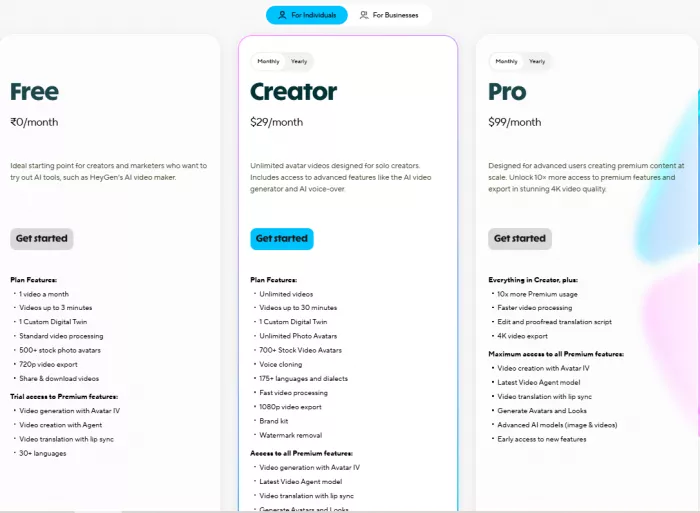
● Large avatar library: 700+ stock video avatars plus unlimited photo avatars on paid plans.
● Custom “Digital Twin” avatars: Create 1 custom avatar even on the Creator plan, with more on higher tiers.
● Script-to-video editor: Turn text into full videos with scene layouts, templates, and brand elements.
● Multilingual support: 175+ languages and dialects, with realistic AI voice-over and lip-sync.
● High-resolution export: Up to 1080p on standard plans and up to 4K on advanced tiers.
● Video translation: Translate and dub existing videos while matching lip movements.
Strengths
From a strengths perspective, HeyGen is known for very realistic avatars, especially with its Avatar IV technology, which adds micro‑expressions and better emotional nuance, making the presenter feel more natural on screen. This realism, combined with templates and longer maximum video length (up to around 30 minutes per video on the Creator plan), makes it particularly appealing for marketing campaigns, product explainers, online courses, and internal training content.
Limitations
However, this sophistication comes with trade‑offs. HeyGen is typically more expensive at the entry level than D-ID, and while it does provide a free plan, that plan is restrictive: roughly one short video per month, with watermarks and limited avatars. The abundance of features can also feel overwhelming if your only goal is to get a basic talking avatar on screen as fast as possible. Some reviewers also note that rendering times can be slower than D-ID, especially when using higher‑detail avatars, and that default output sharpness, while professional, can feel slightly softer than D-ID in side‑by‑side comparisons.
Pricing
Best Use Cases for HeyGen
In practice, HeyGen fits best where you want a robust video creation process: launching marketing campaigns, building recurring course content, or running ongoing internal communications where quality and consistency matter more than shaving a few seconds off render time.
D-ID: Fast Talking Avatars and AI Agents
D-ID, by contrast, approaches the problem from a different angle: it focuses on animating photos into talking avatars and on powering AI “agents” that can speak and interact in real time. While you can absolutely use it to generate scripted talking‑head videos, its design and pricing structure skew towards short clips, real‑time experiences, and web‑embedded assistants.
Key Features
● Photo animation: Turn any portrait into a talking avatar with accurate lip-sync.
● AI Agents & Studio: Build talking avatar agents that answer questions, present content, and embed on sites/apps.
● Template-based video generation: Script-to-video talking clips via Creative Reality Studio.
● Real-time interaction: Live avatars and agents for customer support, sales, or live demos.
● Voice cloning and multiple voices: Voice clone support plus TTS voices in many languages.
Strengths
D-ID’s strengths revolve around speed, clarity, and interactivity. It is generally faster than HeyGen when generating short talking‑head clips, which is valuable when you need multiple iterations in a short time window. Many users and reviewers note that the resulting video often appears especially sharp and crisp, which can make simple talking‑head content look clean even without heavy editing. The platform’s real‑time and web‑agent capabilities also give it an edge if your goal is to have an avatar guide users through a website, onboarding flow, or FAQ, rather than just produce static videos.
Limitations
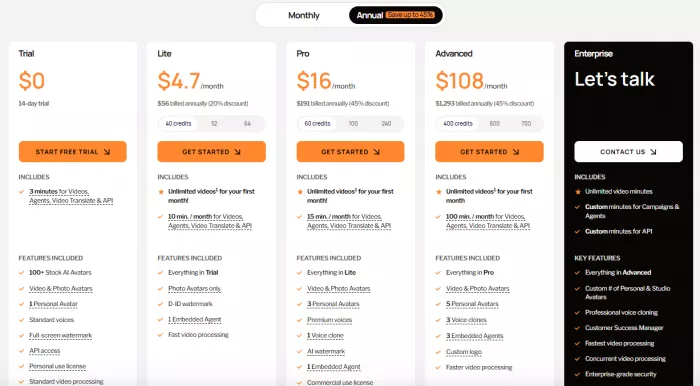
The limitations reflect this narrower focus. While D-ID has templates and a studio interface, it is not as comprehensive a “video production suite” as HeyGen; you get fewer multi‑scene storytelling tools, fewer built‑in branding workflows, and less emphasis on long‑form content. Avatar expressiveness, while solid, is often considered less advanced than HeyGen’s highest‑end avatars, especially when it comes to emotional nuance and micro‑expressions. D-ID’s pricing is typically more minutes‑based, which means that very heavy users producing lots of content may run into quotas more quickly than with HeyGen’s “unlimited videos” style Creator plan.
Pricing
Best Use Cases for D-ID
In real‑world usage, D-ID shines when you want quick, sharp talking avatars for short clips, plus the option to turn those avatars into live web agents that users can talk to, all at a relatively low starting cost.
Direct Comparison: HeyGen vs D-ID
Although both tools create AI avatar videos, they occupy slightly different positions on the spectrum between “full video studio” and “avatar engine plus agents.” The table below summarizes the core differences to help you frame this clearly in your article.
Core Differences at a Glance
Which One Should You Choose?
Choose HeyGen If
● You need polished, brand-ready marketing or training videos with realistic presenters.
● You regularly create longer videos (5–30 minutes) and want unlimited avatar projects instead of worrying about minutes.
● Localization and multi-language content are core to your strategy.
● You value cinematic avatar behavior and micro-expressions over raw speed.
Example: A SaaS company producing monthly product update videos and training modules in 5 languages will usually get more value from HeyGen’s templates, brand kit, and translation stack.
Choose D-ID If
● You primarily need fast talking-head clips from a single photo or a small set of avatars.
● You want to embed an AI avatar agent on your website, app, or support flow.
● Your budget is tight and you’re okay with minutes-based limits for short videos.
● Speed of generation and sharpness of short talking clips matter more than full production tools.
Example: A solo creator or small agency making 30–60 second avatar intros and FAQ videos, plus a website assistant, will likely find D-ID’s Pro tier cheaper and more than sufficient.
Bottom Line
HeyGen is the better fit if you want a full-fledged AI video studio for recurring, branded content, longer explainers, and multi-language training videos, even at a higher price. D-ID is the smarter pick if you mainly need fast, sharp talking-head clips or embedded AI avatar agents on a tighter budget, where speed and interactivity matter more than deep editing and long-form storytelling.
Comments