Table of Contents
- The Bitnation Name: Echo of a Radical Experiment
- First Contact: A Polished Front Stage
- What Bitnation‑blog.com Says It Is
- Content Landscape: Wide, Familiar, and Often Shallow
- Editorial Depth: A Low‑Altitude Flight
- Trust and Transparency: The Phantom Editorial Team
- Monetization: Following the Affiliate Trail
- Reputation and External Footprint: Quiet in the Noise
- Email Behavior: When Bitnation‑blog.com Knocks First
- Pros and Cons: A Balanced Snapshot
- Who Bitnation‑blog.com Is Really For
- Final Verdict: Read with One Eye Open
Bitnation‑blog.com is the sort of website that, at first glance, feels like it has always been clean, confident, and oddly familiar. It wears the “Bitnation” name like a vintage jacket found in a thrift store: still stylish, still meaningful, but now used for a very different night out than originally intended. This article takes a complete walk around that jacket—brand, content, structure, money, trust, and risk to understand what Bitnation‑blog.com really is, who it quietly serves, and how you should position it in your own mental map of crypto media.
The Bitnation Name: Echo of a Radical Experiment
Long before Bitnation‑blog.com started publishing listicles and explainers, “Bitnation” referred to a widely discussed blockchain governance experiment. That earlier Bitnation tried to re‑imagine what citizenship and state services might look like if jurisdictional borders were optional and code handled the heavy lifting instead. It lived in conference talks, academic papers, and the broader conversation about digital sovereignty.
Bitnation‑blog.com is not the “next chapter” of that story. There is no visible narrative that connects the governance project to this blog, no shared team, no explicit succession, no public “here’s how we evolved.” Instead, the site quietly borrows the brand aura of a name that already carries weight in blockchain circles and repurposes it for a mainstream crypto‑and‑finance content portal.
That naming choice matters. To a casual reader, “Bitnation” sounds like history, like credibility, like a project with roots. Bitnation‑blog.com benefits from that association without clearly spelling out the distance between the old idea and the current operation.
First Contact: A Polished Front Stage

Type the URL and you land on a homepage that looks exactly like what a modern crypto blog is supposed to look like. Tiles of recent posts, bold titles, featured images, and categories lined up neatly along the top or side. There’s no early friction here: scroll, click, read everything works.
On the surface:
● The layout is clean and intuitive, with a grid of posts and straightforward navigation.
● Pages load briskly and adapt well to mobile, which matters in a space where a lot of reading happens on phones.
● Standard “About,” “Contact,” and policy links are present, giving the impression of a complete, orderly site.
In those first three seconds when most users decide whether to stay, the site passes the test comfortably. It looks like a place where someone has thought about user experience, even if you know nothing about what sits behind the design.
What Bitnation‑blog.com Says It Is
The site introduces itself, in one way or another, as a destination for people who want to understand cryptocurrency, trading, and digital‑finance themes. Articles promise to explain basic concepts, demystify jargon, and help readers make sense of markets that move faster than headlines can keep up.
In broad strokes, Bitnation‑blog.com positions itself as:
● An educational crypto hub rather than an exchange, broker, or wallet provider.
● A blog‑style source of explainers, opinions, and “reviews” of platforms and services.
● A general‑interest portal for people curious about the digital money universe.
If that was the whole story, polished design, basic education, nothing more the site would slide neatly into the long tail of crypto blogs. But the details push it into more complicated territory.
Content Landscape: Wide, Familiar, and Often Shallow
Explore the categories and a pattern emerges. You’ll find posts about:
● Cryptocurrency basics—what various coins or concepts are and why they matter.
● Trading ideas and simple strategy summaries, aimed at people who want to “get into trading.”
● Finance‑adjacent topics and, in some corners, content that leans toward casinos, gambling, and similar high‑commission verticals.
On the positive side, the range is broad enough that a curious beginner can bounce from topic to topic and build a rough map of the landscape. But that same breadth, especially when it drifts into gambling and other monetizable niches, makes the site feel more like a multi‑niche SEO operation than a tightly defined crypto‑only publication.
The tone and structure of the articles reinforce that impression. Many posts follow a familiar recipe:
● A gentle introduction that defines the term.
● A list of pros and cons or key features.
● A section on why you should care.
● A tidy conclusion, sometimes with a recommendation or call to action.
There’s nothing inherently wrong with this format, but the absence of original data, detailed sourcing, technical nuance, or genuinely contrarian insight keeps most content in the “first layer of understanding” zone. It’s the overview you read before you decide where to research seriously, not the source you quote when arguing with a professional.
Editorial Depth: A Low‑Altitude Flight
If you imagine the crypto knowledge space as a landscape, Bitnation‑blog.com tends to fly at a constant low altitude. You see a lot of territory: Bitcoin here, DeFi there, a trading strategy in the distance, a casino platform on the horizon. But the plane rarely lands.
What’s noticeably scarce:
● Deep dives that engage with whitepapers, technical documentation, or regulatory texts in a meaningful way.
● Long‑form analyses that compare platforms with real benchmarks, user data, or risk modeling.
● Evidence of original reporting—no interviews with founders, no investigative series, no on‑the‑ground stories.
What’s abundant is reusable structure. Articles often feel like they were built around keyword targets, not burning questions. The rhythm of the sentences, the shape of the sections, even the narrative voice all carry the signature of content produced at scale. That doesn’t make it useless; it does make it predictable.
For a reader who is just stepping into crypto, predictability and simplicity are welcome. For anyone beyond that stage, the site quickly becomes more of a reminder of things you already know than a source of things you don’t.
Trust and Transparency: The Phantom Editorial Team
Trust online has layers. One of those layers is simply knowing who is behind the content. Here Bitnation‑blog.com is noticeably thin.
You will find:
● A contact page and generic methods to reach “the site.”
● Policy pages like a privacy policy, which give a minimal corporate veneer.
You will struggle to find:
● A clearly presented editorial masthead with names and roles.
● Detailed bios of writers, editors, or owners that you can cross‑reference elsewhere.
● A narrative of how the publication was founded and who funds it.
Several independent reviewers point to this opacity as a key weakness. The legal and policy copy often reads like template text rather than a carefully tailored description of a specific entity that expects to be held to account. In sectors like crypto and finance, where advice has financial consequences, this lack of visible accountability is more than a cosmetic issue; it is a structural risk.
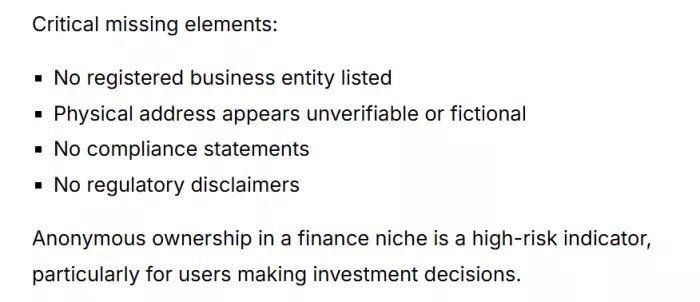
In practical terms: if an article on Bitnation‑blog.com leads you astray, there is no easy way to trace responsibility beyond the abstract “site” level. You are not dealing with a recognizable editor‑in‑chief or a known journalistic brand. You’re dealing with a largely faceless content engine.
Monetization: Following the Affiliate Trail
If the content is the storefront, the monetization model is the stockroom. With Bitnation‑blog.com, that stockroom appears full of affiliate deals.
Read enough “reviews” and “best of” lists and you start seeing patterns:
● Repeated recommendations of specific exchanges, brokers, or casinos.
● Links that carry tracking parameters, characteristic of affiliate programs.
● Articles that, on inspection, feel like soft sales pages thinly disguised as neutral evaluations.
This is standard affiliate marketing: when you click through a link and register or make a transaction, the site potentially earns a commission. There is nothing inherently unethical about that as long as two conditions are met:
1. Disclosures about these relationships are clear, visible, and written in human language, not buried legalese.
2. The editorial tone remains genuinely critical and independent, even when discussing partners.
Independent reviews suggest that Bitnation‑blog.com does not fully satisfy those ideals. Disclosures exist but may not always be prominent or emphasized in a way that a non‑technical reader will notice. Articles that should be sharp, comparative reviews sometimes read like enthusiastic brochures.
This doesn’t mean every recommendation is bad. It does mean that the site’s main economic incentive is to get you off its pages and into someone else’s onboarding funnel. That incentive should be front‑of‑mind when you interpret any glowing coverage of specific platforms.
Reputation and External Footprint: Quiet in the Noise
A robust crypto publication usually leaves footprints. It gets cited in other articles, argued over on forums, quoted in research, or referenced in podcasts. In that sense, reputation is almost a side effect.
Bitnation‑blog.com leaves a lighter trail. When third‑party reviewers and safety‑checker sites look at it, they tend to land on similar conclusions:
● It is a functioning blog with regular content and a coherent front‑end, not a single honey‑trap page.
● It behaves like a low‑to‑moderate‑trust, SEO‑driven site that reuses a meaningful name and leans on affiliate funnels.
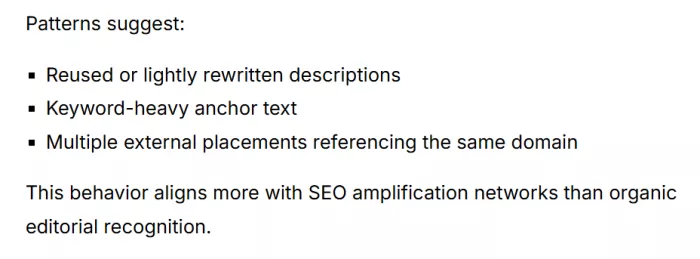
● Users are advised to treat its content and especially its promotional push with caution, verifying claims through more established channels.
What you do not see is Bitnation‑blog.com frequently cited by major crypto outlets or deeply embedded in community conversations. It feels more like a node in a large network of monetized content sites than a unique voice the community rallies around.
Email Behavior: When Bitnation‑blog.com Knocks First
For a subset of users, the site doesn’t appear on a search results page; it appears as an email in the inbox. Those emails have been scrutinized as well.
Common observations include:
● Messages arriving without a clear remembered opt‑in trail, especially for users not aware of signing up.
● Strong, urgency‑heavy language promoting opportunities, tools, or platforms that need you to “act now.”
● Links pointing to a variety of external sites, some of which users have never heard of before.
Reviewers typically stop short of calling these emails outright phishing, but they do recognize familiar patterns from aggressive marketing and scam campaigns. The safest operating assumption is that any email with this branding is a pitch first, information second.
Practical safety rules in this context are simple and non‑negotiable:
● Never share private keys, seed phrases, or other sensitive authentication data in response to any email.
● Don’t click through to financial platforms solely on the basis of promotional copy; look them up independently and see what other, more transparent sources say.
Bitnation‑blog.com’s email presence is part of its overall marketing machine, not a separate, altruistic channel.
Pros and Cons: A Balanced Snapshot
To understand where Bitnation‑blog.com fits in your own reading habit, it’s useful to compress the analysis into a clear pros‑and‑cons view.
Pros
● Visually polished, easy‑to‑navigate design that lowers friction for first‑time visitors.
● Beginner‑friendly explanations that make intimidating topics feel less overwhelming.
● Broad topical spread that lets new readers sample many corners of the crypto and online‑finance world.
Cons
● Limited transparency around ownership, editorial leadership, and real‑world accountability.
● Templated, SEO‑driven content with modest originality and limited data‑backed depth.
● Heavy reliance on affiliate monetization and promotional structures, with only modestly visible disclosures.
● A relatively small external footprint in serious crypto discussions, with independent reviewers placing it in the low‑trust, high‑caution category.
This balance doesn’t make the site villainous or virtuous; it simply clarifies what it is optimized to do.
Who Bitnation‑blog.com Is Really For
When you put all the pieces together, the borrowed name, polished UX, shallow but accessible content, opaque ownership, affiliate incentives, and cautious external reviews, a specific reader profile emerges.
Bitnation‑blog.com is best suited for:
● Curious newcomers who want to understand basic crypto and finance concepts in simple language, without diving into dense whitepapers or technical blogs.
● Casual readers who treat it as one of many tabs open, not as a singular authority.
● Users who are conscious of affiliate dynamics and willing to double‑check recommendations against more transparent sources.
It is not ideal for:
● Professional traders, analysts, or institutions needing deeply sourced, critical, and data‑driven research.
● Readers who demand strong editorial identity, visible leadership, and clear separation between advertising and advice.
● Anyone thinking of treating one blog as the foundation for their entire crypto risk‑taking strategy.
Used with that distinction in mind, the site can have a place in your media diet, but it should never be the only voice you hear.
Final Verdict: Read with One Eye Open
Bitnation‑blog.com is, in many ways, a product of its time. It takes a historically significant name from the blockchain world and attaches it to a contemporary content engine. It offers a pleasant interface and accessible copy, yet conceals much of its own internal structure and leans heavily on monetization strategies that quietly shape what it praises and promotes.
The healthiest approach to the site is neither blind trust nor outright dismissal, but cautious distance. While its clean design and beginner-friendly content are appealing, readers should remember it operates in an SEO-driven, affiliate-funded environment with limited transparency and should verify any important claims through more established sources.
Bitnation‑blog.com works acceptably as a soft landing spot for the crypto‑curious. It does not earn the right to be your single source of truth.
Comments