Learning AI tools online has shifted from abstract theory to applied skill building. What once required formal degrees and lab access is now accessible through browsers, notebooks, and cloud platforms. The challenge today is not access but direction. With hundreds of courses, videos, and platforms available, learning AI tools effectively depends on choosing the right formats, sequencing knowledge correctly, and practicing with real systems rather than passive content.
This guide focuses on how people actually learn AI tools online, what works in practice, and where common approaches fall short.
What Learning AI Tools Online Really Involves

Learning AI tools is not the same as learning AI theory. Tools focus on usage, experimentation, and workflow familiarity rather than mathematical depth alone. Most learners interact with AI through interfaces, APIs, notebooks, and managed platforms long before they build models from scratch.
Online learning environments reflect this reality. They emphasize prompt design, data handling, model evaluation, and deployment basics. The goal is competence, not academic mastery.
Structured Learning Versus Exploratory Learning
Online AI education generally falls into two distinct styles.
Structured platforms provide curated sequences, defined outcomes, and assessments. These suit learners who want clarity and progression. Platforms such as Coursera, Google AI learning hubs, and DataCamp fall into this category. They introduce concepts gradually and reduce decision fatigue.
Exploratory environments prioritize experimentation over structure. Kaggle notebooks, fast.ai lessons, and Hugging Face spaces allow learners to interact with models, datasets, and code directly. This approach mirrors how AI is used in real work but assumes curiosity and persistence.
Most successful learners combine both styles rather than relying on only one.
Where Beginners Actually Start Successfully
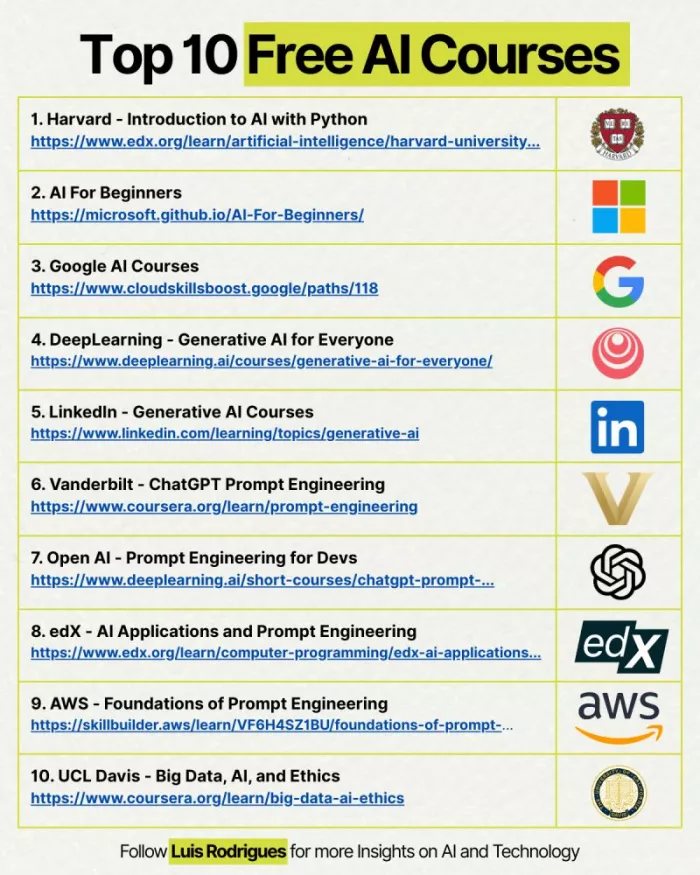
Many people struggle by starting too technically. Successful learners often begin with conceptual grounding before touching code.
Introductory courses such as AI for Everyone or Elements of AI explain what models do, where they fail, and how they are used across industries. This reduces confusion later when learners encounter tools like notebooks or APIs.
Once fundamentals are clear, platforms like Google AI Essentials introduce practical skills such as prompt construction, tool selection, and workflow thinking without heavy coding requirements.
Hands On Learning Makes the Difference
The defining factor in learning AI tools online is interaction.
Platforms that allow learners to write, run, and modify code consistently outperform passive video courses. Kaggle stands out here by offering free cloud notebooks tied to real datasets. Learners train models, debug errors, and compare results publicly.
fast.ai takes a different approach by teaching deep learning through working applications. Learners train image classifiers, language models, and deploy small apps early, which builds confidence quickly.
DataCamp bridges structured learning and interaction by embedding coding exercises with immediate feedback and AI assisted hints.
Hands On Platforms Compared
| Platform | What You Actually Do | Skill Level | Learning Style |
| Kaggle | Train models on real datasets | Beginner to intermediate | Practice driven |
| fast.ai | Build deep learning apps | Coding required | Project focused |
| DataCamp | Guided ML exercises | Beginner to advanced | Interactive lessons |
| Google AI Studio | Prototype prompts and models | Beginner | Tool experimentation |
Using Video Content Without Getting Lost
YouTube is one of the most powerful but risky resources for learning AI tools. Without structure, learners often consume content without progress.
Channels like StatQuest simplify foundational ideas such as loss functions and evaluation metrics. Andrej Karpathy provides deep insights into how large models work internally. Jeremy Howard focuses on practical application and deployment.
The key is selective use. Videos should support active learning, not replace it. Watching without building rarely leads to skill retention.
Learning Paths That Actually Hold Up
Effective online learners tend to follow a loose but consistent path.
They start with conceptual introductions, move into tool oriented basics, then shift quickly into hands on projects. After that, learning becomes iterative rather than linear.
A common progression looks like this:
● Conceptual AI overview to build mental models
● Practical introductions to prompts, notebooks, and datasets
● Hands on projects using Kaggle or fast.ai
● Tool specific exploration such as Hugging Face fine tuning or Google AI Studio experimentation
● Portfolio building through notebooks or small deployments
This approach balances understanding with execution.
What Learners Commonly Struggle With
Online AI learning is accessible but not frictionless.
Many platforms assume basic Python familiarity, which creates barriers for complete beginners. Free tiers often exclude certificates, which can matter for formal credentialing even when skills improve.
Another challenge is keeping pace with rapid change. Models, tools, and best practices evolve quickly. Learners must supplement courses with current documentation, community discussions, and updates from platform providers.
Hands on experience solves many of these issues but requires time and patience.
How Online Learning Translates to Real Skills
The strongest signal of AI tool competence is not course completion but output. Learners who build notebooks, experiment with prompts, train small models, or document workflows develop transferable skills.
Community feedback from Kaggle competitions, GitHub repositories, and discussion forums often matters more than certificates. Employers and teams increasingly value demonstrable problem solving over formal credentials.
Online learning works best when treated as an ongoing process rather than a checklist.
Conclusion
Learning AI tools online is less about finding the perfect course and more about choosing the right mix of structure, experimentation, and repetition. The internet offers more than enough resources. What matters is how learners engage with them.
Those who combine conceptual understanding with hands on practice, stay current with evolving tools, and focus on building rather than watching tend to develop real capability. Online platforms do not replace experience, but they increasingly serve as the fastest path to acquiring it.
AI tools will continue to change. The ability to learn them independently may become the most valuable skill of all.
Comments