Table of Contents
- Quick Verdict: Who Wins for What?
- Midjourney and Leonardo AI Overview
- Platform and User Experience
- Image Quality, Style, and Consistency
- Features and Control: How Much Can You Direct the Output?
- Speed, Performance, and Reliability
- Pricing and Free Plans
- Use Cases: Which Tool Fits Which Persona?
- Community, Ecosystem, and Learning Curve
- Ethics, Safety, and Business Readiness
- Practical Recommendation by Persona
- Conclusion
AI image generators have moved from “cool toy” to essential creative infrastructure for artists, marketers, game studios, and solopreneurs. Midjourney and Leonardo AI are two of the most talked‑about tools in this space, but they serve slightly different creative personalities and business needs.
In this in‑depth guide, you’ll see how they compare on image quality, control, pricing, workflow, and business readiness so you can confidently pick the right one—or build a stack using both.
Quick Verdict: Who Wins for What?
If you want a one‑line answer: Midjourney is still the king of stylised, cinematic art, while Leonardo AI is the more practical, controlled, and business‑friendly workhorse, especially for photorealism and consistent assets.
Here’s a fast overview before we go deep.
| Need / Scenario | Better Choice | Reasoning |
| Stylised, surreal, cinematic art | Midjourney | Strong artistic bias, painterly outputs, beloved by concept artists and illustrators. |
| Photorealistic products, people, interiors | Leonardo AI | More control over details, strong photoreal models, good prompt adherence. |
| Teams, agencies, structured workflows | Leonardo AI | Full web app, asset management, templates, easier onboarding than Discord. |
| Social/community‑driven exploration | Midjourney | Huge Discord community, constant prompt sharing and inspiration. |
| Free/low‑budget experimentation | Leonardo AI | Ongoing free tier with monthly credits; Midjourney requires a paid plan. |
| Custom styles, characters, product lines | Leonardo AI | User‑friendly custom model training and datasets. |
Midjourney and Leonardo AI Overview
Both tools generate images from text, but their philosophies and delivery formats are very different.
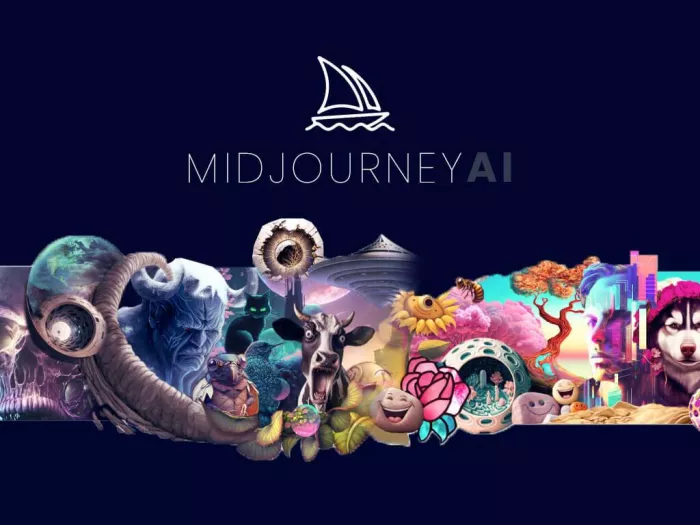
Midjourney is primarily accessed through Discord, using text commands and parameters to generate images on shared or private servers. It has a reputation for producing visually striking, highly stylised imagery with cinematic lighting, complex compositions, and a strong “Midjourney look” that many artists instantly recognise. The company has gradually added a browser‑based gallery and some web features, but the core workflow is still command‑driven.
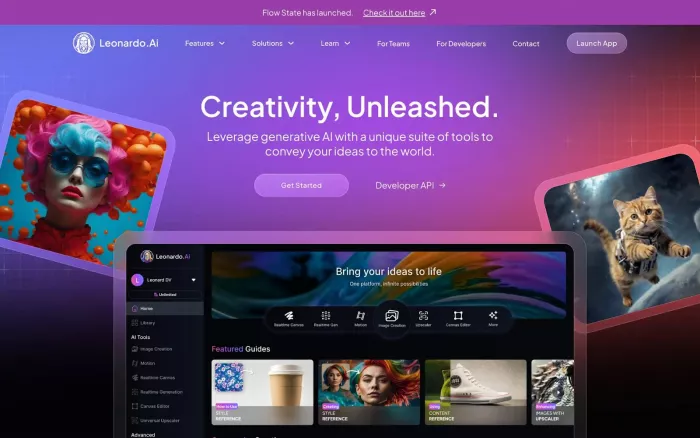
Leonardo AI, in contrast, is a web‑first and mobile‑friendly platform that bundles multiple models, an AI canvas editor, template systems, and asset management under one interface. It’s built less like a “model demo” and more like a production studio: you can train custom models, manage datasets, generate in bulk, and edit images with built‑in tools.
So, from the start, one feels like a creative playground inside Discord; the other feels like a self‑contained design environment aimed at creators, marketers, and small studios.
Platform and User Experience
Midjourney’s Discord‑first workflow is streamlined once you get used to it: you type a command, adjust a few parameters, and the bot returns a grid of images. Power users love the parameter‑driven control and discoverability through public channels, but non‑technical users sometimes find the environment confusing and noisy, especially when they are used to working in web dashboards or design systems.
Leonardo AI runs entirely in the browser (with mobile apps available), offering a familiar UI with panels, sliders, dropdowns, histories, and project views. You can browse previous generations, organise assets into projects or datasets, and access different tools (image generation, canvas, custom model training) from a single interface without having to learn chat commands.
For client‑facing work or team onboarding, Leonardo’s UX tends to be easier to demonstrate live in a meeting, while Midjourney’s Discord interface favours more technical, experimental users who like working in chat environments.
Image Quality, Style, and Consistency
This is where the competition becomes nuanced, because both tools are very strong but in slightly different ways.
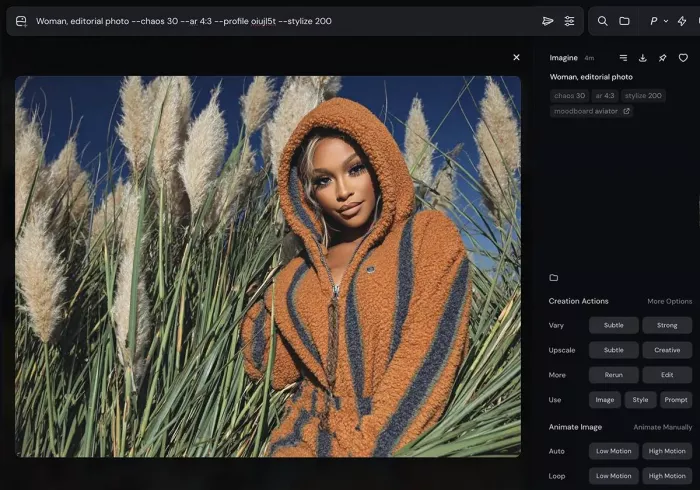
Midjourney is known for its signature style: dramatic lighting, painterly textures, imaginative compositions, and striking colour palettes. It often interprets prompts creatively rather than literally, giving you something that “feels” right even if certain small details deviate from the text. For concept art, fantasy scenes, stylised portraits, surreal imagery, and mood boards, this bias is often an advantage rather than a limitation.
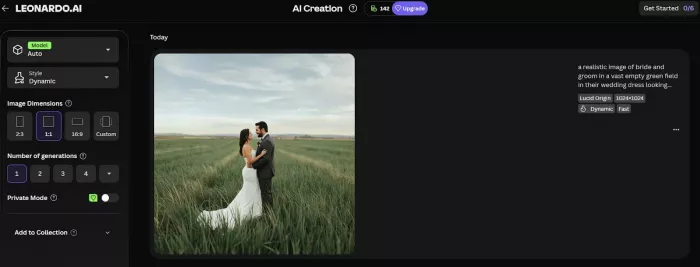
Leonardo AI, on the other hand, has leaned more aggressively into photorealism and precise control. Reviews and hands‑on comparisons consistently note that Leonardo’s latest models tend to produce more realistic skin, cleaner product renders, and better adherence to detailed instructions (e.g., number of objects, specific camera angles, or logo placement). It is widely recommended for product shots, marketing visuals, game assets, and any scenario where realism and repeatability matter more than artistic flair.
On character and brand consistency, Leonardo AI currently has the upper hand thanks to its custom model and dataset features. You can train models on your own character, product line, or brand imagery to reproduce consistent looks across campaigns or episodes. Midjourney can approximate consistency through careful prompting and style references, but it lacks an equally user‑friendly, integrated custom training flow at this time.
Features and Control: How Much Can You Direct the Output?
Beyond style, the real question is: how much control do you have over what comes out?
Leonardo AI offers a broad set of tools around the core generation engine. Inside the web app you typically find:
● Multiple foundation and speciality models (including ones tuned for specific aesthetics or tasks).
● A canvas editor for inpainting, outpainting, and fine‑tuning existing images.
● Image‑to‑image workflows for transforming sketches, photos, or previous generations.
● Custom model training and dataset management for recurring characters, styles, or products.
● Bulk generation options and project‑based asset organisation.
This turns Leonardo into a quasi‑end‑to‑end pipeline: prompt, generate, refine, organise, and repeat inside the same interface.
Midjourney focuses more narrowly on generation but offers deep, parameter‑driven control through prompts and settings. You can tweak aspect ratios, stylisation degrees, quality levels, seed values, and more to steer the results. Simple commands let you upscale or generate variations, and newer versions have improved coherence and detail significantly compared to early iterations. However, built‑in editing tools like full canvas inpainting/outpainting are still less mature compared to Leonardo’s integrated editor.
For power users who love living in text and fine‑tuning prompts, Midjourney is extremely expressive; for teams who want visible toggles, sliders, and editors, Leonardo offers more “studio‑like” control.
Speed, Performance, and Reliability
Performance can vary depending on time of day, model version, and your plan, but some patterns are visible in public reviews.
Leonardo AI commonly offers different quality or speed modes, with typical generation times falling somewhere between roughly 10 and 40 seconds depending on resolution and settings. Its web‑based queue system and credit model make it relatively predictable: you know how many generations you can run, and each request usually completes within a reasonable, business‑friendly timeframe.
Midjourney, running through Discord infrastructure, can feel very fast during off‑peak hours but may slow down when servers are heavily loaded. Some reviewers note that complex prompts or higher‑quality settings can push generation times closer to a couple of minutes, especially if queues build up. For creative exploration this is rarely a dealbreaker, but for bulk, time‑sensitive production runs, that variability may matter.
The key takeaway: both are usable for day‑to‑day work, but Leonardo’s credit‑driven, web‑native system tends to feel slightly more predictable under heavy production workloads.
Pricing and Free Plans
Pricing is a moving target, but the overall structure of both tools is clear enough to compare.
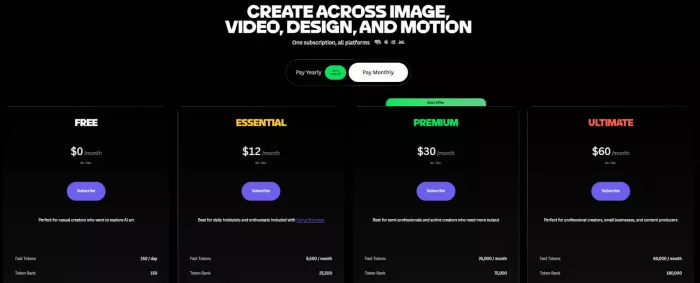
Leonardo AI uses a freemium model. New users can access a free plan with a limited number of monthly tokens or credits, which is usually enough for light experimentation and learning the interface. As you upgrade to paid plans, you mainly buy more credits and unlock advanced features geared towards heavier individual use and team workflows, so the pattern stays simple: start free, then scale your spend as your volume and needs grow.
Midjourney no longer provides a permanent free tier or a general, always‑available free trial, so in practice you need a paid subscription to generate images. Its current lineup is built around several subscription tiers (such as Basic, Standard, Pro, and higher), which differ mainly by the amount of “fast” GPU time you get, whether you have access to unlimited “relax” mode, how many jobs you can run concurrently, and extras like stealth/private mode. This makes its pricing less about per‑image credits and more about how much generation time and capacity you need each month.
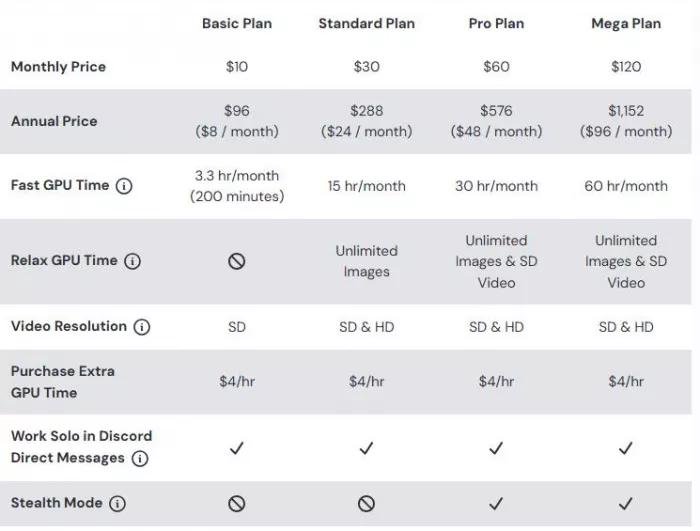
Here is an approximate structural comparison (specific prices and limits change frequently, so treat this as directional rather than exact).
Pricing structure overview
| Aspect | Leonardo AI | Midjourney |
| Free plan | Yes, with monthly credits/token limits suitable for light use. | No ongoing free tier; subscription required to generate images. |
| Entry paid tier | Credit‑based, aimed at solo creators who need more generations. | Flat monthly subscription with defined fast GPU time and features. |
| Scaling model | Higher plans add more credits, higher limits, and extra capabilities. | Higher plans add more fast hours, relax mode, and greater concurrency. |
| Predictability for budgeting | High, as you can estimate usage by credits consumed per image or action. | Good, but framed around GPU time and usage windows rather than per‑image. |
| Accessibility for beginners | Very accessible thanks to a usable free tier for testing and learning. | Requires up‑front financial commitment before you can meaningfully explore. |
For hobbyists or early‑stage creators, Leonardo’s free tier often makes it the natural starting point to experiment without pressure, while Midjourney’s subscription‑only access tends to appeal more to users who already know they want to invest in its specific aesthetic and capabilities as part of their regular creative toolkit.
Use Cases: Which Tool Fits Which Persona?
You’ll get the most value if you choose based on your real‑world workflow rather than abstract model comparisons.
Solo artists and illustrators often gravitate toward Midjourney because its bias toward mood, drama, and interpretive creativity aligns with concept art, book covers, posters, and experimental visuals. The Discord community also acts as a constant stream of inspiration, with shared prompts and styles encouraging exploration.
Marketers, brands, and e‑commerce teams frequently find Leonardo AI better suited to their needs. As AI-generated visuals become more common in marketing, some organizations also rely on an AI image detector to distinguish AI-created images from traditional photography when reviewing creative assets. The combination of photorealistic models, custom training, template‑driven workflows, and project‑based asset organisation makes it easier to use as a semi‑formal part of a content production pipeline. You can build consistent product imagery, ad creatives, and branded visuals without constantly fighting to recreate the same look.
Game developers, UI designers, and asset‑heavy projects benefit from Leonardo’s emphasis on repeatable style and custom models. You can train models on your own concept art set or asset library to generate variations that still “fit” your world, then refine them inside the AI canvas. Midjourney is still useful here for early ideation and exploratory mood boards, but Leonardo is often used for production‑ready assets.
Hobbyists and casual creatives will likely choose based on budget and UX comfort: Leonardo’s free tier and point‑and‑click UI vs Midjourney’s paid access and Discord‑centric interface.
Community, Ecosystem, and Learning Curve
The community around an AI tool can dramatically affect how quickly you improve and how inspired you feel.
Midjourney’s Discord community is enormous and very active. Public channels are filled with prompts, settings, variations, and experiments that you can learn from in real time. This social layer is part of why Midjourney’s signature looks evolve so fast: users riff on each other’s work, remixing styles and techniques collaboratively.
Leonardo AI has a growing but more focused community, distributed across its own channels and the broader AI art ecosystem. Discussions tend to be more about workflows, templates, production tips, and new model releases than purely sharing aesthetic experiments. For professionals or teams, this can be more directly useful, even if it feels less like a “creative party.”
On learning curve, Midjourney demands that you become comfortable with prompt engineering plus specific command syntax inside Discord. Leonardo’s GUI makes basic use straightforward for non‑technical users, though mastering all its advanced tools (custom models, datasets, canvas workflows) still takes time.
Ethics, Safety, and Business Readiness
Any serious adoption in a business or brand context has to consider content safety, licensing clarity, and data handling.
Both Midjourney and Leonardo AI implement content moderation and restrict certain NSFW or harmful generations, though the exact policies and enforcement mechanisms can evolve over time. Both platforms position themselves as suitable for commercial use, but you should always read their current terms of service and licensing details before integrating them into mission‑critical workflows or high‑visibility campaigns.
Leonardo’s focus on custom datasets raises additional questions around data governance: you’re uploading proprietary assets and possibly customer or internal imagery to train models. For brands, this is powerful but also requires clear policies about what gets uploaded, who controls it, and whether any of that data is used to train global models. Some reviewers note that Leonardo’s evolving enterprise‑oriented features (like team accounts and project permissions) are designed with these concerns in mind.
Midjourney, by not emphasising user‑uploaded training datasets in the same way, avoids some of those complexities but also gives you less native control over model behaviour for brand‑specific use cases.
Practical Recommendation by Persona
To make this ultra‑actionable, here is a concise persona‑based guide summarising the analysis above.
● If you are an artist, concept designer, or illustrator who values stylised, cinematic outputs and a highly active creative community, Midjourney is often the better primary tool.
● If you are a marketer, e‑commerce operator, or brand focused on photorealistic, consistent visuals and repeatable workflows, Leonardo AI should probably be your main platform.
● If you are part of a studio or agency, the strongest stack is often: ideation and early visual exploration in Midjourney, followed by production, refinement, and consistency work in Leonardo AI.
● If you are a beginner or hobbyist on a tight budget, start with Leonardo’s free plan to learn the basics, then consider adding Midjourney once you’re ready to invest.
Conclusion
Midjourney and Leonardo AI represent two mature but distinct directions in AI image generation, and both clearly demonstrate how far this technology has progressed in a short time. Each tool delivers professional‑grade visuals, supports complex creative workflows, and continues to evolve rapidly with new models and features. Rather than one “winning” outright, what stands out is how complementary they are: one leans into bold, interpretive creativity, while the other emphasises control, structure, and production‑readiness.
As the ecosystem matures further, the real story is less about rivalry and more about how creators and teams can combine such tools to push visual storytelling, design, and content creation into entirely new territory.
Comments