Table of Contents
- The Elevator Pitch: What Mirami Really Is
- Opening the Door: First Contact and UX Flow
- The Core Engine: Features Without the Gloss
- The Part Everyone Feels: Pricing and the Clock Ticking
- Safety and Privacy: The Things You Don’t See On Camera
- Are the Women Real or Is This Scripted Theater?
- How Users Actually Feel: The Sentiment Curve
- Pros, Cons, and the Honest Trade‑Off
- So Should You Use Mirami Chat?
Mirami Chat is the kind of app that doesn’t introduce itself politely. It barges into your browser or phone with a bold promise: “random live video with beautiful girls, right now.” Behind that one‑liner sits an entire ecosystem of coins, hosts, safety questions, and expectations that are very different from what you get on a regular dating app. This review takes Mirami apart from every angle, product, UX, pricing, authenticity, safety, and long‑term value but in a way that mirrors the experience itself: direct, a little raw, and very honest.
The Elevator Pitch: What Mirami Really Is
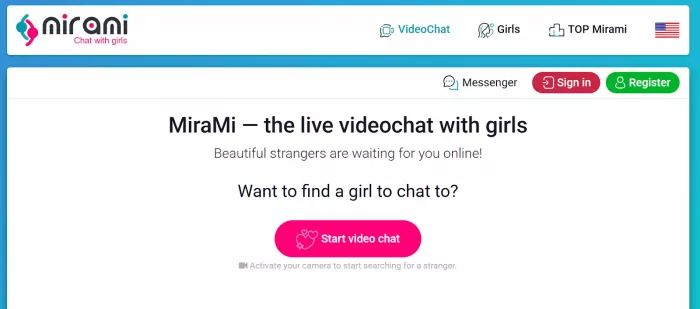
If Tinder and a lightweight cam site had a no‑strings fling, the result would look suspiciously like Mirami Chat.
At surface level, Mirami is a random 1:1 video chat service, available in your browser and as an Android app. You open it, give the camera and microphone permission, and within seconds, there’s a woman on your screen ready to talk. No swiping, no bio, no “tell us about your hobbies” friction. Just face‑to‑face, instantly.
Mirami’s twist is its positioning: you’re not being matched with “any random stranger.” You’re being matched with “girls only” that’s the promise, that’s the lure, and that’s the filter shaping everything else. The target user is obvious: an adult man who wants quick, anonymous, flirty contact without the emotional admin of modern dating and without the more explicit label of “cam site.”
The app does deliver that core fantasy. The rest of this article is about the price you pay for it , financially, emotionally, and in terms of data and trust.
Opening the Door: First Contact and UX Flow
Most apps spend entire onboarding flows trying to prove they’re your friend. Mirami does the opposite: it tries to prove it doesn’t waste your time.
The first session usually plays out like this:
1. You land on a page, see an attractive face or marketing image, and a big “Start” or “Chat” button.
2. You confirm you’re of age, grant camera/mic permissions, and suddenly you’re on a live call.
3. You get a short burst of free time—often 30 to 60 seconds—before a paywall arrives asking you to buy credits to continue.
The interface is almost aggressively minimal. A big remote video, a tiny preview of your own camera, a few controls: end, next, mute, maybe a button to type something or send a quick emoji. Profiles, if they exist at all, are skeletal—usually just a name or nickname and perhaps a tiny snippet of info. Mirami isn’t trying to build your social graph; it’s trying to keep a pipeline of moment‑by‑moment encounters moving.
That minimalism is clever. It makes the experience feel easy and disposable, which is exactly the sweet spot for impulse use. But it also strips away many of the guardrails and context clues that would help you understand who you are really talking to and what you’re walking into.
The Core Engine: Features Without the Gloss
If you peel away the marketing language, Mirami’s feature set is surprisingly small. That’s not necessarily a bad thing, but it’s important to see it clearly.
Feature Matrix: What You Actually Get
| Dimension | What Mirami Offers |
| Platform | Browser interface plus Android app |
| Matching | 1:1 random video, “girls only” focus for male users |
| Communication | Live video and audio; basic text overlay/emojis in some builds |
| Filters | Gender bias to women, limited regional hints or light filters |
| Profiles | Minimal; often just nickname and basic display |
| Account | Often optional for trial; required for credit purchases and advanced usage |
| Extras | Occasionally virtual gifts, re‑match options, or minor paid perks |
You won’t find elaborate AR filters, mini‑games, or social feed elements that many video apps now include. The product is laser‑focused on one loop: show you a woman, let you talk, then either move on or pay to keep her on your screen.
That narrow focus is both the appeal and the limitation. It’s frictionless when you’re in the mood and know what you want. It’s thin if you’re seeking anything beyond casual, transactional interaction.
The Part Everyone Feels: Pricing and the Clock Ticking
Mirami’s most interesting feature is not on the screen. It’s in your subconscious: every second, somewhere in the back of your mind, you know coins are melting away.
The financial architecture looks roughly like this:
● A tiny free teaser: new users get a very short burst of free calling—typically under a minute—just enough to verify that there’s a real person there and to taste the experience.
● A coin/credit model: time costs coins. You buy bundles of coins; the app burns them at a per‑minute rate while the video is active.
● A high effective rate: if you translate coins to real money, many users and reviewers converge around a rough range of about 0.80 to 1.50 USD per actual minute on the call, depending on region and bundle size.
● Add‑ons: some versions add virtual gifts or special interactions that consume extra credits on top of your time burn.
Let’s put that into perspective.
Time vs. Money: A Rough Snapshot
| Session Length | Approximate Spend Range* | How It Feels in Practice |
| 2–3 minutes | A few dollars | “Just testing it out” |
| 10 minutes | The cost of a monthly dating sub | “That escalated quickly” |
| 30+ minutes | A night out budget in some cities | “This is a paid show, not a casual app” |
*Ranges will vary by region, bundle, and promos, but the pattern holds: short bursts are manageable; long calls stack up quickly.
The economics explain a lot of user sentiment. Mirami works best when you treat it like buying a ticket to a short performance, not subscribing to a service. The longer you try to force it into an “I’ll just hang out here and meet people for an hour” role, the more punishing the price becomes.
Safety and Privacy: The Things You Don’t See On Camera
Mirami sells anonymity as a benefit. You don’t have to expose your real name or social profile. You can disconnect whenever you like. At first glance, that sounds like a safer alternative to sharing a Facebook or Instagram profile with strangers.
But anonymity is a double‑edged sword. It protects you and it also protects whoever is on the other side whether they’re a bored student, a freelance host, or someone with less benign intentions.
Several key questions hang over any app like this:
● How well are the “girls” verified? Are they passing serious ID checks, or just basic anti‑bot filters?
● How is content moderated? What happens when someone crosses a line or asks for off‑platform contact, money, or explicit material?
● How is your video and audio data handled behind the scenes? Is it stored, inspected, or ever reused?
Mirami’s public‑facing messaging leans on general statements about anonymity and fun, but user reports often highlight gaps: moderation that feels light, verification that isn’t clearly communicated, and a sense that you are trusting a black box with your camera feed in a very adult context.
From the outside, third‑party trust and scam‑check tools paint a cautious picture rather than a red alert. They typically classify Mirami as a legitimate site in a risky niche not a phishing operation or malware trap, but also not a squeaky‑clean family platform. The implied advice is: you probably won’t be robbed by the site itself, but you still need to protect yourself inside the experience.
For a user, that boils down to some non‑negotiables:
● Assume everything you show on camera can be recorded.
● Never share personal contact details or financial info in chat.
● Prefer prepaid or virtual cards for any spend.
● Be willing to disconnect the second a chat feels uncomfortable, pushy, or manipulative.
Are the Women Real or Is This Scripted Theater?
This is the question that keeps popping up in user reviews: “Am I talking to a real person who just happens to be online… or a professional host running a script to keep me paying?”
The answer is inconveniently in the middle.
On one hand, the behavior in many sessions looks undeniably live and unscripted: real‑time reactions, spontaneous laughter, background noise, imperfect lighting, occasional tech hiccups. Those are hard to fake convincingly across an entire platform. Mirami doesn’t appear to be a field of pre‑rendered bots.
On the other hand, patterns emerge:
● Openers and “vibes” that sound similar from one chat to another.
● A consistent gravitational pull toward longer calls and more gifts.
● Emotionally flattering interactions that feel more like a performance than a genuine, messy human conversation.
The best way to think about it is this: Mirami likely has a mix of casual users and semi‑professional hosts, but the product and pricing structure incentivize host‑style behavior. Even if everyone is technically “real,” the experience can easily drift into scripted fantasy because that’s what keeps coins burning.
If you walk in expecting that “I’m paying for a performative, flirty interaction, not necessarily stumbling into my future partner” you are far less likely to feel tricked.
How Users Actually Feel: The Sentiment Curve
On app stores and independent blogs:
● Positive notes: Some users praise the app for delivering exactly what it promises—quick chats with women, decent video quality, and a straightforward UI.

● Neutral or mixed: Others acknowledge that it’s fun but describe it as “expensive entertainment” that should be used sparingly.
● Negative feedback: High costs, very short free trial, and the feeling that many women are more like hosts or models than regular users.
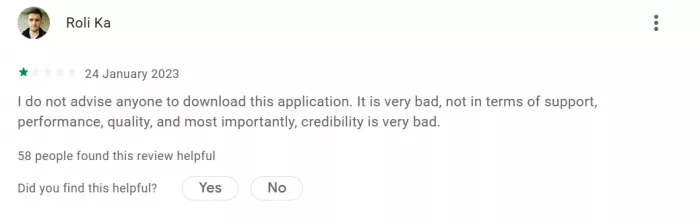
On Trustpilot and Reddit‑style communities:
● Some users say they were surprised by how quickly credits disappear and how often they are prompted to buy more.
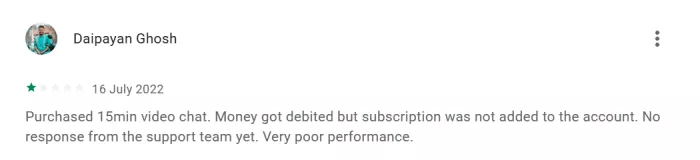
● Several complain that chats feel staged or scripted, with women steering conversations toward longer calls and gifts. reddit
● A few accuse the platform of deceptive marketing—not a technical scam, but misleading in how “organic” the social experience really is.
Pros, Cons, and the Honest Trade‑Off
By this point, the strengths and weaknesses almost list themselves.
Mirami works when:
● You want fast, minimal‑effort access to women on live video.
● You are okay with the idea that this is closer to a show than a friendship engine.
● You treat spending as you would at a movie theater, not as a background subscription charge.
Mirami fails you when:
● You’re looking for slow‑burn, authentic connections or serious dating.
● You’re sensitive to cost and micro‑transactions.
● You’re uneasy about fuzzy moderation and verification in adult spaces.
To capture that trade‑off in one snapshot:
Mirami in One Table
| For You If… | Not For You If… |
| You want quick, flirty, anonymous video with women | You want long‑term, genuine relationships |
| You accept per‑minute paid entertainment | You hate micro‑transactions and “time as money” |
| You can set and respect a spending limit | You easily lose track of time and budgets |
| You’re comfortable in adult‑adjacent online spaces | You need strong, visible safety and verification guarantees |
So Should You Use Mirami Chat?
Mirami Chat isn’t a miracle social app or an outright trap, it’s a very specific tool for a very specific itch: instant, paid live video interaction without the grind of traditional dating apps. If you treat it exactly that way as host-leaning, pay-per-minute entertainment, you might enjoy it in short, controlled bursts. But if you expect a cheap, organic dating alternative, disappointment is likely.
The healthiest approach is to treat the free trial as a demo, set a firm spending limit, assume the person on screen is performing, and exit the moment it stops feeling fun. Used this way, Mirami isn’t the villain, it’s simply doing what it was built to do. The real question is whether a few minutes of curated, clock-ticking flirtation is worth the price to you.
Comments