Running a mental health practice often means dealing with fragmented systems, excessive documentation, and workflows that were never designed for behavioral health. Billing systems rarely align with clinical notes, and scheduling tools ignore how therapy and psychiatric care actually function. The result is predictable. Clinicians end up handling administrative work outside business hours just to keep things running.
Valant IO positions itself as a behavioral health–specific EHR platform, built from the ground up rather than adapted from general healthcare systems. The focus is clear. Align software with how mental health practices actually operate.
The important question is not what it promises, but whether that specialization translates into meaningful improvements in daily use.
What Makes Valant Different from Standard EHR Systems

The behavioral health space operates differently from general medicine. Treatment is ongoing rather than episodic. Documentation follows formats like SOAP and DAP notes, and patient cases often involve co-occurring conditions and long-term care plans.
Valant approaches this at a structural level. Instead of adding behavioral health as a feature, it builds the workflow entirely around it. Everything from scheduling to billing connects back to long-term patient management rather than isolated visits.
The system centers on the patient chart, which acts as a unified dashboard. From a single view, clinicians can access:
● Treatment history
● Upcoming appointments
● Active medications
● Financial balances
● Recent clinical notes
This reduces the need to move between disconnected modules, which is a common frustration in more generic EHR platforms.
Core Features That Actually Matter for Mental Health Practices

Smart Scheduling That Reflects Clinical Reality
Traditional scheduling tools treat appointments as simple time slots. Valant treats them as part of an ongoing treatment structure.
You can configure:
● Recurring session patterns tied to treatment plans
● Rules around session frequency
● Alerts for missed or inconsistent attendance
● Visibility into provider workload distribution
Group therapy is handled differently as well. The platform supports fixed group memberships, attendance tracking, and waitlist management, which is critical for structured programs.
Documentation Built for Clinical Use
Documentation in mental health is not just administrative. It directly impacts clinical continuity, compliance, and reimbursement.
Valant supports multiple formats including SOAP notes, DAP notes, and narrative documentation, allowing clinicians to work within their preferred frameworks.
A key feature is treatment plan integration. Goals are tracked within the system, with reminders for updates and reviews. This creates a more continuous link between sessions rather than isolated note entries.
Clinicians often report that structured templates reduce time spent documenting, though this depends on how well the templates match individual workflows.
E-Prescribing and Medication Management
Valant includes psychiatry-focused e-prescribing tools, which handle:
● Controlled substances
● Prescription monitoring integrations
● Medication history tracking
This is particularly relevant for practices managing complex medication regimens, where accuracy and compliance matter.
Revenue Cycle Management
Billing in mental health involves specific CPT codes, documentation requirements, and payer rules that general systems often mishandle.
Valant’s billing system is designed around these patterns. It includes:
● Pre-submission claim checks
● Validation of diagnosis and procedure alignment
● Error flagging before claims are sent
This reduces claim denials, which is critical given the typically tight margins in behavioral health practices.
User Experience for Clinicians and Staff

The interface prioritizes functionality over design aesthetics. It is built to reduce clicks and keep workflows efficient rather than visually impressive.
Clinicians often highlight:
● Faster documentation compared to older systems
● Reduced cognitive load through structured templates
Administrative staff benefit from features like:
● Automated appointment reminders
● Digital check-in processes
● Centralized communication tracking
However, feedback from review platforms suggests that the experience is not uniform. Some users report that initial onboarding and customization require time, especially for larger practices.
Pricing and Implementation Reality
Valant does not publicly list pricing, which is standard for many EHR vendors.
Based on industry comparisons and user feedback from platforms like SoftwareWorld and GetApp, pricing typically follows a per-provider monthly model, often estimated in the range of:
| Practice Size | Estimated Monthly Cost per Provider |
| Small Practice | $200 to $400 |
| Mid-Sized Practice | $300 to $600 |
| Larger Organizations | Custom pricing |
These are not official numbers, but they align with behavioral health EHR market averages and reported user experiences.
Implementation involves:
● Data migration from existing systems
● Workflow configuration
● Staff training
Practices report that the return on investment often comes from improved billing efficiency and reduced administrative workload, though the initial setup phase can be resource-intensive.
Where Valant Falls Short
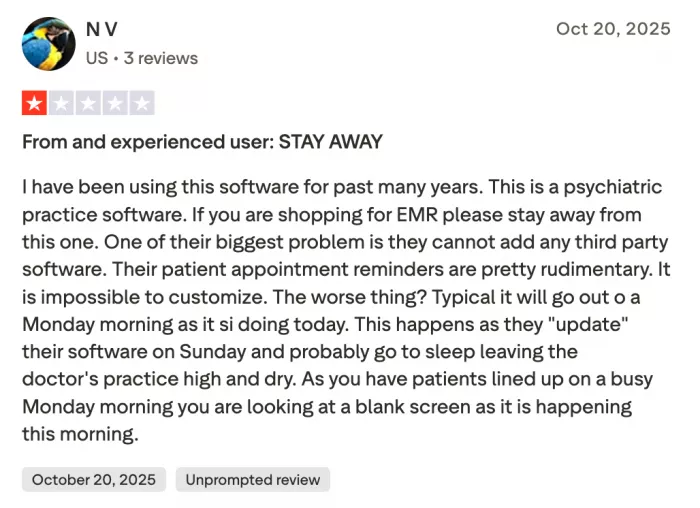
No system is without trade-offs.
The mobile interface remains a weak point, particularly for clinicians who rely on mobile documentation.
Analytics and reporting are adequate but not as advanced as newer platforms that emphasize data visualization.
Integration with specialized third-party tools can be inconsistent, which may require additional workflow adjustments.
Support quality is generally acceptable, though response times can vary depending on issue complexity.
Is Valant the Right EHR for Your Practice
Valant is best suited for mid-sized to large behavioral health practices that need a system aligned with their clinical workflows.
It is particularly relevant for:
● Practices offering psychiatric services
● Clinics managing complex or long-term cases
● Organizations running group therapy programs
Smaller practices or those with simpler workflows may find the platform more complex and costly than necessary.
The Bottom Line
Valant IO addresses a real gap in the market by focusing specifically on behavioral health workflows. That specialization shows in areas like documentation, scheduling, and billing.
At the same time, the platform is not without limitations. Pricing transparency, mobile usability, and reporting depth remain areas where it could improve.
For practices that need a system tailored to mental health care, Valant offers a structured and purpose-built approach. For others, especially smaller operations, the trade-offs may outweigh the benefits.
Comments