What does it actually cost to start an online business in 2026? About $35 a month and a Saturday afternoon, if the right tools get picked. The hard part stopped being money or technical skill the day ChatGPT got good at writing product descriptions. The hard part now is figuring out which AI tools earn their subscription and which ones are marketing copy wearing a free trial. Beginners launch coffee brands, Notion templates, soy candle stores, and digital download libraries from the same kitchen counter, often using nearly identical tool stacks. Some succeed. Most quietly close by month four. The tools do not separate them; the discipline does. What follows is a blunt walk through the five AI tools beginners actually reach for, where each one earns its keep, and where it quietly fails.
The 5-Tool Beginner Stack That Actually Earns Its Keep in 2026
ChatGPT
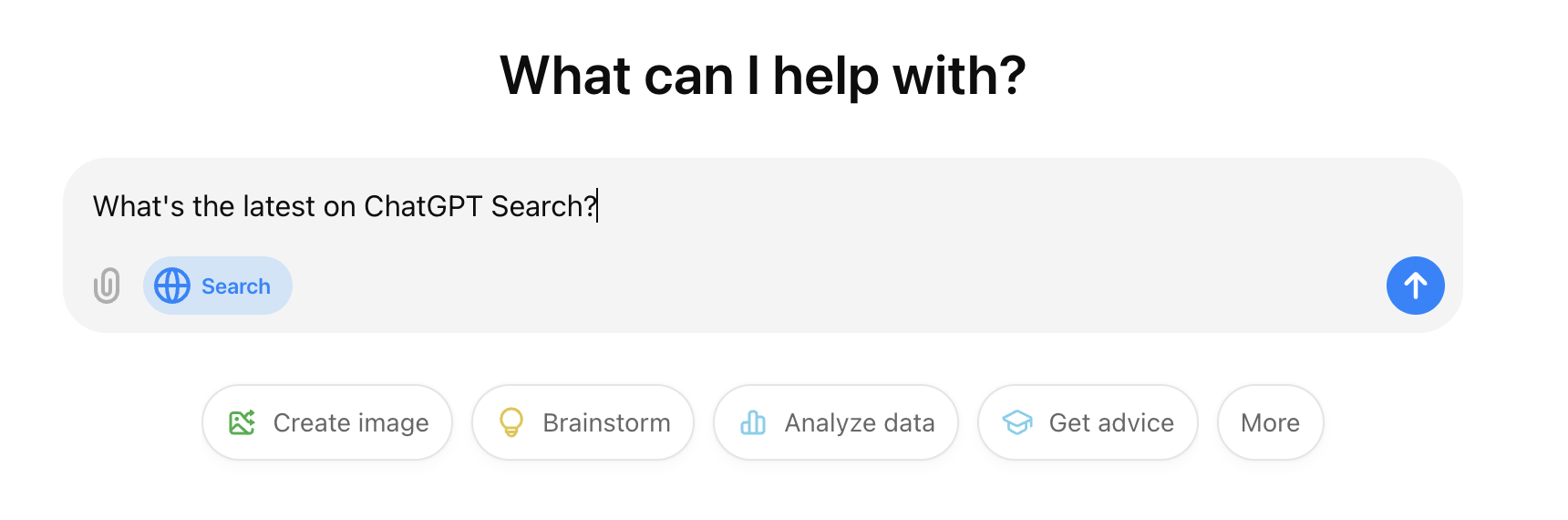
What it is. OpenAI's conversational AI, used by beginners for niche research, FAQ drafts, product description first cuts, customer-support templates, and 30-day operating checklists. Crossed 900 million weekly users in early 2026, the vast majority on the Free tier.
Use case. A new Etsy soy candle seller skips the default "write me a product description" prompt and runs the buyer-objection rewrite instead: "Act as a buyer who has been disappointed by handmade soy candles. What would make you not buy this one?" Then asks the model to rewrite the listing addressing those objections by name. Five-minute reframe, measurably better conversion than the default prompt.
The platforms welcome AI; they do not welcome same-AI. Etsy and Amazon recalibrated their search and quality signals through 2025 and 2026 to flatten generic AI output. Beginners using ChatGPT as a typing aid never break the same-AI penalty zone. Beginners using it as a thinking aid do.
Pricing tiers, verified May 2026
| Plan | Monthly | What a Beginner Actually Gets |
|---|---|---|
| Free | $0 | GPT-5.3 only, 10 messages per 5 hours, US ads since Feb 2026 |
| Go | $8 | 10x Free limits, no Sora, no Deep Research, no Codex, ads possible |
| Plus | $20 | GPT-5.5 default, 10 Deep Research runs per month, Sora limited, Agent Mode |
| Pro $100 | $100 | GPT-5.5 Pro, 5x Plus limits, 250 Deep Research runs (April 2026) |
| Pro $200 | $200 | 20x Plus limits, 1M-token context, unlimited image creation |
| Business | $25 per seat (annual) | SOC 2, SAML SSO, no training on data by default |
Source: OpenAI pricing page; Fritz AI verification, May 2026.
ChatGPT versus Claude versus Gemini
| Dimension | ChatGPT Plus ($20) | Claude Pro ($20) | Gemini Advanced ($20) |
|---|---|---|---|
| Long-document handling | ~320 pages per chat | 1M tokens, best in class | 1M tokens |
| Native image generation | Yes (Images 2.0) | Limited | Yes |
| Best beginner use case | First-draft writing, ops checklists | Long-research analysis, contracts | Google Workspace tasks |
User ratings
4.8 on the Apple App Store across millions of reviews; 4.7 on G2 under enterprise listings. Criticism concentrates on rate-limit unpredictability and contextual ads in the US Free tier since February 2026. Plus rarely justifies day-one purchase for a beginner; the upgrade makes sense after Free limits hit three days running, or the moment confidential material starts entering chats (Plus trains on conversations unless the opt-out is manually toggled).
Canva and Magic Studio
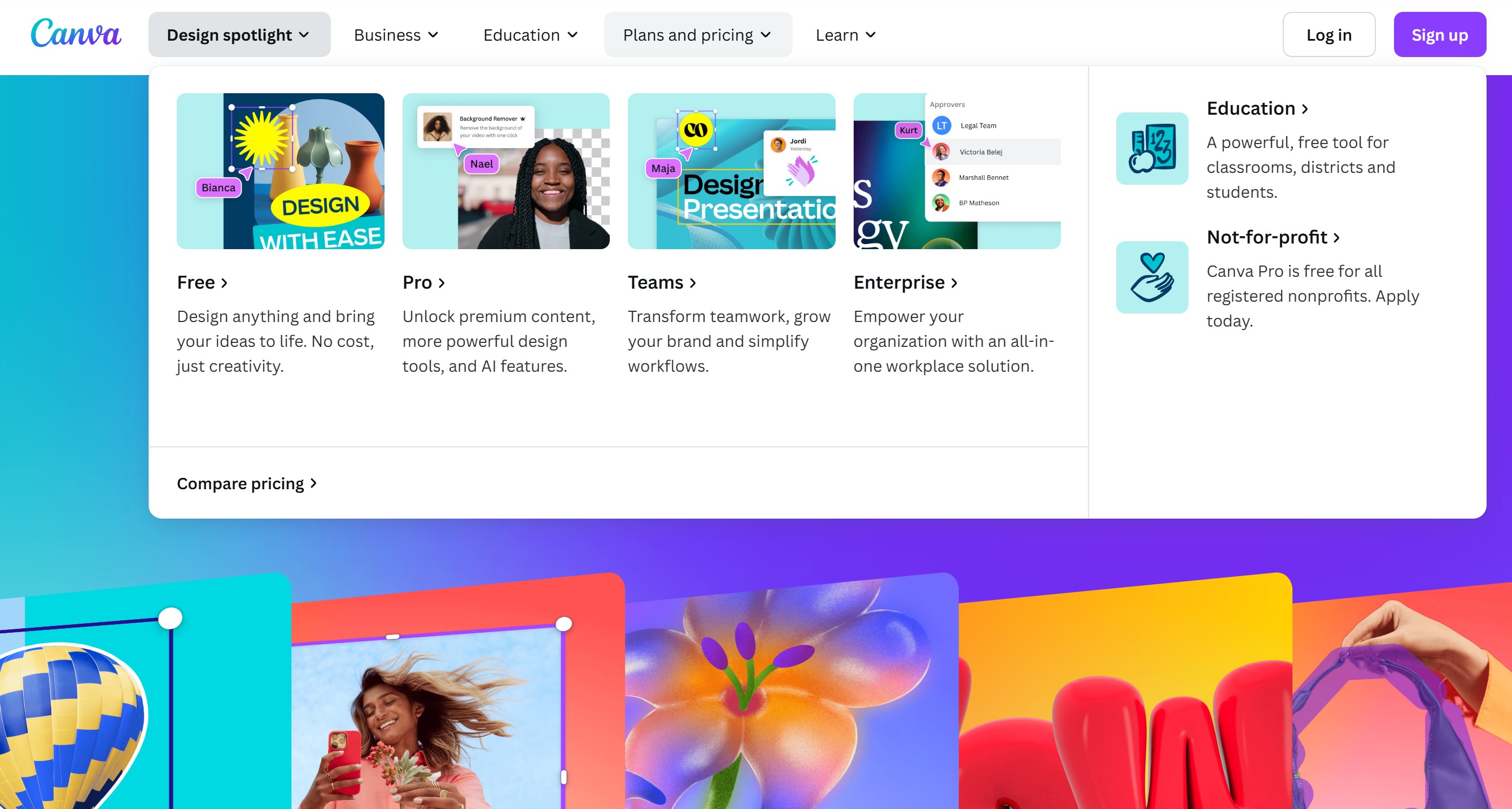
What it is. Template-first design software with the Magic Studio AI suite built in: Brand Kit, Background Remover, Magic Resize, Magic Edit, and Magic Media (text-to-image). Used for product graphics, social posts, decks, and printable downloads by 260 million users worldwide.
Use case. A first-time Shopify seller pulls a "Modern Boutique" template, swaps the typography to break visual sameness, drops in real product photography, and uses Background Remover to clean phone-shot images. Result is roughly 80 percent of designer-grade output at $15 a month, ready to publish in an afternoon.
The Canva paradox: roughly 10,000 stores already use that exact "Modern Boutique" template. Brands that stop looking interchangeable break the templates early. Magic Media is unreliable for product mockups, and Etsy's 2026 AI image rules now require at least one genuine product photograph; AI-only product images can be removed.
Canva subscription map
| Plan | Monthly | Annual Equivalent | Real Constraint |
|---|---|---|---|
| Free | $0 | $0 | About 50 lifetime AI credits, 5 GB storage, no Brand Kit |
| Pro | $15 | $120 | 500 AI credits per month (no rollover), Brand Kit, Background Remover, 1 TB |
| Teams | $20 per seat | $10 per seat | Brand approvals, multi-user admin, ~4,000 AI credits |
| Enterprise | Custom | Custom | SSO, advanced permissions, IP indemnification not included |
Source: Canva pricing page; getaiperks.com verification, March 2026.
Canva versus Adobe Express versus Figma
| Dimension | Canva Pro ($15) | Adobe Express Premium ($9.99) | Figma Professional ($15) |
|---|---|---|---|
| Template library | 250,000+ templates | Adobe Stock 200M+ assets | Designer-built, sparse |
| AI commercial safety | Standard | Firefly trained on licensed content | Limited native AI |
| Best beginner fit | Default for non-designers | Cheaper alternative with safer AI | Wrong fit until designer joins |
User ratings
4.7 on G2 across roughly 4,500 reviews. 4.7 on Capterra across 12,977 reviews. 3.4 on Trustpilot, where the drop is mostly billing complaints and surprise renewals rather than product quality. The recurring complaint pattern: thirty minutes of layout work, drop in a Pro-locked graphic, face the upgrade decision while staring at a watermark. Annual billing is the only sensible option for committed users; Teams stops being worth the per-seat math below three people sharing brand assets.
Shopify Magic and Sidekick
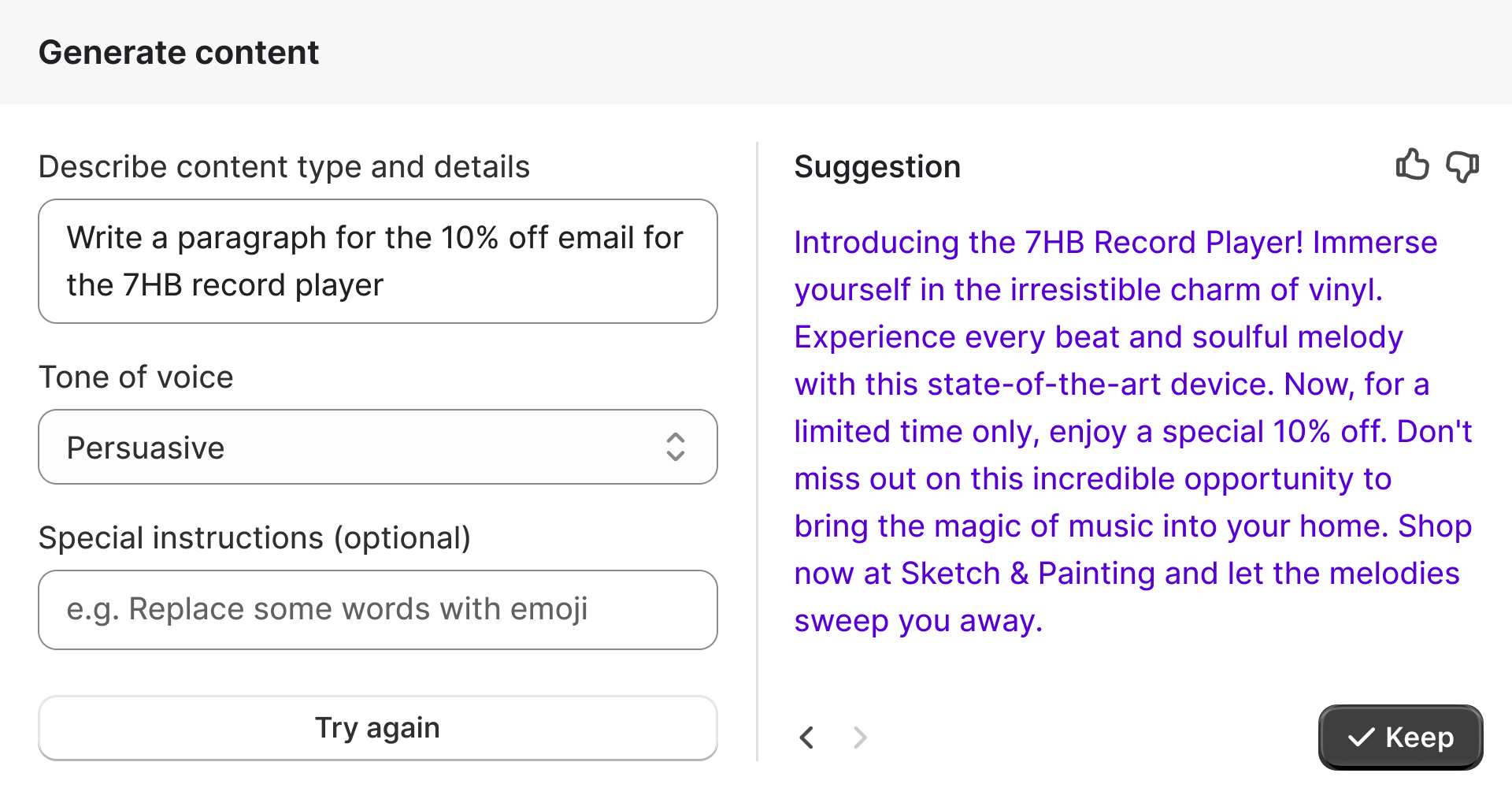
What it is. AI bundled free with every Shopify plan from $39 a month upward. Magic generates product descriptions, alt text, email subject lines, and AI-edited photography. Sidekick is a chat interface for store admin and analytics.
Use case. A merchant migrates 500 SKUs from Amazon to Shopify in three days using Magic's bulk description generator, eliminating an estimated $2,500 in copywriting fees. Day-to-day, Sidekick handles the queries the dashboard cannot answer in four clicks: "show me products with views above 100 and zero sales last week," "tag any customer over $300 lifetime spend as VIP," "draft a 10 percent off email to repeat buyers in the past 90 days."
Most beginners use Sidekick maybe twice in their first thirty days, which is the under-utilization story for the entire Shopify AI stack. The trap with Magic: accepting its first draft on every product reads identical to every other Shopify catalog that did the same. Editing one in three sentences breaks the pattern detectors.
Shopify plan map: where the AI sits
| Shopify Plan | Monthly Price | AI Capabilities Included |
|---|---|---|
| Basic | $39 | Full Magic suite, basic Sidekick chat |
| Shopify | $105 | Full Magic and Sidekick, lower transaction fees |
| Advanced | $399 | Same AI tools, custom reporting |
| Plus | $2,300+ | Same AI tools, B2B features, multi-storefront |
| Grow Plus (new) | Custom | Required to unlock Sidekick custom-app generation |
Source: Shopify; Talk Shop verification, January 2026.
Shopify versus WooCommerce versus Wix
| Dimension | Shopify Basic + Magic | WooCommerce + AI plugins | Wix Business + AI |
|---|---|---|---|
| Effective monthly cost | $39 plus 2.9% per sale | ~$25 (hosting + plugins) | $36 |
| Native AI integration | Bundled, no add-on fees | Plugin by plugin | Wix AI Site Builder, weak commerce |
| Best beginner fit | Default for serious sellers | Cheap but technical | Simple stores under $5K monthly |
User ratings
4.4 on G2 across 6,300+ reviews; 4.5 on Capterra across roughly 6,500 reviews. Merchant surveys put time savings at 5 to 10 hours per week, translating to $250 to $500 per week at typical owner-time valuations. The 2026 development worth tracking is Agentic Storefronts: orders from AI assistants like ChatGPT, Perplexity, and Microsoft Copilot grew roughly fifteenfold over twelve months on Shopify's Universal Commerce Protocol with Google. This only matters if the product feed is good. Sidekick falls flat on anything technical involving custom Liquid code; it gestures, it rarely fixes the bug.
Jasper

What it is. A premium AI writing platform built around brand-voice consistency, with native SurferSEO integration. Priced for marketing teams, not solo operators.
Use case. A small agency runs three contractor writers on one client's blog content. Tone drifts between writers, costing the editor hours of cleanup per week. Jasper's brand voice, trained on the client's existing content, locks the tone across all three writers and eliminates the drift. The $69 a month earns back inside the first week of saved editing.
Jasper solves a real problem, but it is not a beginner problem. One person writing for one brand has no voice-drift issue. ChatGPT Plus at $20 already does the work. The marketing implies a feature gap. The real gap is a team gap.
Jasper plans
| Tier | Annual (per month) | Monthly Billing | Practical Fit |
|---|---|---|---|
| Creator | $39 | $49 | 1 brand voice, 1 user, SurferSEO add-on |
| Pro | $59 | $69 | 3 brand voices, multi-seat, campaign workflows |
| Business | Custom (~$250+) | Negotiated | Unlimited brand voices, API, training, SSO |
Source: Jasper pricing page; DemandSage verification, January 2026.
Jasper versus ChatGPT Plus versus Copy.ai
| Dimension | Jasper Pro ($69) | ChatGPT Plus ($20) | Copy.ai Pro ($36) |
|---|---|---|---|
| Brand voice training | Yes, multiple voices | Manual prompting only | Limited single voice |
| SurferSEO native integration | Yes | No | No |
| Best beginner fit | Wrong fit until team forms | Default for solo writers | Cheaper Jasper alternative |
User ratings, and the split that tells the real story

The product is rated highly. The buying experience is rated hostile. Surprise trial-to-paid charges, refund disputes, and a "Pause Subscription" feature that several reviewers describe as revoking access immediately while continuing to bill drive most of the negative volume. Calendar reminders before any free trial expires are non-negotiable. The other failure mode worth flagging: hallucination in claims-sensitive verticals (supplements, finance, cybersecurity) inherits as legal risk because the output reads cleanly.
Printify
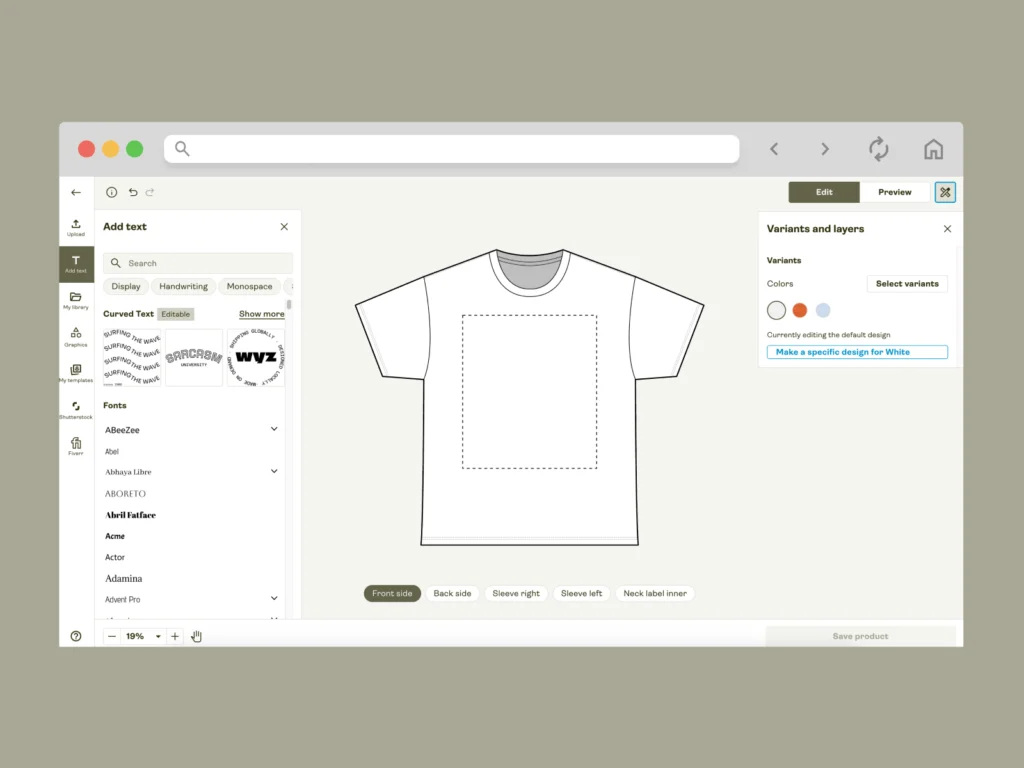
What it is. A print-on-demand marketplace connecting sellers to 100+ print providers across roughly 1,300 SKUs. Free plan is genuinely free, paid only on order. Premium gives a 20 percent discount on base costs.
Use case. A beginner with no design background tests five t-shirt graphics on Etsy, with Printify routing fulfillment automatically. Net profit lands $5 to $7 per shirt on Free and $10 to $15 on Premium. Three of the five designs flop; two find traction. The seller scales the survivors without ever holding inventory or paying upfront for stock.
The trade-off most starter guides skip: "Printify quality" is not one quality. The same SKU ships a 9 out of 10 print from Monster Digital and a 5 out of 10 print from a bottom-quartile fulfiller. Sampling providers before committing is the difference between repeat customers and refund threads.
Printify plans and the February 2026 hike
| Plan | Monthly Billing | Annual Billing | Break-even on the 20% Discount |
|---|---|---|---|
| Free | $0 | $0 | Suitable below 15 orders per month |
| Premium | $39 (raised Feb 17, 2026) | $24.99 ($299/yr) | About 17 monthly orders to recoup |
| Enterprise | Custom | Custom | High-volume sellers, dedicated support |
Source: Printify pricing page; EcommerceCEO verification, March 2026.
Printify versus Printful versus Gelato
| Dimension | Printify Premium | Printful | Gelato |
|---|---|---|---|
| Per t-shirt cost | ~$8 | ~$12 | ~$10 |
| Production model | 100+ providers, variance | In-house, consistent | Local fulfillment in 30+ countries |
| Best beginner fit | Margin priority | Quality consistency priority | International shipping priority |
Where the real margins land
| Seller Approach | Net Margin Range After All Costs | Margin Band | |||
|---|---|---|---|---|---|
| Auto-routed providers, default pricing |
| Tight | |||
| Curated providers, intentional pricing |
| Workable |
User ratings
4.8 on the Shopify App Store across many thousands of installs; 4.6 on G2 across roughly 2,400 reviews; around 4.4 on Trustpilot. Complaints cluster on provider-specific quality issues rather than the platform itself, which is consistent with the architecture: Printify is a sourcing marketplace, not a printer. Beginners who treat it as the latter blame the platform for outcomes that belong to the provider they picked.
How the five tools actually stack together
Three stack patterns dominate every successful beginner store on record. The first is service-business and digital-product friendly. The second is the e-commerce starter setup. The third is for content-led businesses that hire their first contractor. The cost step between them is steep, which is why most beginners should sit on the first stack until something specific forces an upgrade.
The three stacks beginners actually build

Component widths are proportional to monthly cost. Content-velocity is more than four times the cost of the kitchen-table stack and only earns its keep when a content team exists.
Where each tool sits for a beginner
| Easy Setup | Hard Setup | |
|---|---|---|
| High Beginner Necessity | ChatGPT and Canva Pro Day-one essentials. Combined cost about $35 per month. Roughly 70 percent of beginner workload sits here. | Shopify Magic and Sidekick Bundled free with any Shopify plan. Becomes essential the moment a storefront exists. Most beginners under-use it. |
| Low Beginner Necessity | Printify Easy to start, only relevant for print-on-demand. Real margins are tighter than the dropshipping pitch implies. | Jasper Solves multi-writer brand drift. A team-of-three problem at a team-of-three price. Solo beginners do not need it. |
Necessity is judged from the perspective of a first-time online business owner in 2026. Tools in the upper-left handle most of the workload; tools in the lower row are conditional buys.
The blunt summary
ChatGPT and Canva carry roughly 70 percent of a typical beginner's workload at a combined cost of $35 a month. Shopify Magic and Sidekick carry the rest if a storefront exists, and they are already bundled into the Shopify subscription most beginners have paid for anyway. Jasper is overkill for solo operators by a wide margin and usually only makes sense once there is a small content team and a clear need to coordinate multiple writers. Printify is excellent if the margin structure is understood in detail and brutal if “lowest risk” is mistaken for “highest return,” because thin margins compound fast when pricing and fulfillment aren’t tightly managed.
For most beginners in 2026, the real constraint isn’t budget; it is the ability to apply consistent, boring operational discipline to two or three tools they genuinely understand. That’s where having a structured learning environment matters more than adding yet another subscription. A platform like Timtis, which focuses on practical learning paths and tool-specific workflows, can quietly raise the ceiling on what you get out of ChatGPT, Canva, or Shopify without trying to sell itself as a “growth hack.” Used this way, Timtis becomes less of a “tool” in your stack and more of a reference layer that helps you squeeze real outcomes from the software you already pay for, before you even consider adding more line items to the monthly bill.
Comments