A direct answer first, because the search that brought you here deserves one. PromptChan AI is an uncensored NSFW image generator. None of the four tools below are. All four are mainstream, moderated platforms with content filters, and none will produce explicit material. They handle commercial and creative work properly, which is what this page is about.
The first AI image subscription I paid for was the wrong one. Not because the tool was bad, but because it was excellent at something other than what I needed. I had twenty product shots to make, each with legible copy on the packaging, and I had bought a tool that renders text like a sign painter having a stroke.
That is this category in miniature. These tools stopped competing on raw image quality once everybody started licensing everybody else's models. What separates them now is narrower: control after generation, who owns the output, subscription or meter, and what disappears when you cancel.
How the scores work
Each tool is rated out of five on the same five criteria. There is no overall winner, because the criteria pull against each other.
• Output quality. The ceiling, and how many attempts it takes to reach it.
• Control and editing. When an image is ninety percent right, can you fix the rest in the tool?
• Value for money. Not sticker price. What a realistic month costs.
• Rights and ownership. Who owns the output, especially on the free tier.
• Trust and billing. Refunds, cancellations, and whether customers feel fairly treated.
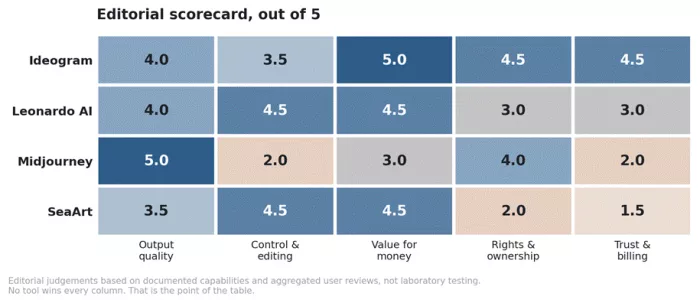
Read the columns, not the rows. Your job decides which column matters.
The sixty second answer
Find the row describing the job you are actually paid to do this month.
| If the job is | Use | Because |
|---|---|---|
| Illustration, concept art, moodboards, anything that must simply be beautiful | Midjourney | The highest aesthetic ceiling here. Also the least control. |
| Posters, ads, packaging, book covers, anything with words inside the image | Ideogram | The only model here that reliably spells. |
| A bit of everything, on a budget, with a free tier worth using | Leonardo AI | Broadest feature set per dollar. |
| Exploring hundreds of visual directions before committing | SeaArt | An enormous model library. Read the billing terms first. |
Midjourney
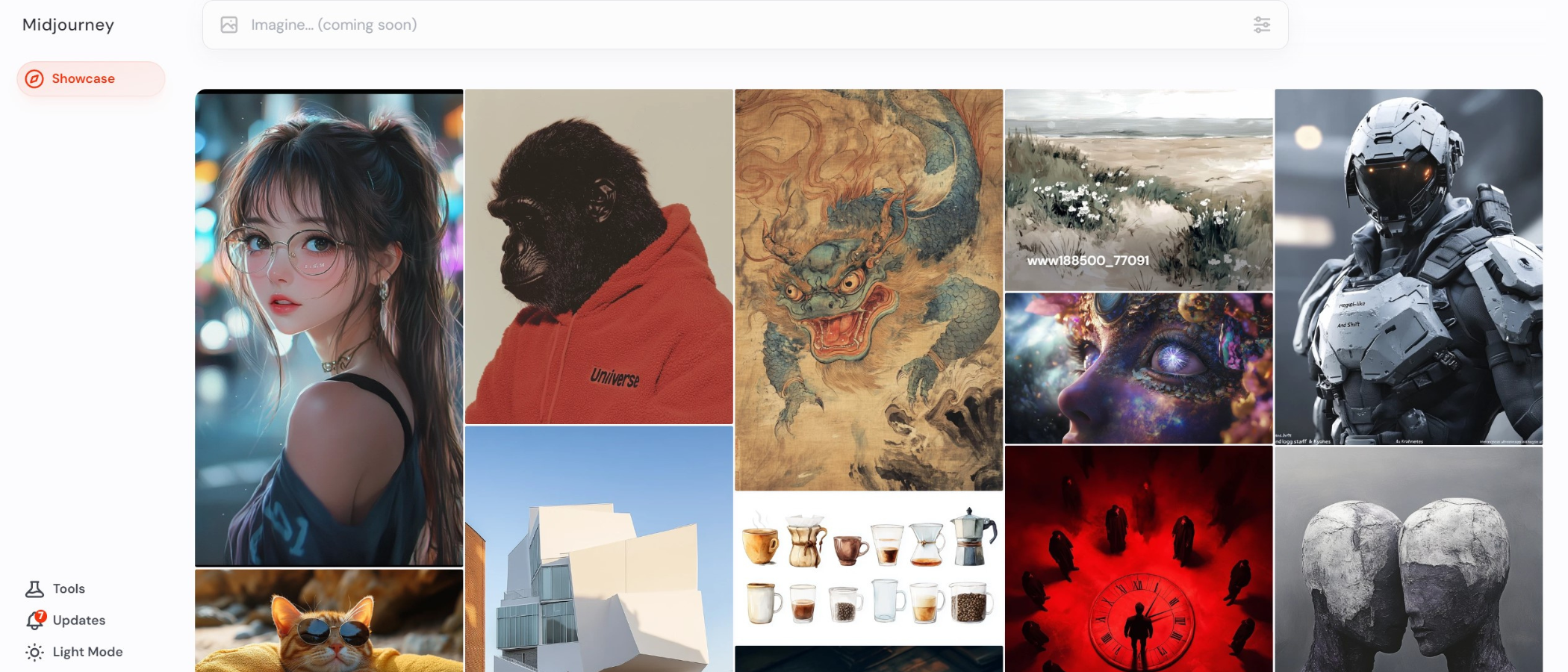
A self-funded research lab that happens to sell a subscription. No free tier, no advertising, no interest in being a design tool. It makes the most beautiful images in the category and gives you the least control over how it gets there.
Where it wins
• Aesthetic judgement. Other models look like stock photography. This looks art directed.
• Style consistency. Seeds and style references hold a look across a series.
• Niji mode. Anime runs on a dedicated model, not a preset.
Where it hurts
• No free tier. The trial ended in March 2023. Evaluating it costs ten dollars.
• You buy GPU time, not images. A still costs roughly one GPU minute. One HD video batch costs around twenty six.
• Text rendering is poor. Paired-prompt reviewers put accuracy near thirty percent, against roughly ninety for Ideogram.
• Privacy costs sixty dollars. Stealth Mode exists only on Pro and Mega. For client work your real entry price is sixty, not ten.
• The revenue rule. Companies above one million dollars in annual revenue must use Pro or Mega.
At a glance
| Detail | |
|---|---|
| Plans, monthly | Basic $10, Standard $30, Pro $60, Mega $120. Twenty percent off annually. |
| Fast GPU hours | 3.3 / 15 / 30 / 60. Extra hours around $4, and they do not expire. |
| Unlimited Relax | Images on Standard and up. SD video on Pro and up. Never HD video. |
| Free tier | None. |
| Commercial rights | All paid plans. Above $1M revenue, Pro or Mega is mandatory. |
| Best for | Illustration, concept art, editorial imagery, moodboards. |
Rating
| Criterion | Score | Why |
|---|---|---|
| Output quality | 5.0 | Nothing here matches its ceiling. Reddit and G2 practitioners are near unanimous. |
| Control and editing | 2.0 | Its answer to a nearly-right image is another image. |
| Value for money | 3.0 | No trial, privacy costs $60, and GPU hours never roll over. |
| Rights and ownership | 4.0 | Clear paid rights. Marked down because work is public unless you buy Pro. |
| Trust and billing | 2.0 | Refunds apply only under roughly twenty minutes lifetime usage. Support is thin. |
A scenario, and two tips
You are art directing a novel cover and need thirty directions, of which one survives. Standard gives fifteen fast hours, then unlimited Relax mode for variations. That Relax tier is why most people land on Standard.
1. Explore in Relax mode. Render finals in Fast mode.
2. Run /info before each session. Fast hours never roll over, so leftovers mean you overpaid.
What reviewers say
The most contradictory profile in the category. Trustpilot puts it near the bottom for refunds and support. Reddit and G2 call it the class leader. Both are true: Trustpilot collects billing grievances, Reddit collects craft.
Ideogram
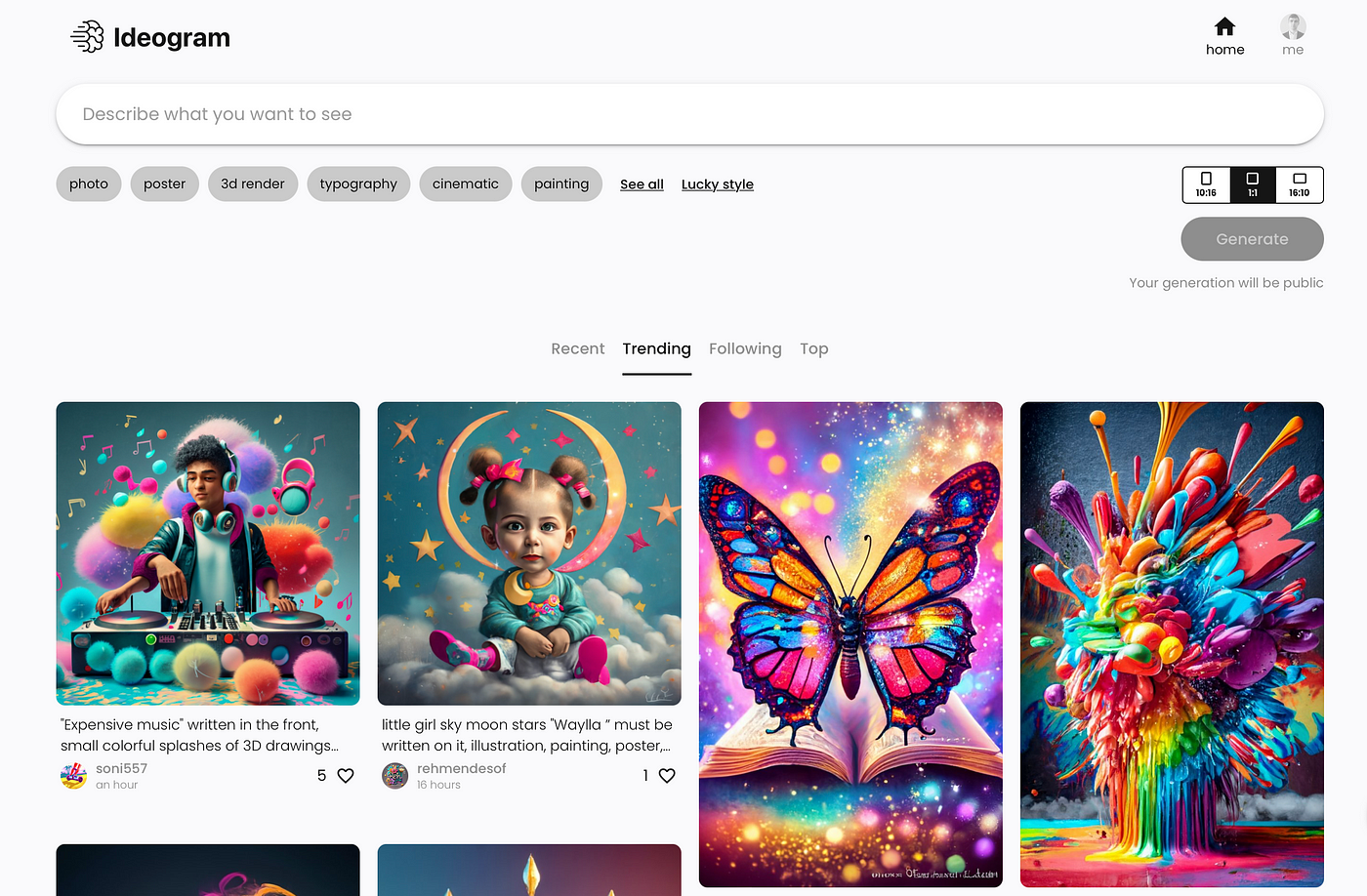
Founded in 2022 by four former Google Brain researchers, several of whom worked on Imagen, around one bet: AI image generators are terrible at rendering text, and whoever fixes that owns an underserved segment. It paid off.
Where it wins
• Text rendering, by a wide margin. Reviewers report around ninety percent accuracy on short embedded text, against roughly thirty for Midjourney.
• Price. Plus costs half of Midjourney Standard, and private generation costs far less than Stealth Mode.
• A free tier with no watermark. Ten prompts daily and a slow queue, but the output is clean and yours.
• Layerize Text and native transparency. Typography becomes adjustable layers, and version 4.0 generates transparent backgrounds directly.
Where it hurts
• The text advantage has a ceiling. It nails one to four words nine times in ten, but loses letters above fifteen. The practical limit is near sixty characters.
• Magic Prompt is a liability. It rewrites your prompt and swaps specific terms for adjacent ones. Harmful when you know what you want.
• Photorealism lags Midjourney. Very good, not exceptional. You can usually tell.
• Guardrails misfire. Benign prompts get rejected as unsafe, and the failed generation still costs credits.
At a glance
| Detail | |
|---|---|
| Plans, monthly | Free, Basic around $8, Plus around $20, Pro around $48. Annually about $7, $15 and $42. |
| Free tier | About ten prompts daily, four images each, slow queue, public, no watermark. |
| Credit model | Slow generations unlimited on paid tiers. Priority generations are metered. |
| API | Roughly $0.06 per image. |
| Standouts | Text accuracy, Layerize Text, native transparency, style codes, CSV batch. |
| Best for | Posters, packaging, ads, book covers, social headers, logo concepts. |
Rating
| Criterion | Score | Why |
|---|---|---|
| Output quality | 4.0 | Excellent at design and typography. Photorealism trails Midjourney. |
| Control and editing | 3.5 | Layerize Text and Magic Fill help. The canvas does not replace Photoshop. |
| Value for money | 5.0 | The cheapest serious tool here, with a no-watermark free tier. |
| Rights and ownership | 4.5 | Private mode on paid plans. No ownership grab on the free tier. |
| Trust and billing | 4.5 | The absence of billing anger is a real competitive advantage. |
A scenario, and three tips
You make fifteen social graphics a week, each with a headline in the image. In Midjourney you generate a background, export, and set type in Figma. In Ideogram you generate the finished asset.
1. Put the exact text inside straight quotation marks. Quoted strings are treated as literal tokens.
2. Name a real typographic style. Bauhaus geometric sans works. Modern and clean do not.
3. Turn Magic Prompt off for final renders.
What reviewers say
Sentiment is unusually consistent, which is itself a signal. Practitioners switch from Midjourney over price and text. Complaints cluster tightly: queue waits, credit confusion, no Android app.
Leonardo AI

The generalist: images, video, in-tool editing, custom model training and an API, behind a web interface that needs no Discord. New to the category? Start here.
Where it wins
• A free tier that is actually usable. 150 tokens daily, roughly twenty five images, no credit card.
• Breadth. Custom model training, character consistency, posing controls, video and API, at Midjourney prices.
• Token rollover. Premium tiers bank unused tokens. Valuable if your workload is lumpy.
• Relaxed generation. When the pool empties on Premium and above, you keep generating at lower priority.
Where it hurts
• The free tier owns your work. Free generations are public, and Leonardo retains broad rights to reproduce and distribute them.
• Moderation is the top complaint. Professional prompts fail with vague safety errors and no indication of the trigger. One reviewer claims roughly seventy five percent rejected.
• Plan names changed. Apprentice, Artisan and Maestro are gone. It is now Free, Essential, Premium and Ultimate. Guides using old names are stale.
• Downgrades bite. Upgrades apply instantly, downgrades wait for cycle end, and users report losing accumulated tokens on cancellation.
At a glance
| Detail | |
|---|---|
| Plans, monthly | Free, Essential $12, Premium $30, Ultimate $60, plus Team and API. Twenty percent off annually. |
| Free tier | 150 fast tokens daily, no rollover, public generations, Leonardo holds the rights. |
| Token behaviour | Cost varies by model and quality. Premium banks unused tokens. Top-up packs need an active subscription. |
| Commercial rights | Paid subscribers retain full ownership. Free users grant a broad licence. |
| Standouts | Custom model training, video models, in-browser editor, API. |
| Best for | Freelancers, indie game developers, anyone wanting one tool for most jobs. |
Rating
| Criterion | Score | Why |
|---|---|---|
| Output quality | 4.0 | Consistently strong. Rarely the most beautiful result, rarely a bad one. |
| Control and editing | 4.5 | Model training, character consistency and a real in-browser editor. Best control here. |
| Value for money | 4.5 | Most feature per dollar, plus rollover. Heavy features drain tokens fast. |
| Rights and ownership | 3.0 | Paid ownership is clean. The free tier licence is the most consequential clause here. |
| Trust and billing | 3.0 | Support is praised. Opaque moderation and token loss on cancellation pull it down. |
A scenario, and three tips
You are an indie developer building twelve characters who must look identical across dozens of poses. Model training plus character consistency gets you there with no local GPU, and Premium's rollover means a quiet November subsidises a busy December.
1. Never generate anything commercially sensitive on the free tier. Upgrade first.
2. Essential allows one training run per month. Prepare reference images carefully.
3. Time your downgrade. It takes effect at cycle end, not immediately.
What reviewers say, and how to read it
Leonardo's Trustpilot aggregate sits between 4.1 and 4.5 across a thousand plus reviews, which looks healthy. But an independent analysis of a hundred-review sample found seventy seven were about support tickets, and eighty six percent of positive reviews named an individual agent. That is review solicitation. The score measures support, not product.
SeaArt
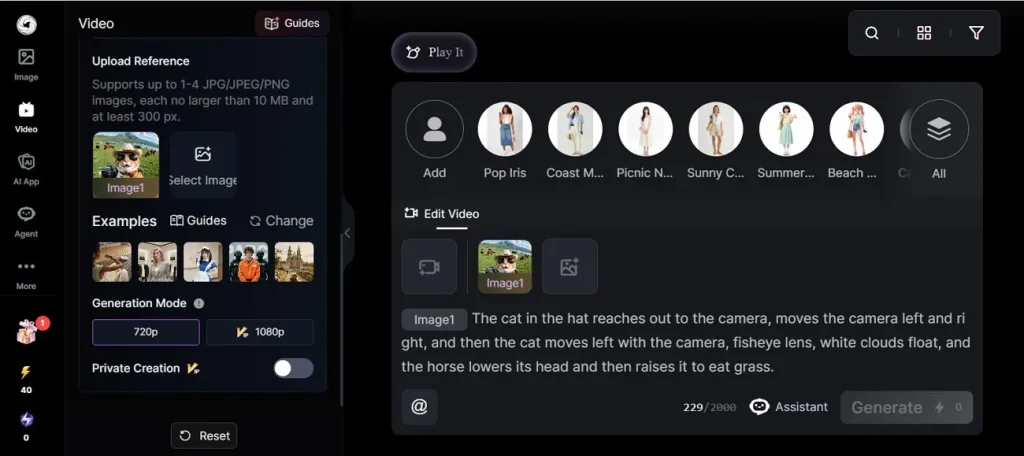
The biggest model buffet in the category, and this section is less flattering than most reviews you will read. Hundreds of thousands of community models, cloud ComfyUI, LoRA training, video. To explore rather than to produce one polished asset, nothing comes close.
Where it wins
• Model breadth. Reported at 200,000 to over a million community models. Far ahead of the rest.
• Cloud ComfyUI, free. If you have fought dependency conflicts and VRAM limits locally, this is the best feature here.
• A usable free tier, no card required. Around 130 to 150 daily stamina, roughly twenty images.
• Low-cost LoRA training. Twenty to thirty reference images, below what competitors want.
Where it hurts, and this matters
• Billing complaints are consistent and specific. Reviewers describe a three day trial, a full annual charge before it ends, and a templated refund refusal. SeaArt's own docs advise cancelling a day early because charges may process ahead of schedule.
• The star rating is unstable. Sources months apart report its Trustpilot score as 1.9 and as 4.3, both citing hundreds of reviews. That volatility is itself the finding.
• Model sourcing is unresolved. SeaArt has been publicly accused of copying models from Civitai and showing fabricated engagement statistics on the copied pages.
• Moderation consumes credits. Blocked generations still burn stamina. This appears in positive and negative reviews alike.
• Third-party trackers. Reviewers have flagged data going to TikTok and Yandex.
At a glance
| Detail | |
|---|---|
| Plans | Free, then paid tiers reported from around $5.99 up to $149.99 for Master. Annual billing is charged in full, up front. |
| Credit model | Daily stamina that does not roll over, plus purchasable credits that do. |
| Free tier | Around 130 to 150 stamina daily. Watermarked, placed to resist cropping. |
| Commercial rights | Vary by tier. SeaArt's own FAQ and Terms are reported not to agree. |
| Standouts | Model library, cloud ComfyUI, LoRA training, video, real-time canvas. |
| Best for | Exploration, anime and stylised work, hobbyists learning to prompt. |
Rating
| Criterion | Score | Why |
|---|---|---|
| Output quality | 3.5 | Heavily model dependent. Defaults are average. Good results require picking the right community model. |
| Control and editing | 4.5 | Cloud ComfyUI, LoRA training and ControlNet. Technically the deepest platform here. |
| Value for money | 4.5 | A real free tier and paid plans from around $5.99. Unmatched capability per dollar. |
| Rights and ownership | 2.0 | Terms vary by tier, and the platform's own documents are reported not to agree. |
| Trust and billing | 1.5 | Auto-renewal and refused-refund complaints, sourcing allegations, trackers. |
If you use SeaArt 1. Start on the free tier. It needs no payment details. 2. Find the cancellation path on day one, not the day before renewal. 3. Assume annual billing is the default, and screenshot what you bought. 4. Export prompts and assets locally. |
The fair verdict
A powerful generation engine attached to a billing operation many customers call predatory. Those facts do not cancel out. On the free tier it is the best value here. With a card on file it carries a risk Midjourney does not.
All four, compared
Four tables, four questions. Together they usually make the choice for you.
The overview
| Tool | Best at | Entry | Free tier | Verdict |
|---|---|---|---|---|
| Midjourney | Aesthetic quality | $10 | None | Beautiful, rigid, expensive |
| Ideogram | Text inside images | About $8 | 10 prompts daily, no watermark | Cheap, honest, specialised |
| Leonardo AI | Doing everything well | $12 | 150 tokens daily, about 25 images | Broad, controllable, opaque |
| SeaArt | Model variety | About $6 | About 150 stamina, watermarked | Powerful, deep, untrustworthy |
Who owns what
Take one table from this article and make it this one. The free-to-paid gap is larger than any gap in image quality.
| Tool | Free tier | Paid plan | The catch |
|---|---|---|---|
| Midjourney | None exists | Full commercial rights | Images are public unless you pay $60 for Stealth Mode. Above $1M revenue, Pro or Mega. |
| Ideogram | Public, no watermark, images are yours | Private mode included | The most generous free policy here. Very little to watch. |
| Leonardo AI | Public. Leonardo may use, change and share your images | You retain full ownership | Users report tokens vanishing on cancellation or downgrade. |
| SeaArt | Watermarked, and it resists cropping | Varies by tier | SeaArt's own FAQ and Terms reportedly disagree. Get rights in writing. |
One caveat that applies to all four Under current United States guidance, purely AI-generated work is not copyrightable, because copyright requires human authorship. Owning the file and holding a copyright in it are different things. Take proper legal advice for your situation. |
How the meter runs
Three billing shapes, not comparable. Knowing which one you are on beats a twenty percent annual discount.
| Tool | Meter type | What drains it fastest | Rollover | Wrong for |
|---|---|---|---|---|
| Midjourney | GPU compute time | High quality settings. One HD video batch equals about twenty six stills. | No | Anyone needing a known image count |
| Ideogram | Priority credits, unlimited slow queue | Priority generations and upscales. Rejected prompts still cost credits. | No | Nobody, really |
| Leonardo AI | Monthly token pool | Premium models and refiners can triple per-image cost. | Yes, Premium and up | Anyone who cancels often |
| SeaArt | Daily stamina | High resolution and video. Blocked generations burn stamina for nothing. | No, expires daily | Anyone working in weekend bursts |
The only credit rule that reliably saves money If you buy top-up credits more than once a month, you are on the wrong tier. Upgrading is almost always cheaper per credit. If you end two months with a third of your allowance unused, downgrade. Most downgrades take effect only at cycle end. |
What reviewers actually say
Aggregating star ratings here produces nonsense. Trustpilot collects billing surprises. Reddit collects craft arguments.
| Tool | Reported ratings | Praised for | Criticised for | How to read it |
|---|---|---|---|---|
| Midjourney | Bottom on Trustpilot. Class leader on Reddit and G2. | Output quality, prompt adherence, aesthetic | Refund policy, thin support, no trial | Believe practitioners on quality, complaints on billing. |
| Ideogram | No large aggregate. Sentiment consistently positive. | Text rendering, price, free tier | Queue waits, credit confusion, no Android app | The most trustworthy profile here. |
| Leonardo AI | 4.1 to 4.5 on Trustpilot, 1,200 plus reviews. 4.5 on G2. | Support, feature breadth, free tier | Opaque moderation, tokens lost on cancellation | Support-solicited. Read the one star reviews. |
| SeaArt | Reported as 1.9 and as 4.3 within months. | Free credits, model library | Auto-renewal, refused refunds, trackers, sourcing | Treat any single number as unreliable. |
How to read any AI tool's reviews
1. Sort by one star and read twenty. Repeated billing stories are a process, not bad luck.
2. If most positive reviews name a support agent, the score measures support, not product.
What these four do not cover None indemnifies you. If a generated image draws a copyright claim, that is your problem. Adobe Firefly offers IP indemnification on paid plans. None outputs true vectors. For logos and icons that must scale, Recraft generates editable SVG. |
Five mistakes that cost people money
1. Choosing on sticker price. What you spend depends on how fast your workflow burns credits.
2. Generating anything valuable on a free tier. On Leonardo that is a different legal arrangement, not a smaller product.
3. Buying the top tier first. Upper tiers buy privacy and volume, not better images.
4. Topping up instead of upgrading. Top-up credits cost more per credit.
5. Trusting an undated comparison. Leonardo renamed its tiers. SeaArt's rating swung wildly in one quarter.
The final verdict
If you want one recommendation rather than four, start with Ideogram. It is the cheapest serious tool here, its free tier does not quietly take your rights, and its single real weakness, photorealism, is the easiest of any weakness on this page to work around. Add Midjourney the month a client tells you the images look correct but not good, because that is precisely the gap it fills and nothing else fills it. Add Leonardo when you need the same face twice. Treat SeaArt as a sandbox rather than a supplier: brilliant for learning, unwise for anything with a deadline or a card on file.
Switching costs far less than staying on the wrong tool. These are monthly subscriptions with free tiers and no real lock-in. The prompt library transfers. The eye you developed transfers. So take the sixty second table, pick your row, and run the same five prompts through two of them. You will know within an hour.
And whichever you choose, read the free tier's terms before you generate anything you would hate to see in a public gallery. That is the one mistake here you cannot undo.
Last verified: July 2026. Pricing and plan names change frequently. Confirm every figure on the vendor's own pricing page before purchase.
Comments