Table of Contents
Spend a few weeks feeding real coursework into ChatGPT, Gemini, or Claude, and one truth lands fast: the tool almost never decides whether you cheated. What you hand in does. Ask a model to re-explain a confusing proof at midnight and it behaves like a patient tutor. Paste that same model’s paragraphs into a graded essay and submit them as original work, and the exact same conversation turns into misconduct. The distance between those two moments is the entire subject here.
Most students worry about the wrong thing. They ask whether using AI “counts” as cheating, as if the app ships with a built-in verdict. Universities in 2026 are far more precise than that. They care about three things: who actually did the work, whether the assignment allowed AI, and whether you said so. Each one is written into real policies. The line is genuine, it is easy to step over by accident, and after enough time inside these tools it stops feeling blurry.
The one-sentence rule
Using AI to understand material is studying. Using AI to produce work that gets graded as yours, when the brief did not allow it or you never disclosed it, is cheating.
The line sits at what gets graded, not which app you opened
Scan the updated policies at Oxford, Harvard, MIT, and the long list of US universities that rewrote their rules after 2023, and they converge on the same two ideas: the submitted work has to be authored by you, and any AI help has to be declared when the course requires it. No mainstream policy bans you from opening ChatGPT to revise for an exam. Plenty of them will discipline you for submitting its output.

That reframes the whole question. Stop asking “is this tool allowed” and start asking “what level of AI does this specific task allow.” Many departments now run some version of an AI assessment scale, where each assignment is tagged somewhere between no AI at all and full AI exploration. The setting is chosen per assignment, not per campus, which is why the same tool can be fine in one unit and a violation in the next.
Here is where common study moves actually fall.
| What you are doing | Where it lands | Why |
| Asking AI to re-explain a concept, quiz you, or react to a draft you wrote | Green | You still do the thinking and the writing |
| Generating practice questions or a revision timetable | Green | Nothing graded comes out of the model |
| Running sources through a paraphraser, or letting grammar software rewrite whole sentences | Amber | Useful as a check, risky once it writes meaning for you. Declare it |
| Letting AI build your outline or draft your thesis statement | Amber | Allowed in some courses with disclosure, banned in others |
| Submitting AI text as your own work | Red | Authorship fraud under almost every policy |
| Using AI on a task marked “No AI” | Red | A breach of a stated condition, whatever you used it for |
| Letting AI invent citations, quotes, or data | Red | Fabrication, treated the same as making up sources by hand |
Green moves are safe at nearly every institution, including while you prepare for the stricter assessments. Red moves are misconduct almost everywhere, no matter how the rest of the policy reads. Amber is where careful students get caught, because the status depends entirely on the assignment in front of them.
What real 2026 policies actually say
Policies stopped being “ChatGPT is banned” a while ago. The current wording is more specific, and reading a few side by side makes the pattern obvious.
| Institution (2026) | Where it draws the line |
| Cal Poly, San Luis Obispo | Updated its cheating and plagiarism policy in July 2026 so that using AI output in submitted work is judged by the same standard as using another person’s work. Any AI use in a submission has to be disclosed |
| Georgia Tech (course-level policy) | No full drafts produced by AI, and no using AI to summarize assigned readings instead of reading them. Finding a topic and checking subject-verb agreement are fine, and every AI use must be noted in the submission |
| Regis University | Three settings applied per assignment: allowed broadly with citation, mixed depending on the task, or restricted to specific stated uses |
| University at Buffalo | A Turnitin AI-detection report on its own is not treated as enough to prove unauthorized AI use |
| University of Michigan | Detector probability scores cannot stand as definitive proof that a student cheated |
Two things jump out. First, disclosure keeps showing up as the deciding factor. Several schools now ask you to add a short note stating which tools you used and how, and they are explicit that doing this works in your favor when AI was permitted. Second, the institutions that have thought hardest about enforcement are also the ones warning their own staff not to treat a detector score as a conviction. That tension matters, and it comes up again below.
The gray moves that quietly become cheating
Nobody plans to commit academic misconduct. They plan to “just clean this up” or “just check my understanding,” and then the help keeps creeping until the submitted work is not really theirs. These are the moves that do the creeping.
The paraphraser that rewrites your meaning

Pasting a source into a paraphrasing tool to see a plainer version is a study aid. Pasting your own rough sentences in and submitting whatever comes back is a problem, because the phrasing on the page is no longer your own. Some strict policies classify heavy paraphrasing tools as prohibited outright.
The grammar check that turns into a ghostwrite
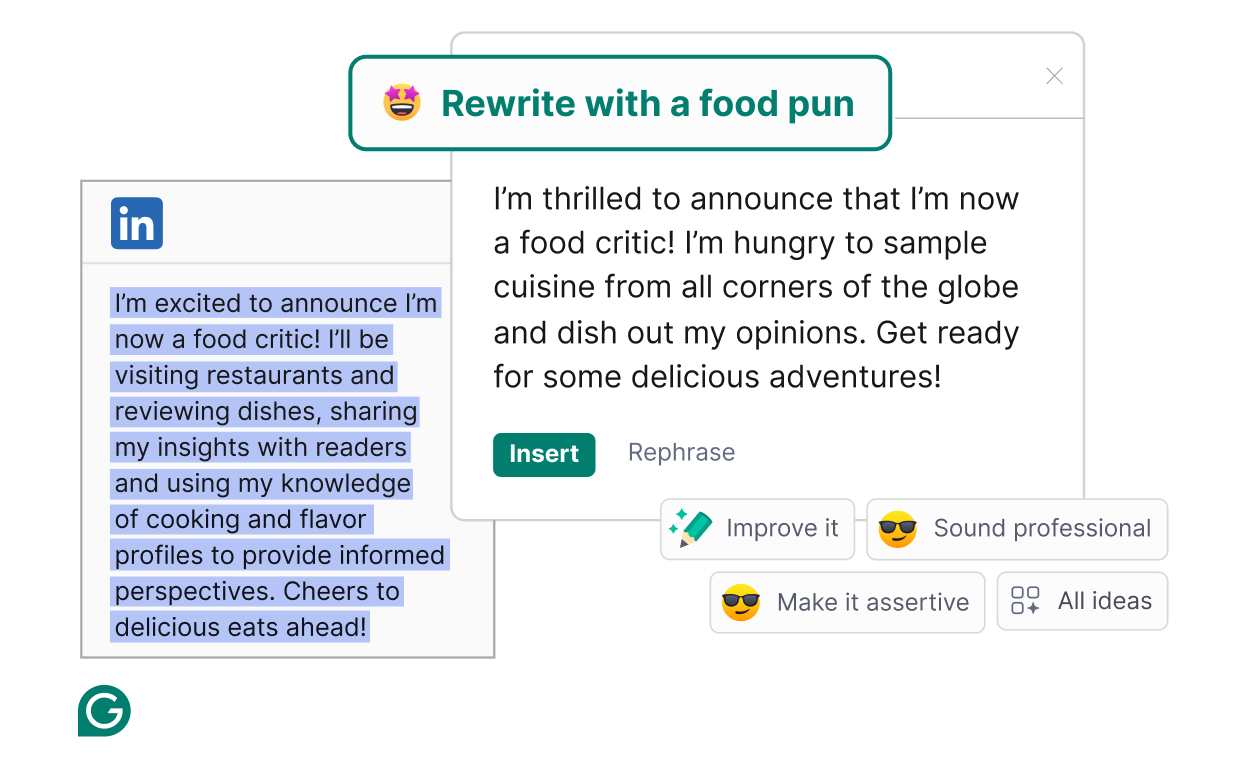
Fixing subject-verb agreement or a comma splice with Grammarly is fine almost everywhere. Letting the same tool rewrite entire paragraphs is the thing many syllabi specifically forbid. Language, translation, and composition courses are stricter still, because the sentence mechanics are the exact skill being graded.
The summary that replaces the reading
Asking AI to condense your assigned chapters so you can skip them is banned by name at some institutions. It also quietly removes the comprehension the assignment was built to test.
The “90% AI, 10% you” essay
Generating a draft and then changing a few words is treated as ghostwriting, not editing. The intellectual work still came from the model, and that is what the authorship rule is about.
The invented source
Models fabricate citations that look real, complete with plausible authors and page numbers. Submitting them is fabrication, and it is one of the fastest ways to turn a small shortcut into a serious case, because a single dead reference is easy for a grader to verify.
The forbidden-zone slip
On any task declared no-AI, using it at all is a breach of a stated condition. The policy does not care whether you used it to brainstorm or to write the whole thing. The condition was the line.
The disclosure habit that keeps you safe
The students who never have an awkward conversation about this tend to share a few plain habits, and none of them require avoiding AI.
Keep your process. Draft inside a tool with version history, such as Google Docs, so your writing has a visible trail. When a question ever comes up, an hour-by-hour history of a draft growing is the single strongest thing you can show.
Declare it when it was allowed. Most courses that permit AI want a short acknowledgment of which tool you used and for what. There is now an APA-style format for citing generative AI if you need one. A one-line statement costs nothing and reads as integrity, not guilt.
Verify every fact before it lands in your work. Treat anything the model states as a lead, then confirm it against a real source and cite that source, not the chatbot.
Ask before you submit, not after. When the brief is silent or vague, a two-minute email to the instructor settles it. Checking first is a normal question. Explaining afterward is a disciplinary meeting.
About detectors, and why a flag is not a conviction
A lot of the fear around AI and studying comes from detectors, so it helps to see what they actually do and do not prove.
Detectors output a probability, not a fact. They improved through 2025 and 2026, and they are genuinely good at catching raw, unedited AI text. They are far shakier on everything else, which is why several universities pulled back on them.
| Detector | What vendors claim | What independent testing tends to find |
| Turnitin | Under 1% false positives | Roughly 4% at the sentence level, with scores below 20% hidden because they are unreliable. More false flags on non-native English writing |
| GPTZero | Around 99% accuracy at a 1% threshold | Independent 2026 tests put real-world false positives closer to 8 to 12%, and higher on short pieces |
| ZeroGPT and free tools | Marketed as accurate | Reported false positive rates near 20%, high enough to be reckless for grading |
The real-world cost of those error rates is not abstract. Vanderbilt turned off Turnitin’s AI detection back in August 2023 after running the math: even a 1% false positive rate across its roughly 75,000 annual submissions would mislabel about 750 students a year. Northwestern and Michigan State stepped away for the same reason. The burden also falls unevenly. One study found non-native English essays were wrongly flagged at an average rate above 60%, and Common Sense Media reported detectors misfiring on about 20% of work from Black students against roughly 7% from White students.

The cases that reach the news show both sides of the risk. A doctoral student at the University of Minnesota was expelled after a misconduct process that cited GPTZero among its evidence, and he denied using AI at all. Running the other direction, a New York court in January 2026 annulled an academic-integrity finding at Adelphi University, pointing to problems in how the university handled the evidence and the appeal. The takeaway is not that detectors are useless or that flags never stick. It is that a number from a tool is a starting point for a human review, and most serious policies now say so in writing. If AI use really is forbidden on a task, that is the reason to stay off it, not the detector.
A workflow that keeps AI on the study side
Put all of it together and a simple routine keeps the help honest without making AI off-limits.
Learn first, generate never. Use the model to explain, test, and pressure-check what you know. Keep it away from the artifact that actually gets marked.
Think out loud, then answer in your words. Have AI quiz you, then write the answer yourself before checking it. The gap between those two is the part you were supposed to learn.
Write the draft, then ask for reactions. Feedback on your own paragraphs is fair game in most courses. Handing over blank space for the model to fill is not.
Treat facts as leads. Confirm and cite the real source every time.
Disclose by default. When AI was allowed, say how you used it.
Run that loop for a term and something clicks: the same habit that protects your record is also the one that makes the learning stick, because you did the reps the tool could have skipped for you.
The verdict
After enough late nights with these tools, the conclusion is almost dull: the honest way to use AI for studying and the effective way to use it are the same way. These models are remarkable tutors and poor ghostwriters, not because the writing is bad, but because the moment you let them produce the graded work, you stop learning the material and you hand your record to a policy and a detector you do not control. Keep AI on the explaining side of the line, declare it whenever the course asks, and hold on to your own drafts. Do that and the question of whether you crossed the line never has to be asked, because the work on the page is probably yours.
Comments