Table of Contents
- What Research Says About Studying With AI
- Why AI Study Sessions Feel Better Than They Are
- Where AI Helps and Where It Quietly Hurts
- How to Use AI to Study: 7 Workflows That Keep the Learning
- ChatGPT Study Mode vs Claude Learning vs Gemini Guided Learning
- Pros and Cons of Using AI to Study
- Warning Signs That AI Is Doing the Learning
- A 60-Minute Study Session That Uses AI Properly
- Final Verdict
Most students who open a chatbot the night before a deadline are not trying to cheat. They are stuck on question four, it is past midnight, and a full solution sits one prompt away. The cost shows up a week later in an exam room with no laptop, when the method that looked so clear on screen will not come back.
This guide was built the slow way. Over about a month, the same coursework (a calculus problem set, a cell biology chapter and a dense history reading) went through ChatGPT's Study Mode, Claude's Learning style and Gemini's Guided Learning, plus a few dedicated study apps. Some sessions used the tools as tutors. Others used them lazily: paste the question, copy the answer, move on. The lazy sessions felt productive and left almost nothing behind by the next morning. The tutor sessions were slower, sometimes irritating, and far more likely to stick.
That pattern is not one tester's hunch. It matches what controlled studies have found since 2024. Below is that evidence, the habits that protect real learning, and prompts that make AI act like a coach instead of an answer key.

The short answer Attempt every problem honestly before asking AI anything. Then use it to hint, quiz and check, never to solve. Keep a tutor mode switched on, spread reviews across several days, and end each session with a short recall test while the chat is closed. |
17% lower scores once unrestricted GPT-4 access was removed (PNAS, 2025) | 2x+ median learning gains from a purpose-built AI physics tutor (Harvard, 2025) | 61% vs 40% one-week recall for self-testing versus rereading (2006) | 47% of student chats with Claude sought answers with minimal engagement (Anthropic, 2025) |
What Research Says About Studying With AI
Most advice on this topic is opinion. The useful news is that solid studies now exist, and they point the same way: how AI is used matters far more than whether it is used.
| Study | Who | Finding | Takeaway |
|---|---|---|---|
| Bastani et al., PNAS (2025) | Nearly 1,000 high school math students | Unrestricted GPT-4 lifted practice grades by 48%. Once it was removed, those students scored 17% below peers who never had it. A guarded "GPT Tutor" version largely avoided the drop. | Answers on demand inflate practice and hollow out exams. |
| Kestin et al., Scientific Reports (2025) | 194 Harvard intro physics students | A custom AI tutor more than doubled median learning gains compared with an active-learning class, in 49 minutes instead of 60. | AI designed to teach can beat strong classroom methods, at least short term. |
| Roediger & Karpicke (2006) | University students learning prose passages | A week later, self-testers recalled 61% against 40% for rereaders, despite reading the text 3.4 times versus 14.2. | Quizzing beats rereading. |
| Dunlosky et al. review (2013) | Ten common study techniques | Practice testing and spaced practice rated "high utility." Highlighting, rereading and summarizing rated low. | AI summaries land in the low bucket. |
| Kosmyna et al., MIT Media Lab (2025) | 54 adults writing essays under EEG | 83% of the ChatGPT group could not quote a sentence from the essay they had just written, against about 11% in the other groups. | Work the AI produces often never gets encoded. |
| The MIT paper is a small preprint, and its authors publicly objected to headlines claiming ChatGPT causes "brain rot." Treat it as an early signal, not a final word. |
Why AI Study Sessions Feel Better Than They Are
The Roediger and Karpicke experiment hides a detail that matters here. Five minutes after studying, rereaders actually scored higher than self-testers, 81% to 75%. The testing group only pulled ahead on the delayed test. Easy study wins the moment and loses the week.
A clean AI explanation is the easiest study there is. Each step looks obvious once it is laid out, and that feeling of "yes, that makes sense" is easily confused with being able to do it alone. Learning researchers call this an illusion of fluency, and chatbots produce it on demand.
| Confidence feeds the trap. A 2025 Microsoft Research and Carnegie Mellon survey of 319 knowledge workers found that higher trust in AI went with less critical thinking, while higher self-confidence went with more. |
Usage data shows how common the shortcut is. Anthropic's 2025 review of 574,740 education-related Claude conversations classed roughly 47% as Direct: the student wanted an answer or finished content with minimal back-and-forth.
Where AI Helps and Where It Quietly Hurts
A quick way to sort any AI request: does it ask the student to produce something, or does it produce it for them?
| Good use of AI | Use that skips the learning |
|---|---|
| Writing practice questions from class notes | Answering graded homework |
| One hint after a genuine attempt | Solving a problem before trying it |
| Re-explaining a concept the textbook made confusing | Summarizing a reading that was never read |
| Spotting the step where a finished solution broke | Drafting an essay meant to build an argument |
| Planning a spaced review calendar | Replacing class notes entirely |
How to Use AI to Study: 7 Workflows That Keep the Learning
Each workflow includes a prompt that can be pasted as written. They share one rule: the student produces something first, and the AI responds to it.
1. Attempt first, then ask for one hintGive every problem at least five honest minutes before opening the chat. When stuck, paste the problem and the attempt, and ask for the next nudge only. Prompt Act as a tutor, not a solver. Here is the problem and the work so far: [paste]. Do not give the answer or the full method. Point to the first step that goes wrong and give one hint. Wait for a reply before the next hint. Why it works: This mirrors the GPT Tutor setup in the Bastani study: the same model, prompted to guide rather than hand over answers. |
2. Turn class notes into a recall quizRereading feels productive and does little. Pulling facts out of memory feels harder and works. AI removes the chore of writing the questions. Prompt Using only the notes below, ask 8 short-answer questions one at a time. Wait for each answer, mark it, and explain any mistake in two sentences. Save the hardest three for last. Notes: [paste] Why it works: This is the retrieval practice behind the 61% versus 40% result. |
3. Explain it back, then get gradedAfter finishing a topic, write an explanation from memory as if teaching a younger student. Then hand it over for marking, not rewriting. Prompt Below is an explanation of [concept] written from memory. Grade it out of 10 like a strict examiner. List what is missing or wrong. Do not rewrite it. Why it works: Self-explanation earned a moderate rating in the Dunlosky review, and writing it personally sidesteps the recall gap seen in the MIT study. |
4. Spread reviews across daysOne long night of AI-assisted cramming delivers the five-minute advantage and the one-week collapse. Spacing fixes that. Students who would rather not manage a calendar can use an app built around flashcards that resurface on a spaced schedule, editing the generated cards for accuracy. Prompt The exam is on [date]. Topics: [list]. Build a calendar that brings each topic back at growing gaps (1, 3, 7 and 14 days) using short recall quizzes, not rereading. Why it works: Distributed practice is one of only two techniques rated high utility by Dunlosky's team. |
5. Ask for mixed problem setsTextbook exercise blocks reveal the method before the first problem. Mixed sets force the harder, exam-style decision: which method fits this one? Prompt Write 10 problems mixing [chain rule, product rule, quotient rule] in random order. Do not label the method. Give answers only after all 10 are submitted. Why it works: Interleaved practice received a moderate rating in the same 2013 review. |
6. Check finished work, not unfinished workComparing a completed attempt with a worked solution is efficient, provided the attempt comes first. A step-by-step homework solver such as Gauth makes line-by-line comparison quick, though its answers can still be wrong on harder problems, so disagreements deserve a second source. Prompt Here is a completed solution: [paste]. Do not solve the problem. Say whether the final answer is correct and, if not, name the first step where it goes wrong. Why it works: Feedback needs an attempt to work on. Without one, there is nothing to learn from. |
7. Keep practice tied to the real courseChatbots drift toward generic textbook questions. Uploading the actual slides keeps quizzes aligned with the lecturer's exam. Apps such as Jungle, which turn lecture slides and videos into practice questions, also link every answer back to its source slide. Prompt Using only the attached slides, write 10 exam-style questions. Cite the slide number for every answer. If something is not covered in the slides, say so instead of guessing. Why it works: Grounding the AI in a source cuts invented content and makes every answer checkable. |
ChatGPT Study Mode vs Claude Learning vs Gemini Guided Learning
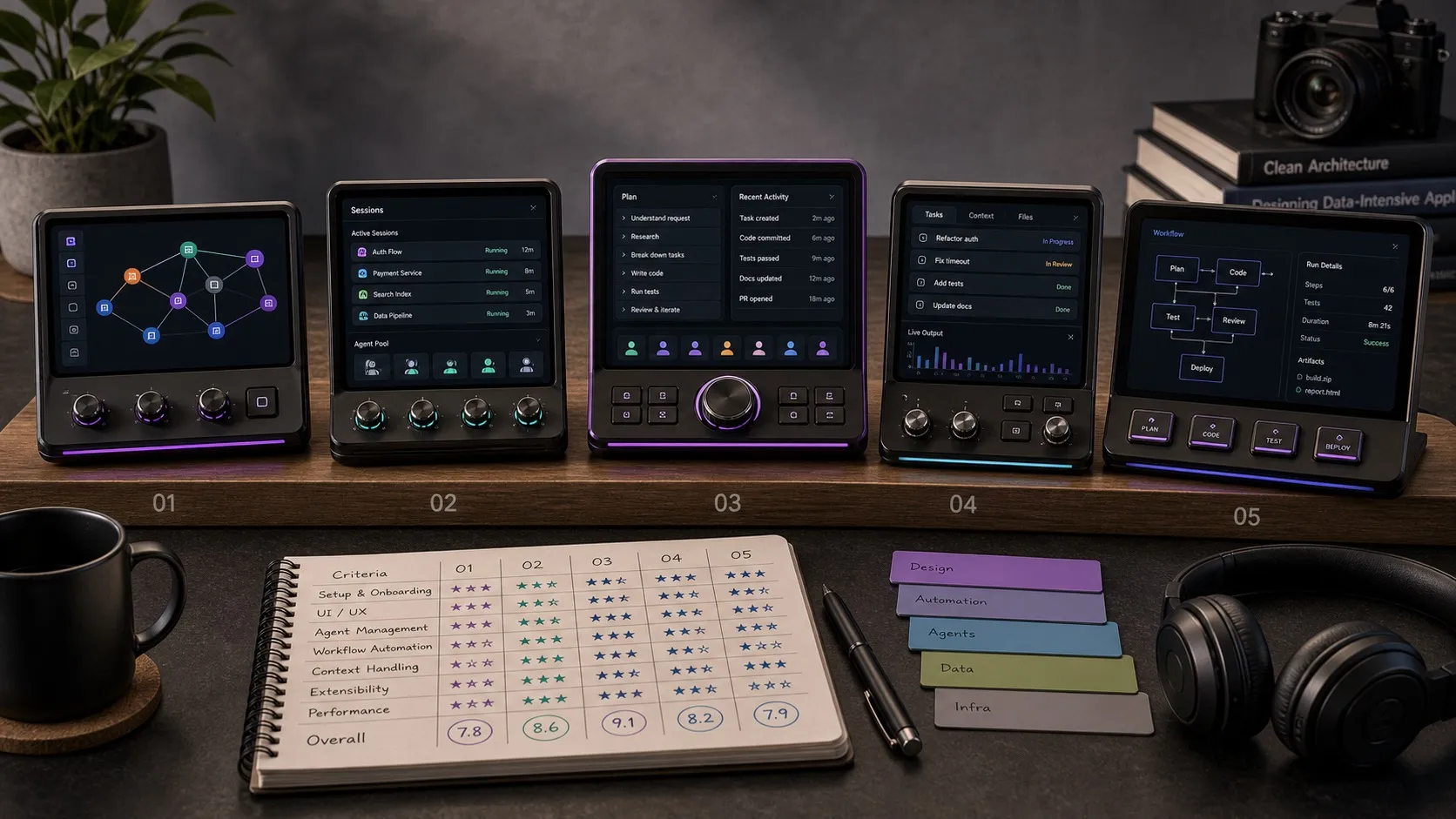
All three major chatbots launched a tutor mode within about three weeks of each other in mid-2025. The idea is shared: guide instead of tell. The feel is not.
| Tool | Launched | Best at | Weak spot |
|---|---|---|---|
| ChatGPT Study Mode | July 2025, all plans including Free | Opens by gauging the student's level, then breaks topics into steps with knowledge checks | Runs on system instructions, which OpenAI admits can behave inconsistently |
| Claude Learning style | April 2025 in Claude for Education, August 2025 for everyone | Socratic questions that push back on assumptions; Claude Code also has a Learning output style for coders | Feels slow for quick lookups, which tempts students to switch it off |
| Gemini Guided Learning | August 2025 | Adds images, diagrams and YouTube clips, and builds flashcards and study guides from quiz results | Visual extras can slide into passive watching unless paired with recall |
| Menu names change between updates. The sharper lesson from testing: every mode is only as good as the student's willingness to leave it on once it starts asking questions back. |
Pros and Cons of Using AI to Study
| What works | What to watch |
|---|---|
| + Endless patience for the same concept explained five different ways | − Confident errors, especially in multi-step math |
| + Practice questions from any notes or slide deck in seconds | − Clean explanations get mistaken for real understanding |
| + Instant feedback that once required office hours | − Tutor modes switch off in one click |
| + Proven gains when the tool is built for teaching, per the Harvard trial | − Usage caps and subscriptions on most study apps |
| + Works at any hour, including the night before a deadline | − Uploaded photos and notes can carry personal details |
Warning Signs That AI Is Doing the Learning
| ! | A similar problem cannot be solved with the chat closed. |
| ! | Sessions end with a neat answer and no scratch work. |
| ! | Every study block starts by pasting the question. |
| ! | Notes are summaries of readings that were never read. |
| ! | Confidence is high the night before, and the page goes blank in the exam. |
Two or more of these means AI has moved too early in the session.
A 60-Minute Study Session That Uses AI Properly
| Minutes | Activity | AI's role |
|---|---|---|
| 0 to 10 | Write down everything remembered about the topic | None |
| 10 to 25 | Attempt practice problems | None unless stuck for 5+ minutes |
| 25 to 40 | Work through stuck problems | Tutor mode, one hint at a time |
| 40 to 50 | Quiz on class notes | Asks and marks questions |
| 50 to 60 | Explain the hardest idea in writing | Strict grader, no rewrites |
The chat stays closed for the first 25 minutes. That one rule does most of the work.
Final Verdict
After a month of daily use After a month of studying with AI open in the next tab, the conclusion is calmer than the headlines on either side. The chatbot was never the problem or the miracle. The habit around it was. Sessions that began with "solve this" produced tidy pages and empty recall by breakfast. Sessions that began with an attempt, then a hint, then a quiz, were slower and noticeably more tiring, and those were the topics that held up once the laptop was shut. None of the three tutor modes stood far above the others; the deciding factor every time was whether it stayed switched on. The research says the same thing more carefully. The tool that helps and the tool that harms can be the very same model. What changes is who does the thinking. Tutor mode on, real course material uploaded, no answers before an honest attempt, and a closed-chat recall check to finish: that setup costs a little speed and pays it back on exam day. |
Comments