Table of Contents
- The 60-second verdict
- What "safe" actually means the six risks inside the word
- Liability: the difference that actually protects you
- Provenance and litigation: knowing where it came from
- The 2026 twist: safety is now a setting, not a tool
- Where the "safe" story has limits
- How to work safely with each one
- The verdict, by how much risk you can absorb
- Bottom line
The fastest way to kill an image you love is to send it to a brand's legal team and get back a single question: "Where did this come from?" If you can't answer that in writing, the image doesn't ship no matter how good it is. That question is what "safer" really means for commercial work, and it's the reason this comparison isn't about which tool makes prettier pictures.
Here's the trap most people fall into: "which is safer" sounds like a yes/no question, and it isn't. The word safe is hiding at least six different risks, and Firefly and Midjourney protect you on some and expose you on others. Answer it as a single verdict and you'll get burned on the risk you didn't think about. So before naming a winner, it's worth pulling the word apart.
The 60-second verdict
For commercial work, Adobe Firefly's native model is the safer tool: it's trained on licensed data, Adobe legally backs your output, there's no lawsuit hanging over it, and it stamps your files with traceable provenance. Midjourney puts more of the risk on you personally, and it's the defendant in a copyright case that's still unresolved.
But "safe" is not automatic even inside Firefly. The free tier isn't covered, the third-party models now living inside Firefly aren't covered, and the protection has real carve-outs. Safety in 2026 is a set of choices you make while using the tool, not a badge the tool comes with. That distinction is the whole article.
What "safe" actually means the six risks inside the word
Before comparing anything, get specific about what you're actually worried about. Commercial safety breaks down into six distinct risks:
● Provenance risk: do you know where the model's training images came from? If not, you can't answer that legal-team question.
● Ownership risk: do you actually own the output, or does the tool retain rights to it?
● Liability risk : if a third party claims your image infringes their copyright, who pays for the defense and the damages?
● Litigation risk : is the tool itself under legal threat in a way that could disrupt your access or taint its output?
● Traceability risk : can the file's AI origin be verified later, which some clients, platforms, and jurisdictions increasingly require?
● Reputational risk: how does your choice of tool look to clients, audiences, and creators whose goodwill you depend on?
A tool can be strong on one of these and weak on another. Here's how the two stack up across all six:
| Risk | What it covers | Adobe Firefly (native model) | Midjourney |
| Provenance | Where training data came from | Licensed Adobe Stock, openly licensed, and public-domain content | Undisclosed; broad web-scraping alleged in court |
| Ownership | Whether you own the output | Yes | Yes (clarified in the Feb 2026 terms) |
| Liability | Who pays if you're sued | Adobe defends you, on eligible paid plans | No one but you |
| Litigation | Legal cloud over the tool | None active | Disney, Universal, and Warner Bros. suit ongoing |
| Traceability | Verifiable AI-origin credentials | Content Credentials applied automatically | Not applied by default |
| Reputation | How defensible the choice looks | Cleaner story, with caveats | Harder to defend publicly |
Firefly wins five of the six outright. But notice that none of the wins are absolute every one has a qualifier and that's exactly where the real work is. Let's take the ones that matter most.
Liability: the difference that actually protects you
This is the risk that separates a hobby from a business, so it deserves the most space.
Because Adobe trained the native Firefly model on content it had rights to, it's willing to indemnify you. In plain terms: if a third party sues you claiming a Firefly image infringes their copyright, Adobe covers the legal defense and any resulting damages. Almost no other major generator does this, and it's the single feature that gets Firefly approved by legal and procurement teams who won't touch anything else.
Midjourney offers nothing comparable. Its February 2026 terms did make two real improvements: subscribers now clearly own their outputs, and the company says it runs "best-effort" screening to stop results from closely copying training material. Both are genuine. Neither is protection. The same terms still disclaim all liability for third-party IP claims, which means if a rights holder comes after a Midjourney image, the bill is yours alone.
The mental model worth internalizing:
● Best-effort screening changes the odds of a claim. It lowers the chance something goes wrong.
● Indemnification changes who pays when something goes wrong anyway. No screening is perfect, and this is the part that matters when it isn't.
For a personal project those feel close enough. For a client deliverable or a national campaign, they are not the same thing, and pretending they are is how freelancers end up personally exposed.
Provenance and litigation: knowing where it came from
These two risks are really the same story told from opposite ends.
Firefly can answer "where did this come from?" question because Adobe knows it licensed the training set. That traceable origin is also what makes the indemnity possible; you can't promise to defend output you can't account for. On top of that, Firefly automatically attaches Content Credentials, a tamper-evident record that the image was AI-generated and how. As more platforms, advertisers, and regulators start asking for disclosure of AI-made content, that built-in traceability quietly moves from "nice to have" to "required."
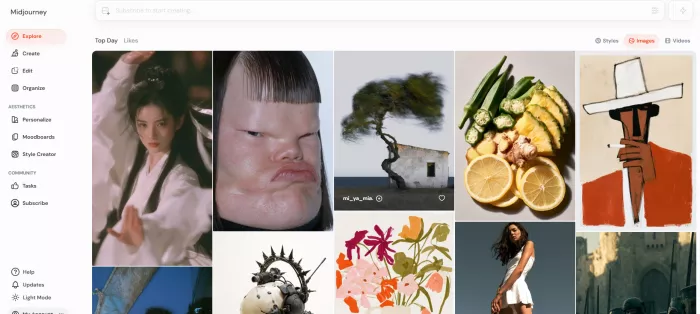
Midjourney sits at the other end. Its training data is undisclosed, which is precisely what Disney, Universal, and later Warner Bros. are challenging in court. Their case argues the model was trained on their characters and lets users reproduce them; Midjourney's defense is fair use. As of now the case is still in discovery and expert testimony, with no ruling and no quick resolution coming.
What that litigation means for you, without the drama:
● It does not make your Midjourney images illegal today. There's no injunction, and the fair-use question is genuinely unsettled.
● It does represent unresolved, category-level risk. The studios asked the court to force copyright protections into the service, and in the strongest version of that outcome, to restrict it until they're built. Low-probability, high-impact but real enough that cautious organizations price it in.
● The likelier trap is self-inflicted. The easiest way into trouble with either tool is prompting your way into a protected character or trademark. Midjourney's looser guardrails make that easier to do without meaning to.
Firefly has no equivalent cloud, and when a client's lawyer is the one deciding whether your work ships, the absence of a cloud is worth a lot.
The 2026 twist: safety is now a setting, not a tool
Here's the development that breaks the old "just use Firefly and you're safe" shorthand and it's the part most articles haven't caught up to.
Sometime in late 2025, Adobe stopped trying to out-generate everyone and started hosting the competition inside its own interface. You can now pick partner models Google's Imagen, OpenAI's image tools, and others and generate them without leaving Firefly. Convenient, and genuinely useful. But it quietly severs the thing you came for.
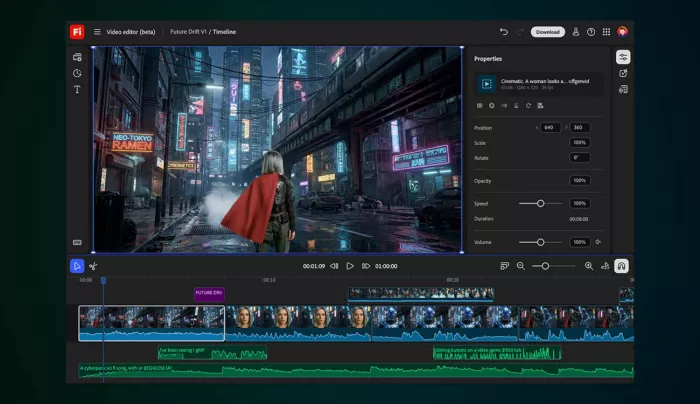
Figure : Adobe firefly editing model
Only Adobe's native model is indemnified. The partner models run under their own training-data policies and their own terms. So "I made it in Firefly" no longer guarantees "Adobe has my back." The safe choice stopped being a tool you open and became a setting you select. If you're doing strict, copyright-sensitive commercial work, you have to deliberately stay on the native model and treat the partner models the way you'd treat any outside generator.
Which leads to the single most useful table in this article what actually keeps you covered, and what quietly voids it:
| What you did | Covered by Adobe's indemnity? |
| Native Firefly model, paid plan, output used as generated | Yes |
| Generated on the free tier | No |
| Used a partner model (Google Imagen, OpenAI, etc.) inside Firefly | No that model's own terms apply |
| Fed in your own reference image | Usually no |
| Prompted in someone else's character, logo, or trademark | No |
| Relied on a beta feature | Usually excluded |
If you take one thing from this whole comparison, take that table. "I used Firefly" and "I'm covered" are no longer the same sentence.
Where the "safe" story has limits
Being honest about Firefly's weak spots is what makes the safe recommendation trustworthy rather than a sales pitch.
● The indemnity has a cap, and the cap details matter. Whether coverage is per-claim or aggregate, and how high it goes, is what an in-house legal team will actually ask. A reassuring headline number can shrink fast against a real dispute with a large brand, so if you're rolling this out across a team, have someone read the actual terms not the marketing page.
● "Licensed" isn't the same as "ethically uncomplicated." Firefly's training rests on Adobe Stock content, and many contributors had their work folded in through platform terms rather than an enthusiastic opt-in; some of them aren't happy that their images trained a system now pitched partly as a replacement for stock work. Adobe did license and pay for the content, so it's legally clean. Whether it's reputationally clean is a judgment call you should make with eyes open.
● Free output is a liability, not a freebie. Anything generated on the free tier carries no indemnity. Dropping a free-tier image into a paid campaign is one of the easiest ways to think you're covered when you're not.
Midjourney's limitations are the more familiar ones: no indemnity, an undisclosed data set, an active lawsuit, and no automatic provenance. Neither tool is spotless. They're compromised in different directions, and knowing which compromise you can live with is the actual decision.
Safety is only one part of that choice, though. If Midjourney still makes sense for the creative side of your workflow, the differences become clearer when you look at Midjourney vs Leonardo AI through image quality, control, consistency, editing tools, and day-to-day production rather than legal exposure alone.
How to work safely with each one
Whichever you use, safety comes from the process, not the logo. A short playbook:
If you're on Firefly:
● Stay on the native model for anything a client will publish, and know which engine produced every asset before it leaves your hands.
● Keep everything client-facing on a paid plan and treat free-tier output as sketch material only.
● Don't upload reference images or prompt in third-party IP if you're relying on the indemnity to cover the result.
● For team or enterprise rollout, read the indemnity cap and carve-outs line by line before you trust the number.
If you're on Midjourney:
● Reserve it for ideation, mood boards, and internal pitches where nothing ships, or for work where you personally accept the risk.
● Never prompt toward a recognizable character, celebrity, or brand mark that's where casual use becomes real exposure.
● Use its private/Stealth mode for confidential client work so drafts don't sit in a public feed.
● Assume you carry the full legal risk of anything you publish, and price that reality into how you use it.
The verdict, by how much risk you can absorb
Instead of one answer, match the tool to how much liability you can personally or organizationally take on:
● A brand, an agency, or anyone answering to a legal team: Firefly's native model, without much debate. The indemnity, the licensed data, the provenance credentials, and the clean litigation record are the entire reason it clears review.
● A freelancer putting their name on client deliverables: Firefly native for anything that ships, Midjourney for exploration that stays in-house. You can't personally absorb an infringement claim, so don't build your billable output on a tool that hands you the whole risk.
● A solo creator or hobbyist with low exposure: Midjourney is fine, and often the better image-maker. Your legal surface is small just stay away from other people's characters and trademarks.
● Anyone doing pure art or spec work with no commercial claim attached: Use whatever you like. The safety argument barely applies to you.
Bottom line
The honest answer to "which is safer for commercial work in 2026" is: Firefly's native model, clearly but only if you use it deliberately. It wins on provenance, liability, litigation, and traceability, which are the risks that actually decide whether your work survives a legal review. Midjourney is the tool that hands you more of the risk, and it's carrying a lawsuit that hasn't been settled.
What changed in 2026 is that "safe" stopped being something you could buy in one click. Firefly turning itself into a marketplace of models, most of them not covered by the promise you signed up for, means the protection now lives in the choices you make: which model, which plan, which prompt, which reference. The tool gives you the option to be safe. Whether you actually are comes down to whether you're paying attention.
Comments