AI chat platforms are no longer a novelty. New ones appear almost every month, each promising smarter responses, deeper conversations, and more “human-like” interaction. Very few, however, manage to feel genuinely different.
ChatFAI caught my attention because it was not positioning itself as a productivity assistant or a question-answering bot. It presented itself as something else entirely a space where you could talk to characters, build personalities, and develop ongoing narrative conversations powered by artificial intelligence.
After spending extended time using the platform, reading community discussions, checking independent safety scans, and comparing it with competing tools, my conclusion is simple: ChatFAI is one of the most creatively ambitious AI chat platforms available today but it is also far from perfect.
This article walks through everything that actually matters: what the platform is, how it works in real use, how much it costs, what users genuinely think about it, the safety signals surrounding it, and whether it is worth your time.
What Is ChatFAI?

ChatFAI is a browser-based AI character chat platform designed for personality-driven conversations.
Instead of interacting with a single generic assistant, you engage with individual characters. These characters can be inspired by fiction, history, gaming, anime, or completely original creations designed by users.
The entire experience runs in your browser. There is no installation process, no heavy setup, and no technical barrier to entry. You create an account, choose a character or build your own and begin the conversation.
What makes it stand out is its focus on interactive storytelling and roleplay rather than productivity.
It is less about getting answers and more about developing interactions.
What ChatFAI Promises And How It Performs in Reality
According to its own positioning, ChatFAI aims to deliver:
- emotionally responsive character conversations
- deep personality customization
- memory that preserves past interactions
- private and secure chats
- creative freedom for storytelling
From actual usage, these promises are partially fulfilled.
The platform can produce surprisingly immersive conversations when:
- the character is well designed
- the prompts are detailed
- the system is running smoothly
However, memory consistency varies. Conversations can occasionally lose context, and long sessions sometimes lead to shorter or more generic replies. When this happens, the sense of immersion breaks.
So while the potential is high, the execution is not always stable.
Features: The Practical Experience Behind the Marketing
Character Creation and Personality Design
This is the strongest part of ChatFAI. Designing a character involves defining:
- tone
- behavioral traits
- backstory
- conversational style
For writers and roleplay users, this becomes a powerful creative tool. It allows you to test dialogue, simulate character interactions, and explore story ideas dynamically. It feels less like configuring software and more like developing a digital persona.
AI Conversations and Roleplay Flow
When everything aligns good prompts, stable performance, clear character identity the conversations can feel remarkably natural.
Characters respond in their own voice, maintain emotional tone, and adapt to the direction of the interaction.
But during long sessions, responses can sometimes:
- become repetitive
- lose descriptive depth
- shrink in length
This inconsistency is one of the most frequently mentioned user concerns.
Memory and Context Retention
ChatFAI does have memory but its effectiveness depends heavily on the subscription tier.
Higher plans maintain longer conversational continuity. Lower tiers often experience:
- forgotten details
- reset dynamics
- repeated questions
For users trying to build long narrative arcs, memory depth is not a luxury it is essential.
Chat Storage and History
Free users receive limited chat history retention.
Paid plans remove this restriction, which dramatically improves the experience because it allows:
- returning to ongoing storylines
- maintaining character relationships
- long-term conversational continuity
Without this, the platform feels temporary rather than persistent.
Privacy and Security Signals
ChatFAI states that conversations are encrypted and not stored long term.
Technically, the site uses secure HTTPS and is not flagged for malware.
However, independent trust-rating services provide mixed results. Some assign medium-risk scores due to limited transparency and hidden domain ownership details.
This does not mean the platform is unsafe but it does mean users should avoid sharing sensitive personal information.
Pricing in 2026: What You Actually Pay For
ChatFAI’s pricing is not just about unlocking more messages. It determines how immersive and reliable the platform becomes.
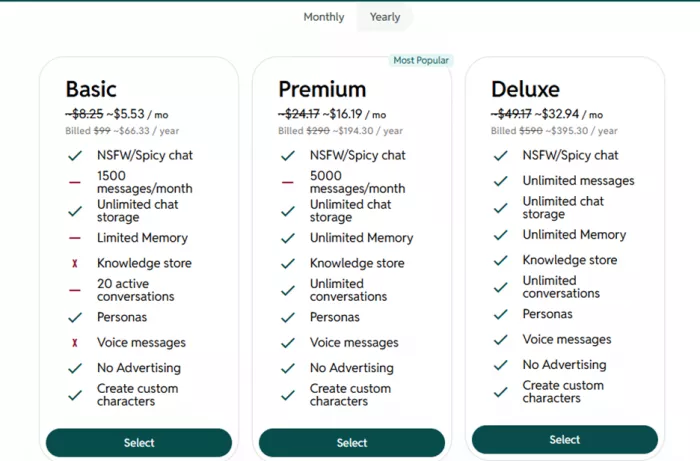
Free Plan: The Trial Experience
The free tier allows you to explore the interface and test character conversations.
In practice, it feels like a preview.
The message cap forces you to shorten interactions, and limited memory prevents long-term continuity. It is perfect for understanding how the system works, but not for using it regularly.
Basic Plan: The First Practical Upgrade
This is where ChatFAI begins to feel usable.
Conversations can last longer, characters maintain context more effectively, and chat history becomes persistent.
For casual roleplay users and hobbyist writers, this plan offers a noticeable improvement without requiring a major financial commitment.
Premium Plan: The Creative Sweet Spot
At this level, the platform starts to deliver on its core promise.
Longer memory allows characters to:
- recall past interactions
- maintain emotional continuity
- develop over time
This is the tier where storytelling becomes fluid rather than interrupted.
For frequent users, this is the most balanced option.
Deluxe Plan: The Full Experience
This tier removes conversation limits and maximizes memory depth.
It is designed for users who:
- run extended narrative sessions
- use ChatFAI as a creative writing partner
- need uninterrupted access
At this point, the AI feels less like a demo and more like a collaborative tool.
How Pricing Translates Into Real Experience
Upgrading does not just increase message numbers.
It unlocks:
- longer conversations
- stronger memory
- smoother performance
- deeper immersion
In other words, you are not paying for access, you are paying for continuity.
What Real Users Are Saying About ChatFAI
One of the most interesting parts of using ChatFAI is that the experience you personally have often mirrors what the wider community is discussing. When I explored user conversations across forums, review sites, and AI tool directories, I noticed a clear pattern: people don’t see ChatFAI as just a chatbot, they see it as a creative playground. But that playground comes with both excitement and frustration.
The Creative Freedom That Hooks People
The most consistent praise comes from users who approach ChatFAI as a storytelling or roleplay tool rather than a productivity assistant.
Many users say the platform feels refreshing because it moves away from the “question–answer” format of traditional AI chatbots. Instead, it lets you build personalities, simulate relationships, and develop long-form conversations with fictional or custom characters. That sense of immersion is the main reason people stay.
Users frequently highlight:
- The ability to design highly specific character traits
- Conversations that feel narrative-driven rather than functional
- The fun of interacting with characters from different genres
This aligns with what AI tool reviewers also note the platform is primarily used for entertainment, creative writing, roleplay, and idea exploration, not for research or work tasks. (elooor.com)
For writers and roleplay enthusiasts, this becomes more than casual chatting. Some users describe it as a dialogue-testing environment, where they experiment with story arcs and character behavior.
In simple terms:
ChatFAI is loved most by people who don’t want a tool, they want an experience.
The “It Feels Real… Until It Doesn’t” Problem
Right after the praise for creativity comes the most common frustration: inconsistency in responses.
Users often mention moments where:
- A deeply immersive conversation suddenly becomes generic
- The character forgets important context
- Replies shrink to very short or low-effort outputs
This isn’t just a random complaint; multiple reviews mention looping responses, coherence issues, and context loss, especially in longer chats or lower-tier plans. (guideofaitool.com)
That break in continuity is important because ChatFAI’s entire appeal depends on emotional and narrative immersion. When memory slips, the illusion collapses. And users notice it immediately.
The Free Plan Feels Like a Demo: Not a Lifestyle
Another recurring theme is the message limit system.
Free users often describe the platform as:
“Amazing… but over too quickly.”
Because conversations are the core experience, hitting a limit doesn’t just pause usage it interrupts a story mid-scene. Review sites confirm that both free and paid accounts operate within message caps, with higher tiers simply extending the limit.
So from a user’s perspective, the pricing isn’t just about cost it directly affects:
- Character memory
- Conversation depth
- Emotional continuity
That’s why many people say the real ChatFAI experience only begins after upgrading.
The Interface: Powerful but Overwhelming at First
New users often report that the platform feels slightly confusing in the beginning.
Not because it is poorly designed but because it offers:
- A large character library
- Custom personality creation
- Multiple configuration options
For first-time users, this can feel like being dropped into a creative studio without a tutorial.
This “feature richness vs. learning curve” trade-off is also mentioned in tool reviews, where the interface is described as user-friendly overall but initially complex due to its depth. Once users understand how character setup affects responses, satisfaction increases significantly.
The Community Aspect People Don’t Expect
Something that surprised me and many other users is the quiet presence of a community layer.
Users enjoy:
- Sharing character builds
- Exploring public personalities
- Seeing how others structure prompts
This creates a collaborative creativity ecosystem, not just a solo chat experience. For many, discovering well-built public characters is what makes the platform addictive.
Trust, Safety, and Transparency: A Mixed Emotional Response
This is where user sentiment becomes cautious rather than negative.
Safety scanners and review platforms generally rate the site as moderately trustworthy but not fully transparent, particularly regarding data handling clarity.
That leads to a very specific kind of user behavior:

- People enjoy the platform
- But avoid sharing personal information
So the concern isn’t “this is unsafe” it’s more like:
“This is fun, but I treat it like a public creative space.”
Performance Depends on Expectations
Perhaps the most important insight from real users is this:
Your satisfaction with ChatFAI depends entirely on why you are using it.
Users who expect:
- A productivity AI
- A research assistant
- A highly stable tool
I usually feel disappointed.
Users who want:
- Roleplay
- Storytelling
- Character interaction
- Creative experimentation
I often love it.
That difference in expectation explains why reviews about the same platform can feel completely opposite.
The Emotional Pattern Behind Most Reviews
After reading and comparing large amounts of feedback, the user journey usually looks like this:
- Curiosity → “This is different from other AI chats.”
- Excitement → “The character actually feels alive.”
- Friction → message limits, memory loss, or short replies
- Decision point → casual users leave, creative users upgrade
And the ones who stay are almost always the people using it for storytelling.
The Real Community Verdict
If you compress all user opinions into one honest line, it would be this: ChatFAI is not the most powerful AI chat platform but it is one of the most imaginative.
People don’t come here for accuracy. They come here for immersion. And when it works well, it delivers something that traditional AI assistants still struggle to provide: a sense of personality.
Alternatives to ChatFAI
ChatFAI focuses on immersive AI character conversations, especially for users who want story-driven, personality-rich interactions. But it’s not the only option and depending on whether someone prioritizes memory, roleplay freedom, uncensored chats, or production-quality characters, other platforms can be a better fit.
Below are the most relevant and widely discussed alternatives.
Character.AI: The Most Popular Story & Personality Platform Link

What makes it different:
Character.AI is built around highly expressive personalities and natural conversational flow. Many users feel its dialogue quality is among the most human-like in the AI character space.
Why users move from ChatFAI to Character.AI:
The platform has an enormous public character library. You don’t just chat — you explore. Fictional characters, historical figures, original roleplay personas, and niche personalities are available instantly.
The conversation style is more emotionally intelligent. Characters remember tone, context, and relationship dynamics in a way that feels closer to interactive storytelling than simple chat.
Where it falls short compared to ChatFAI:
It has stricter content moderation. Users who want complete creative freedom often find it limiting.
Best for:
Story lovers, roleplayers, fandom communities, and users who want long, emotionally consistent conversations.
Janitor AI: Freedom, Customization, and Unfiltered Roleplay Link
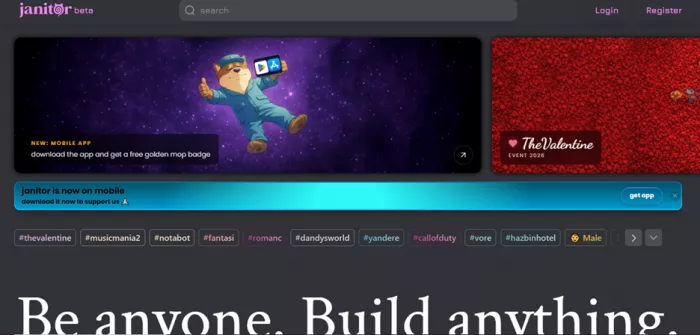
Core strength:
Janitor AI gives users deep control over how characters think, speak, and behave — and it allows multiple model connections.
Why users choose it over ChatFAI:
It supports external AI models, which means:
- better memory (depending on setup)
- longer conversations
- adjustable intelligence level
There’s also significantly more creative freedom in roleplay scenarios.
Trade-off:
It’s not beginner-friendly. Setup can feel technical if someone has never used APIs or model configurations.
Best for:
Power users, advanced roleplayers, and people who want full control over their AI experience.
Replika: Relationship-Focused AI Companion Link

Core philosophy:
Replika is less about “characters” and more about building a long-term emotional bond with a single AI companion.
Why some users prefer it to ChatFAI:
AI evolves over time. It learns your habits, remembers personal details, and adapts to your communication style.
It also includes:
- voice calls
- AR/3D avatar interaction
- daily wellness conversations
This makes it feel more like a digital partner than a roleplay engine.
Limitation:
Not designed for multi-character storytelling or fandom-style experiences.
Best for:
Users looking for companionship, emotional support, and daily conversation.
Chai AI: Fast, Mobile-First Character Chatting Link

Why it stands out:
Chai is built for speed and accessibility. You open the app and start chatting instantly with no complex setup.
Why users switch from ChatFAI:
The mobile experience is smoother and more casual. It’s ideal for quick interactions rather than long, structured roleplay sessions.
There’s also a constant flow of trending bots created by the community.
Downside:
Memory and narrative consistency are weaker than ChatFAI in long conversations.
Best for:
Casual users and mobile-first chat experiences.
NovelAI: For Deep Narrative Roleplay & Worldbuilding Link
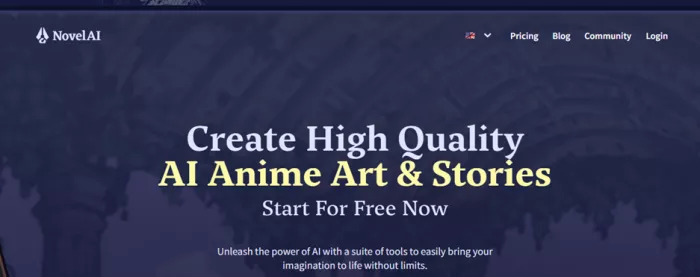
What makes it unique:
NovelAI is not just a chat tool: it’s a storytelling engine.
Why it attracts ChatFAI users:
You can:
- build entire fictional worlds
- create lorebooks for persistent memory
- control writing style and narrative tone
This produces extremely consistent long-form roleplay.
Trade-off:
It’s more text-generation oriented than chat-style conversation.
Best for:
Writers, advanced roleplayers, and worldbuilding enthusiasts.
Quick Positioning Comparison
| Platform | Core Experience | Biggest Strength | Main Limitation | Ideal User |
| Character.AI | Story-driven chat | Emotional realism | Strong moderation | Fandom & RP users |
| Janitor AI | Custom AI roleplay | Full control & freedom | Technical setup | Power users |
| Replika | AI companion | Long-term memory & bonding | Not multi-character | Emotional connection |
| Chai AI | Casual mobile chat | Fast & accessible | Weak long memory | Quick chats |
| NovelAI | Narrative engine | Deep worldbuilding | Not pure chat | Writers & advanced RP |
How They Compare to ChatFAI
ChatFAI sits in the middle of this ecosystem.
It offers:
- Strong character immersion
- Clean interface
- Good roleplay structure
But users move to alternatives when they want:
- fewer restrictions → Janitor AI
- stronger emotional realism → Character.AI
- long-term AI companion → Replika
- mobile casual chatting → Chai
- novel-level storytelling → NovelAI
Final Verdict: Is ChatFAI Worth It?
ChatFAI is one of the most creatively engaging AI chat platforms available right now.
- It is not the most stable.
- It is not the most transparent.
- It is not the cheapest.
But it does something many others do not: it creates the feeling of ongoing, personality-driven interaction. If you approach it as:
- a storytelling sandbox
- a character design tool
- a roleplay environment
you will likely enjoy it. If you expect a perfectly reliable, professional-grade AI assistant, you may be disappointed.
Conclusion
ChatFAI works best when you treat it as a creative playground rather than a mission-critical tool. Its strength lies in imagination, not infrastructure. For writers, roleplay enthusiasts, and users who enjoy character-based conversations, it offers a uniquely immersive experience. For serious, private, or long-term dependency, it still has room to mature. And that balance between fascinating potential and visible flaws is exactly what defines ChatFAI in 2026.
Comments