Log into Securly Flex on a Monday morning and the contrast with the old way of running a flex block is hard to miss. The rosters for the day are already built. The usual scramble to place unassigned students before the bell is gone, because the system spent the night assigning them. For anyone who spent years inside Edficiency's table-style scheduler, the muscle memory no longer fits the screen in front of them, and that is the point. Edficiency is not a standalone product anymore. It is now sold, supported, and developed as Securly Flex.

So the real question schools keep raising is not which tool to choose. It is what happened when one tool absorbed the other, which parts of the old experience survived, and whether the trade left flex scheduling better or worse. The short answer is that most of it got stronger and one piece that students liked went away.
THE SHORT VERSION Securly acquired Edficiency on February 1, 2024. The standalone Edficiency platform was retired and its capabilities were folded into Securly's existing product, Securly Flex. Schools that used Edficiency were moved to Securly Flex. If you are shopping for flex software today, the product to look at is Securly Flex, and the Edficiency name simply points there. |
How the two products collided
| 2015 | Edficiency launched out of Oshkosh, Wisconsin, built by a former teacher to automate the logistics of flex periods for middle and high schools. |
| Before | Securly already sold a scheduling tool called Securly Flex, alongside its school safety and wellness products, after years of acquisitions in the K-12 space. |
| Feb 2024 | Securly bought Edficiency and set out to merge its scheduling engine into Securly Flex, removing a direct competitor and widening its own flex offering. |
| Now | The Edficiency app has been discontinued. Schools log into Securly Flex, and Edficiency's own demo page now routes visitors to Securly. |
What Edficiency was built to do
Edficiency solved one narrow, stubborn problem: the daily paperwork of flex time. Flex, advisory, intervention, WIN, and tutorial blocks all share the same headache, which is sorting hundreds or thousands of students into the right room with the right teacher, every single day, without burning a staff member's whole morning on it. The original idea behind the product was straightforward, turning wasted school hours into real learning by making the scheduling invisible and letting teachers spend the period actually helping students.\
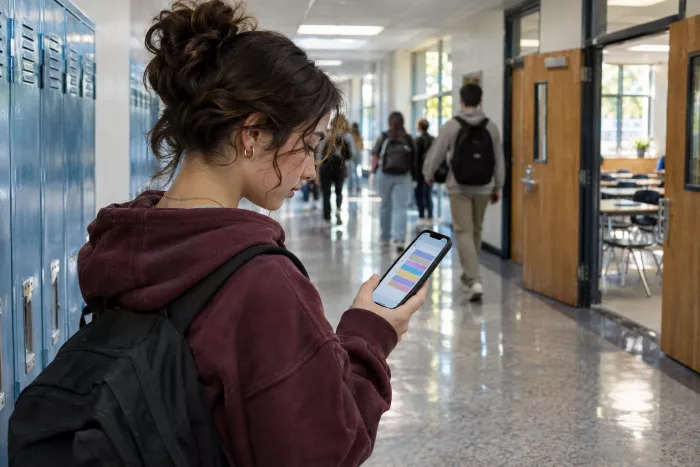
On the ground, it ran as a web tool with a table-style layout. Each flex block showed up as a slot, students and staff worked from those slots, and the software placed students by priority and need. It earned a strong reputation for support and a 4.9 out of 5 rating across 45 verified reviews on Capterra. One detail mattered to students in particular: in Edficiency, a student could request a teacher they did not currently have, which made it easy to go back to last year's teacher for help. Hold onto that detail, because it is the single clearest thing the merger took away.
What Securly Flex is today
Securly Flex does the same core job, then layers on automation, capacity controls, and a mobile app, and sits inside a much larger platform. Securly positions it as the number one flexible scheduling tool for K-12, and the scale behind that claim is real.
Schools 1,000+ | Educators and students 1 million | Activities scheduled daily 20,000+ |
Auto-Assign Reads thousands of data points each night and builds the next day's rosters, so staff wake up to fully assigned sessions instead of a pile of unplaced students. | Priority levels Color-coded tiers from open sign-ups up to admin-required sessions. Teacher requests for one-on-one and small-group help outrank student choices. |
Conflict detection When two placements compete for the same student, the system flags the clash and lets the highest-need assignment win. | Student app A free mobile app lets students browse and sign up for sessions, while teachers and admins work from the browser. |
Capacity and rules Seat limits per activity, combined caps when activities share a room, restriction rules per student, and a catchall for anyone left over. | Attendance and SIS Attendance is logged by activity, student, or date, and can be imported and exported for reporting and your student information system. |
Side by side: before and after
| Area | Edficiency (original) | Securly Flex (now) |
| Status | Standalone product since 2015 | Edficiency discontinued; features live inside Securly Flex |
| Core job | Automate daily flex rosters by priority | Same core job, broader toolset around it |
| Daily view | Table layout, one slot per block | Calendar view showing each day's sessions |
| Teacher choice | Students could request a teacher they did not currently have | Sign-ups limited to current teachers; past-teacher requests removed |
| Auto placement | Rule-based automatic assignment | Nightly Auto-Assign built from thousands of data points |
| Priority handling | Priority-based scheduling | Priority-driven scheduling with color-coded levels |
| Conflicts | Resolved largely by hand | Conflict detection resolves by assignment priority |
| Capacity | Seat limits per activity | Per-activity limits plus combined caps for shared rooms |
| Mobile | Web-based | Browser for staff plus a student mobile app |
| Ecosystem | Scheduling only | Part of Securly's safety, wellness, and classroom suite |
| Support record | 4.9 of 5 on Capterra, praised service | Securly support team, help center, and docs |
The four changes that actually matter

1. The table became a calendar Edficiency's slot-based table is gone. Securly Flex uses a calendar view that shows available sessions for each day. New students read it quickly, but long-time Edficiency staff need a short period to rebuild habits around the new layout. |
2. Auto-Assign does more of the work Instead of staff clearing a list of unassigned students each morning, the system runs overnight and places them into sessions that make sense for them. For a large school, that removes the heaviest manual step of the day. |
3. Priority-driven scheduling is formalized Teacher pull-ins for targeted support outrank student sign-ups, and admins can push must-attend sessions that override everything else. The hierarchy that teachers improvised before is now built into the tool. |
4. One real downgrade for students A student can no longer sign up with a teacher they do not currently have. In Edficiency, a student could book time with a previous teacher for help. That option did not carry over, and it is the change students notice most. |
What the school gained, and what it gave up
Gained
| Gave up
|
What this means for your school
You used Edficiency You are on Securly Flex now, or will be. The core job is unchanged, the interface is new, and access runs through Securly rather than the old Edficiency login. | You are evaluating now There is no Edficiency to buy. The product to trial is Securly Flex, so point any demo request at Securly and compare it against your current schedule. |
You only want scheduling Securly Flex works on its own for flex time, though it lives inside a larger platform. That is worth knowing before you sign, both for pricing and for vendor fit. | You already use Securly If your district already runs Securly for safety or wellness, Flex slots into the same vendor relationship, which can simplify contracts, billing, and rollout. |
The verdict
Spend real time inside both and the honest read is that the merger removed one thing students liked and handed schools several things administrators actually needed. The loss is not trivial: a student who wants help from last year's math teacher can no longer just sign up for that room. Set against that, the daily grind of running flex time is lighter than it was. Rosters build themselves overnight, competing placements resolve by priority instead of by argument, and attendance lands in one place that talks to the student information system. For a school choosing today there is only one road, since the Edficiency name now leads straight to Securly Flex. The move holds up for most middle and high schools that run flex, advisory, or intervention blocks, provided the retired teacher-request feature was not central to how students used the period. Run it against a real week of your own schedule before signing, and weigh whether the wider Securly relationship fits the budget and the direction your district wants to go. |
Comments