I did not want the polished marketing demo. I wanted the real thing. So on a Monday afternoon I signed up for Emergent with nothing but a free account and the ten credits it hands you at the door. No card, no Pro plan, no safety net. One prompt, one build, and an honest look at where the free tier actually gets you.
What follows is not a spec sheet in nicer words. It is a log of the run I actually did: the Marvel landing page I asked for, the credits it quietly spent, the parts it nailed, the parts it fumbled, and the wall I hit the second I tried to publish. I pulled in real numbers and reviews from other builders too, so you get the receipts, not just my afternoon.
MY SCORE 3.6 / 5 tool overall | FREE TIER 10 cr per month | MY BUILD ~7 cr single page | TO PUBLISH Paid plan required | BEST FOR Prototypes not launches |
What Emergent actually is
Emergent is an agentic "vibe coding" platform: you describe an app in plain English and a team of AI agents plans it, writes the code, tests it, and deploys it. Not drag-and-drop, and not a single chatbot. Here is the company behind the meter.
| Category | Full-stack AI app + site builder |
| Founded | 2024 · Mukund & Madhav Jha |
| Backing | Y Combinator S24 |
| Funding | $70M Series B · ~$300M valuation |
| Tech stack | React / Next.js · Node / FastAPI · MongoDB |
| Security | SOC 2 Type II · ISO 27001 |
| Model in-app | "GPT-5.6" banner |
| Site claim | 10M+ users worldwide |
Company details compiled from Emergent’s site and independent reviews (Experiment, Hack’celeration, AI Tool Radar). The 10M+ figure is the platform’s own on-page claim; earlier 2026 coverage cited lower numbers, so it has grown fast.
My run, from login to locked out
Everything below is a real screenshot from my session, in the order it happened. This part is a genuine sequence, so I have numbered it. One prompt in, twelve steps later, three credits left.
Six ways in, one door
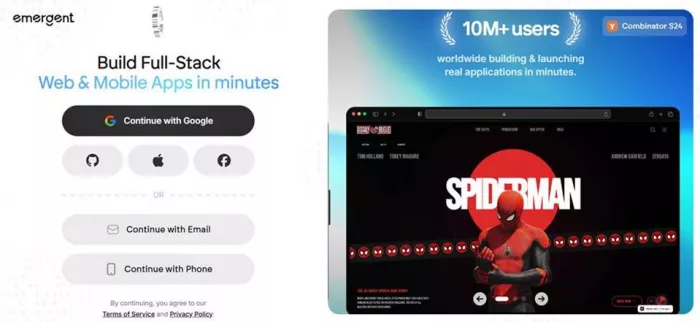
The very first screen is a login wall, not a prompt box like some rivals open with. Six ways in: Google, GitHub, Apple, Facebook, Email, and Phone. I chose Email. The Facebook button is an unusual sight on a developer tool.
A slightly picky password
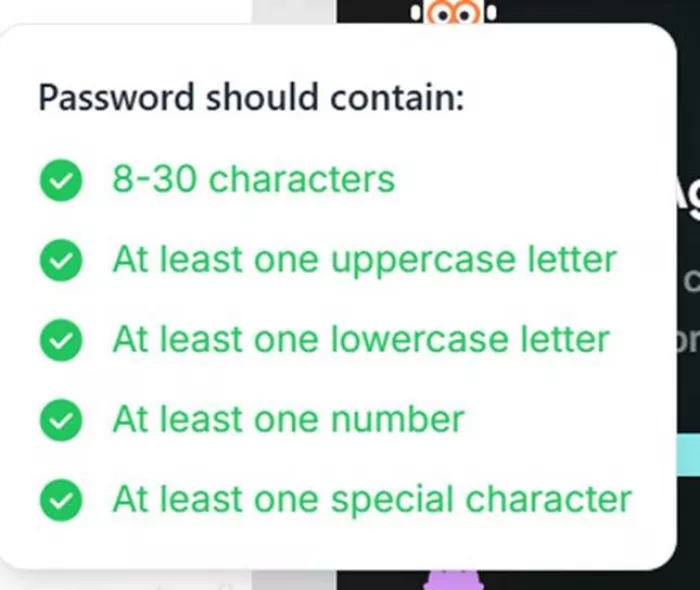
Choosing email meant meeting a rules popup: 8 to 30 characters, at least one uppercase, one lowercase, one number, and one special character. Standard stuff, with a mildly strict 30-character ceiling.
Screenshot 02 · Password rules
Verify, then wait
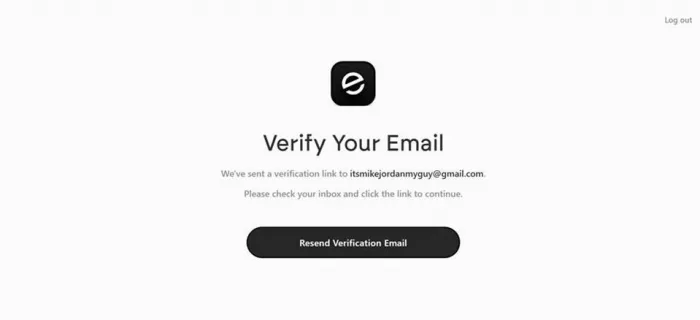
Before it let me near a prompt, Emergent fired a verification link to my inbox. One extra step between me and building, but a normal one. Click the link, come back, continue.
The dashboard, and the meter
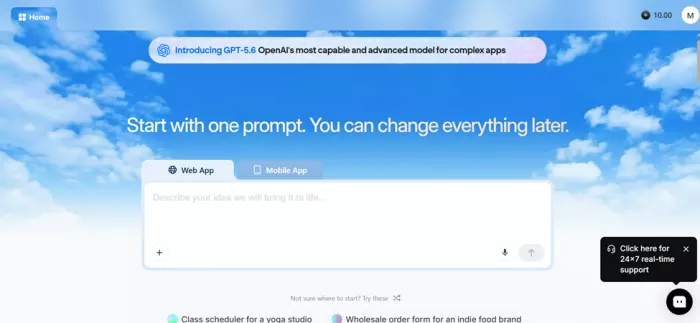
Inside: "Start with one prompt. You can change everything later." A tab for Web App and one for Mobile App, a banner pushing a new model, and starter ideas like a yoga class scheduler. Top right sat the number that framed my whole afternoon: 10.00 credits. That is the entire free budget.
The ask
I typed one line: "Build a Marvel-themed landing page advertising the next Avengers movie with cinematic animations." The status flipped to a cheeky "Tightening a few screws..." while the Code, Preview, and Deploy buttons sat greyed out up top.

It interviewed me first
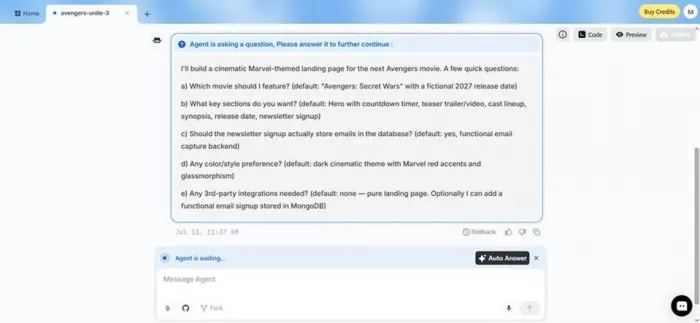
Instead of guessing, the lead agent asked five sharp questions before touching code: which film, which sections, whether the newsletter should truly store emails, my colour and style preference, and any third-party integrations. Each came with a sensible default. This planning step is genuinely one of the best parts.
Auto Answer did the talking
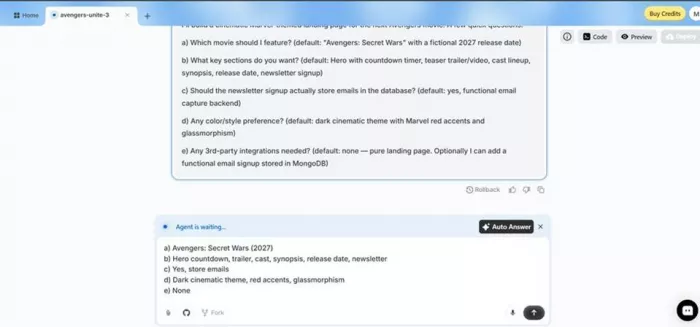
There is an Auto Answer button that fills in smart replies for you. I let it run: Avengers Secret Wars (2027), a hero with countdown, trailer, cast, synopsis, release date, and newsletter, emails stored yes, dark cinematic theme with red accents and glassmorphism, no integrations. One tap, and it went to work.
Build, then self-test
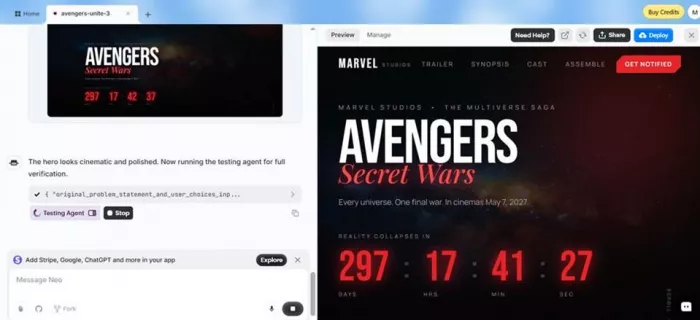
It announced the hero looked "cinematic and polished," then spun up a separate Testing Agent to verify the build. That self-review loop is the feature reviewers keep singling out, and watching it check its own work builds trust.
The hero, and it is a looker
AVENGERS. Secret Wars. "Every universe. One final war. In cinemas May 7, 2027," set over a starfield, with a live countdown reading REALITY COLLAPSES IN 297 : 17 : 41. Hand on heart, this section looked close to something a studio would actually ship.

Screenshot 09 · The finished hero + countdown
The trailer that was not the trailer
The Trailer section played a real, working YouTube embed. Just not the right one. It loaded "The Fantastic Four: First Steps" trailer instead of anything Avengers. Right idea, wrong tape. The plumbing worked; the content matching did not.

Cast names right, faces very wrong
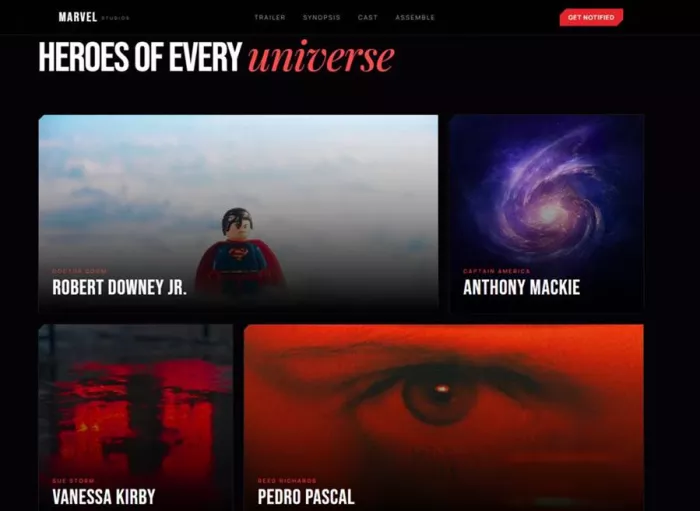
"Heroes of every universe" listed real actors (Robert Downey Jr., Anthony Mackie, Vanessa Kirby, Pedro Pascal), but paired them with scrambled roles and placeholder-style images: a LEGO Superman for Downey, a spiral galaxy for Mackie, a red blur, a giant eye. The layout was slick; the image sourcing was not.
Signup, share, and the wall
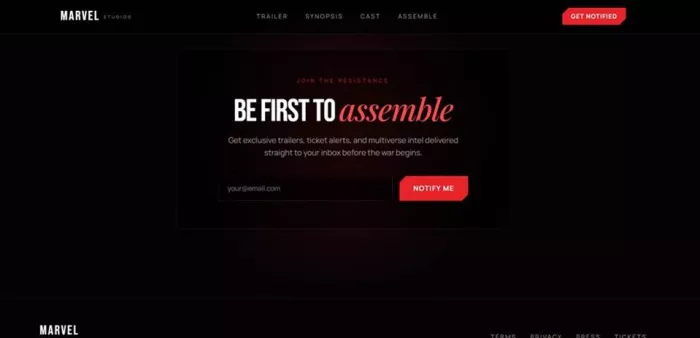
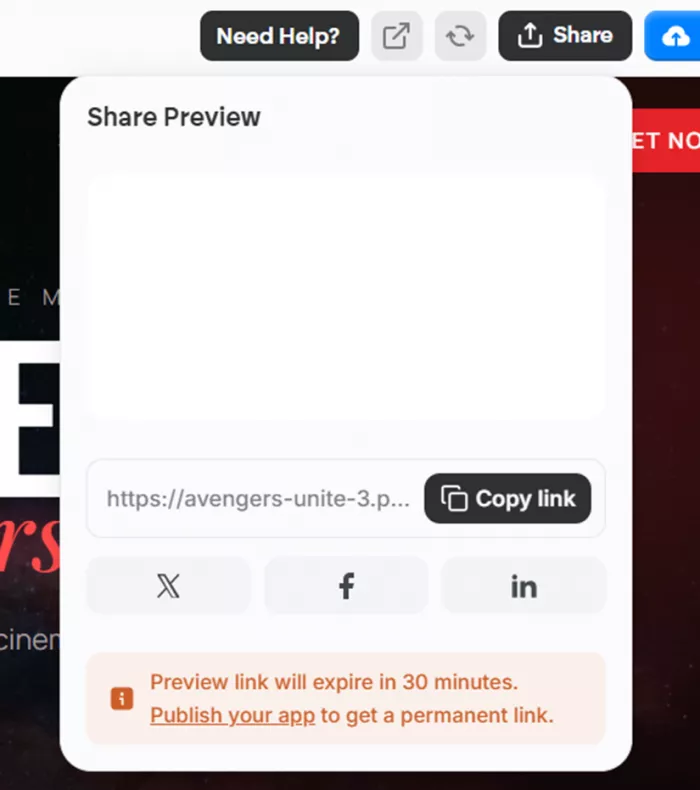
It closed with a tidy "Be first to assemble" email capture and a proper footer. I hit Share and got a link, but the fine print read: expires in 30 minutes. To get a permanent URL I had to Publish, and Publish asked for a premium plan. That was the end of the free road. The meter now read 3 credits.
What it actually built
One prompt produced a full single-page site with a hero, countdown, trailer, cast grid, and a working email capture. The structure and styling were strong. The content sourcing was the weak link, and there was only ever one page.
★★★★★ NAILED IT Design and layout. The hero, the countdown, the section rhythm, and the copy tone were legitimately good. This is where the multi-agent approach shines. | ★★★★☆ SOLID Structure and flow. Nav, sections, and the newsletter block were wired sensibly, and the build passed its own testing agent without me lifting a finger. |
★★☆☆☆ FUMBLED Asset matching. Wrong trailer, mismatched cast photos, scrambled roles. The scaffolding was right, but the media it pulled in missed. | ★★☆☆☆ LIMITED Scope on free. It stayed a single page. With 3 credits left I could not meaningfully extend it, and I could not publish it at all. |
The run, tallied
| What I did | Credits | Result |
|---|---|---|
| Sign up + verify email | 0 | Free account, 10 credits loaded |
| One prompt + Auto Answer | ~7 | Full single-page site built & self-tested |
| Preview & share | 0 | Link works, but expires in 30 min |
| Publish for a permanent URL | locked | Requires a paid plan |
| Credits remaining | 3 | Not enough for a real second build |
Emergent does not print a per-action price, so "~7" is the net of my meter going from 10.00 to 3. A single static page with no backend integrations lands on the cheap end of what reviewers report.
Plans, credits, and what things cost
The plan price is not really the price. Credits are. Every build, bug fix, and deploy burns them, so your bill tracks how hard you make the agents work, not which tier you hold.
The tiers (mid-2026)
| Plan | Price | Monthly credits | What you unlock |
|---|---|---|---|
| Free | $0 | 10 | Testing only. No publishing. |
| Standard | $20/mo ($17 annual) | 100 | Private hosting, GitHub, Fork |
| Pro | $200/mo ($167 annual) | 750 | 1M context, custom agents, priority support |
| Enterprise | Custom | Custom | Shared workspaces, pooled credits, SSO |
Unused monthly credits expire at the end of the billing period. Purchased top-up credits do not expire and are only used after your monthly allowance runs out.
What burns credits
| Task | Rough credits |
|---|---|
| A simple landing page | 10 - 20 |
| Landing page with a working form | 20 - 40 |
| Adding a Stripe integration | 35 - 60 |
| Keeping an app deployed and live | ~50 / month |
| My Marvel single-pager | ~7 actual |
Ranges compiled from No Code MBA, AI Tool Radar, and eesel AI pricing breakdowns. My build came in low because it was one static page with no backend or payments wired up.
The most repeated complaint across every review site is the same: you often spend credits to fix mistakes the AI made, which makes budgeting hard.
Where it wins, where it stings
What genuinely works + Fast: idea to a polished hero in about the time it takes to make coffee. + Smart planning: it interviews you first, and Auto Answer fills the gaps. + Self-testing: a dedicated agent verifies the build before handing it back. + Real stack underneath, with GitHub export on paid plans for full code ownership. + Strong visual output for heroes, section layout, and on-brand copy. | What made me wince - Credits vanish, and you frequently pay to fix the AI’s own errors. - Publishing is paywalled. The free tier is a demo, not a launchpad. - Asset sourcing is unreliable: wrong trailer, random cast images. - Preview links die after 30 minutes unless you upgrade. - Support and billing reviews swing from glowing to silent to disputed. |
What builders are saying
I read through hundreds of Trustpilot reviews so my one session did not become the whole story. The voices below are paraphrased from real user reviews, and the split is striking: real love, real frustration, often about the same features.
★★★★★ TRUSTPILOT Weekend win. A freelancer rebuilt a scheduling app for a mechanic client over a single weekend, spent a few hundred in credits, and still felt it beat the developer quote by thousands. 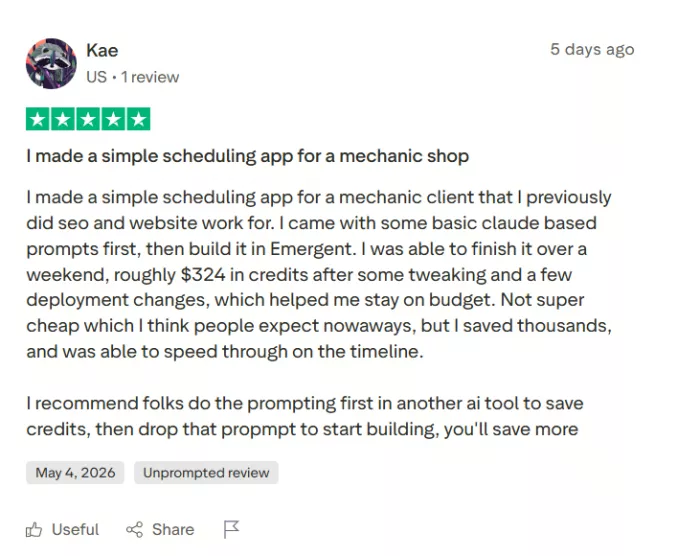 Their tip: prompt in another AI first, then paste it in to save credits. | ★★★★★ TRUSTPILOT Smoothest mobile build. One builder called it the easiest mobile app experience they had used on any vibe-coding platform, and said support actually helped when they got stuck. 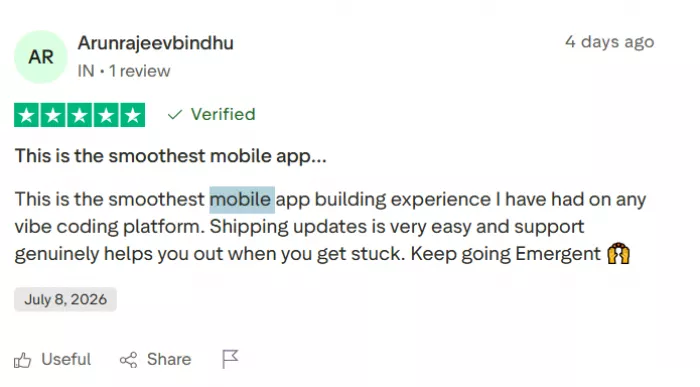 Shipping updates was the part they rated highest. |
★★☆☆☆ TRUSTPILOT Loops and lost credits. A user hit an agent that kept trying to fix the same bug, burned through credits doing it, and found the in-app helper close to useless. The recurring theme: paying for the AI’s own retries. | ★★★☆☆ TRUSTPILOT Great tool, cluttered lately. A fan of the product noted that recent banners and promos had started getting in the way of the actual task. A gripe I felt too: Buy Credits is never far from view. |
★☆☆☆☆ TRUSTPILOT Billing gone wrong. One reviewer said they cancelled, received a confirmation, then saw another charge attempt, and lost confidence in the billing entirely. 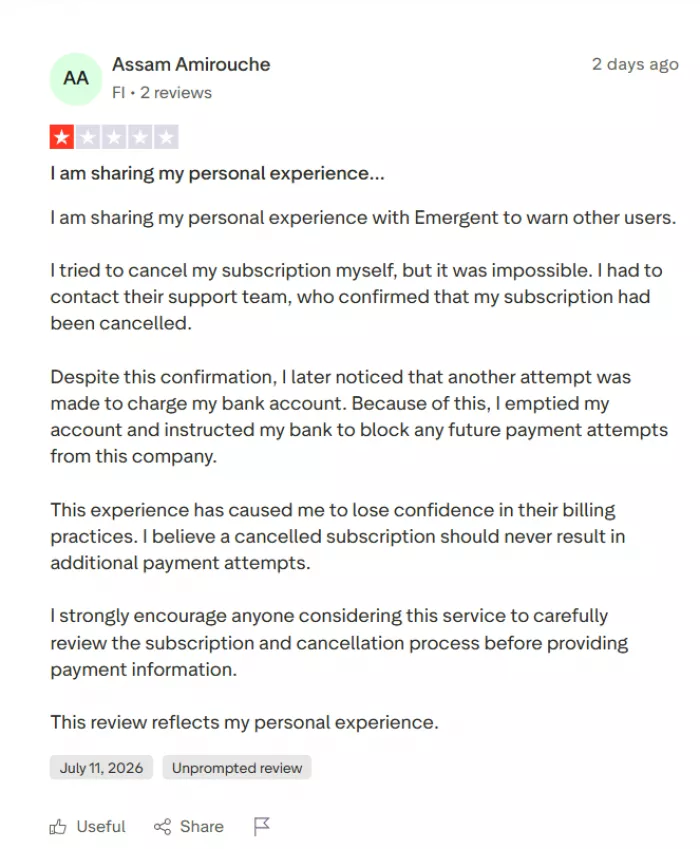 Cancellation and refund complaints recur across pages. | ★★★☆☆ TRUSTPILOT Good with a clear scope. A product manager found it solid for building a few apps, as long as the requirements were well defined up front. 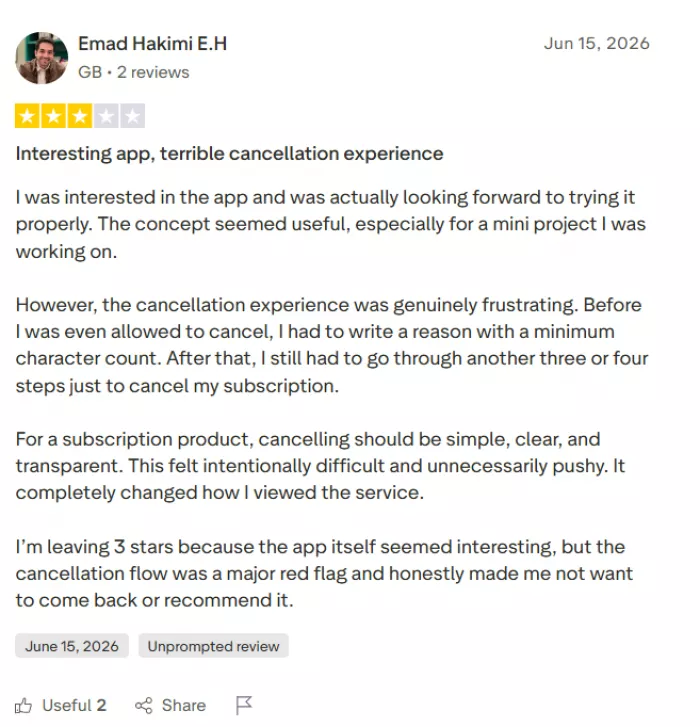 Vague briefs, they warned, cost the most credits. |
What the reviewers concluded
No Code MBA HANDS-ON BUILD Built a virtual try-on app and came away impressed, with the standard caveat to test and refine before shipping anything for real-world use. |
Listicler TESTER Rates the self-review loop a generation ahead of tools that just dump code, and pegs Emergent at replacing roughly the first 70% of a junior developer’s greenfield work, not the whole job. |
Banani PM / DESIGN LENS Calls it reliable for shipping functional web and mobile apps, especially where logic matters more than looks, while flagging that it is credit-intensive and light on pixel-perfect design control. |
eesel AI REVIEW ROUND-UP Reports that the single most common complaint by far is credit pricing, with support often absent and refund requests frequently denied when credits get eaten. |
Hack’celeration 5-CRITERIA TEST Genuinely powerful and fast, but the credit meter burns unpredictably, sitting on a split public Trustpilot picture near the high 2s out of 5. |
How the scores stack up
Trustpilot is noisy and the numbers move week to week, but the relative picture is useful. Emergent lands mid-pack: well above the bargain-tier tools, below the design-first favourites.
| Platform | Trustpilot (approx) | Read |
|---|---|---|
| Emergent | 2.7 - 3.1 | Powerful but polarising; credit & support gripes |
| Lovable | ~3.9 | Design-first crowd favourite |
| Replit | ~3.0 | Broad dev workspace, more technical |
| Base44 | ~2.8 | Simple, fast, less control |
| Bolt.new | ~1.4 | Fast prototyping, rocky reputation |
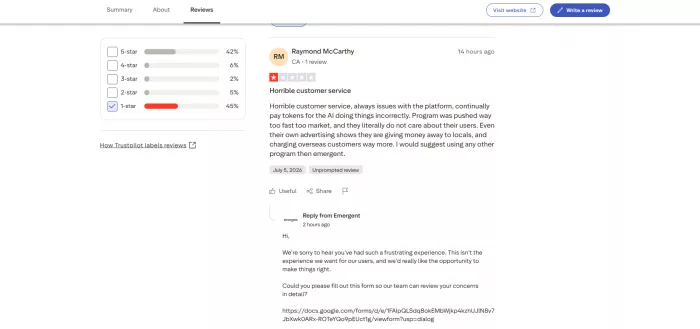
Snapshot from Trustpilot across 2026. Emergent’s score has hovered in the high 2s to low 3s over roughly 557 reviews, and the company replies to a majority of negative ones.
My honest verdict
I got genuinely surprised, and then I got genuinely stopped. The build quality on that hero and the layout was better than I had any right to expect from a single free prompt, and the planning interview plus the self-testing agent made it feel like working with a small team rather than a chatbot. If you want a good-looking prototype fast, this delivers on the promise. But the free tier is a locked demo, full stop. Ten credits buys you one handsome page you cannot publish without paying, and the instant you want a permanent link you meet the wall. My build ate about seven of those ten credits, so a real second attempt was off the table. Add the wrong trailer and the scrambled cast photos, and it is clear this gets you to an impressive first draft, not a finished site. And the pattern across hundreds of reviews matches my afternoon almost exactly: fast and capable when it flows, expensive and frustrating when it loops, with billing and support that swing from excellent to silent. My play: treat the free tier as a test drive, keep every prompt tight, prompt elsewhere first to stretch credits, and only pay once the workflow clearly clicks. Go in with eyes open on cost and it can save you weeks. Go in expecting a free launch and you will bounce off the paywall like I did. |
3.6/5 the tool overall | 2.5/5 the free tier alone | ~7 cr my one build | 0 pages I could publish free |
Who should use it, who should wait
Reach for Emergent if you are • A founder or freelancer who needs a working prototype or MVP to show, fast. • A product manager building an internal tool your engineering team has no time for. • Validating an idea and want something real in front of users before hiring a developer. • Comfortable paying for a plan once the workflow proves itself. | Hold off for now if you are • Expecting to design, build, and launch a real site entirely for free. • A team that needs predictable, forecastable monthly costs. • Shipping mission-critical, regulated, or pixel-perfect work. • Unwilling to babysit prompts and watch the credit meter. |
Comments