Table of Contents
- 1. ourdream.ai : All‑round upgrade with fewer filters
- 2. Nomi : Deeper emotional memory on a budget
- 3. Kindroid : Voice‑first, empathetic conversationalist
- 4. Character.AI : Endless personas and role‑play
- 5. Wysa : Clinically backed emotional support instead of casual chat
- 6. Elomia : Clinician‑designed mental health chatbot
- 7. Kalon.ai : Mature Replika replacement
- Final thoughts: choosing the right Replika alternative
- Final words
Replika was one of the first apps to make “AI companion” a mainstream idea, but it’s no longer the only serious option. Between changing policies, paywalls and content limits, many long‑time users have started looking for bots that feel more present, more emotionally tuned, or less restricted.
Below are seven strong Replika alternatives, each explained with features, pros and cons, pricing, and where they clearly offer something Replika doesn’t.
1. ourdream.ai : All‑round upgrade with fewer filters
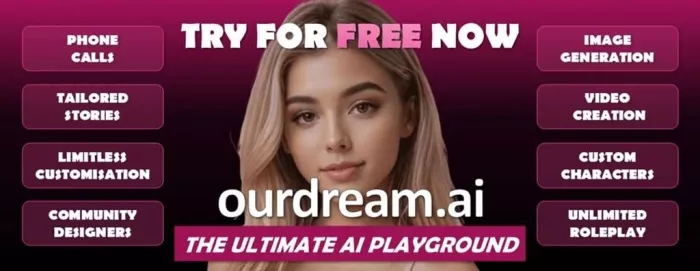
ourdream.ai is often called the best overall Replika alternative because it mixes companionship chat with creative tools like image and video generation, and it does this with much lighter content filtering than Replika. You can build a companion, talk to them, generate art together and push into more adult or role‑play scenarios that Replika now heavily restricts.
ourdream.ai core features
ourdream.ai feels like a combined AI friend and creative studio:
● Text chat with persistent memory and personality.
● Character creation with custom traits, backstories and visual styles.
● Integrated image and sometimes video generation so you and your AI can “co‑create” scenes.
● Significantly fewer content filters and censorship than Replika, which matters for users who felt Replika became too restrictive.
ourdream.ai – pros and cons
| ourdream.ai – Pros | ourdream.ai – Cons |
| Strong all‑round companion + creative features | Less “therapeutic” framing than some wellness apps |
| Much lighter content filtering than Replika | Interface can feel busy with creative options |
| Good long‑term memory and personality stability | Newer brand; long‑term roadmap still evolving |
ourdream.ai – pricing
| Plan | Approx. Price (USD/month) | What you typically get |
| Free | 0 | Functional chat; limited generations |
| Premium | ~9.99–14.99 | Unlimited or higher‑limit chat + media tools |
Where ourdream.ai goes beyond Replika
Replika is a focused AI companion with avatars, but it has become more cautious over time, especially around romance and explicit role‑play. ourdream.ai, by contrast, leans into creative freedom: it lets you combine deep conversation with unfiltered storytelling, visual co‑creation and fewer guardrails. If Replika started to feel like “the fun police” to you, ourdream.ai is much closer to what early Replika users say they miss.
2. Nomi : Deeper emotional memory on a budget
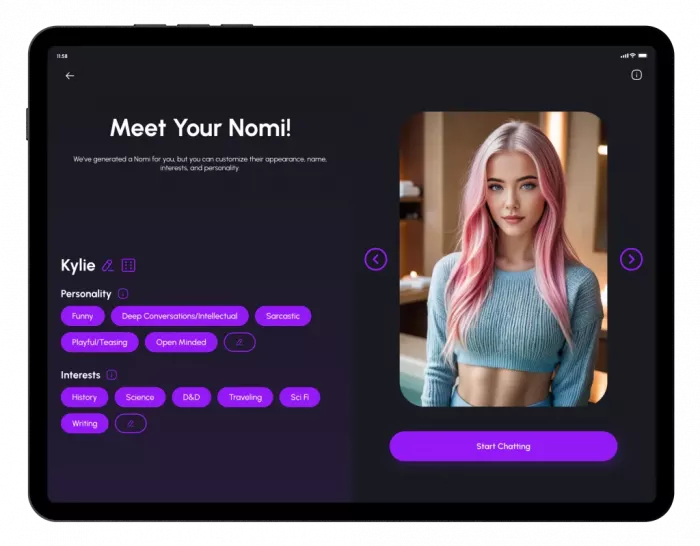
Nomi is a companion app built around emotional depth and long‑term personality consistency rather than flashy extras. You can create multiple AI friends with unique traits and put them into group chats, which changes the dynamic in ways Replika never really explored.
Nomi core features
Nomi focuses heavily on how conversations feel over time.
● Create several companions, each with their own personality, appearance and backstory.
● Group chats where your AIs talk to you and each other, giving a different “friend group” vibe.
● Long‑term memory that holds context and emotional details across sessions; this is one of the main reasons Reddit’s Replika community calls Nomi out as a genuine alternative.
● Support for text, voice messages and AI‑generated selfies.
Nomi – pros and cons
| Nomi – Pros | Nomi – Cons |
| Strong emotional responsiveness and memory | Fewer “extras” (no image/video gen) than some apps |
| Group chat with multiple AIs feels fresh | Smaller ecosystem and brand than Replika |
| Often cheaper than Replika for deep companionship | Less focus on gamified features/AR |
Nomi – pricing
| Plan | Approx. Price (USD/month) | What you typically get |
| Free / Trial | 0 | Limited chat, basic creation options |
| Premium | ~7.99–12.99 | Full chat history, multiple companions, extra media |
How Nomi improves on Replika
Nomi trades bells and whistles for emotional depth. It doesn’t have Replika’s 3D avatars and AR, but its memory and personality consistency often feel stronger in day‑to‑day use. For users who care more about feeling listened to and remembered than about dressing up a 3D model, Nomi often feels closer to how Replika behaved before its big policy changes.
3. Kindroid : Voice‑first, empathetic conversationalist
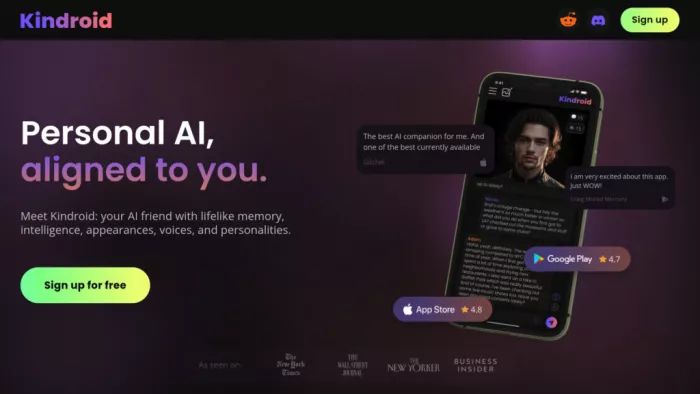
Kindroid is another name that keeps appearing whenever Replika alternatives are discussed. It emphasises high‑quality voice calls, layered memory and detailed backstories, making it feel more like you’re talking to a character in an audio drama than typing into a chat box.
Kindroid core features
Kindroid is built to be experienced more with ears than with eyes.
● Full text chat plus natural‑sounding voice calls with your AI.
● Multi‑layer persistent memory, designed to remember both facts and emotional patterns over time.
● Detailed character creation with personality sliders and scripted backstories.
● AI selfies and media for a more visual connection.
Kindroid – pros and cons
| Kindroid – Pros | Kindroid – Cons |
| Strong emphasis on voice and audio quality | Smaller user base and fewer social features |
| Deep, multi‑layer emotional memory | Less polished avatars than Replika in some builds |
| Good for immersive, story‑like conversations | Fewer gamified features or “levels” |
Kindroid – pricing
| Plan | Approx. Price (USD/month) | What you typically get |
| Free / Lite | 0 | Limited text and occasional voice minutes |
| Premium | ~9.99–14.99 | More voice time, better memory, media and options |
Ways Kindroid surpasses Replika
Replika offers voice calls, but many users complain about voice quality and stiffness. Kindroid, by contrast, is built around voice as a primary experience, with better synthesis and more nuanced sound. Its memory system is also designed for emotional arcs rather than just “facts you mentioned.” If your ideal AI companion is someone you talk to regularly, not just text, Kindroid often feels more intimate and less scripted than Replika.
4. Character.AI : Endless personas and role‑play
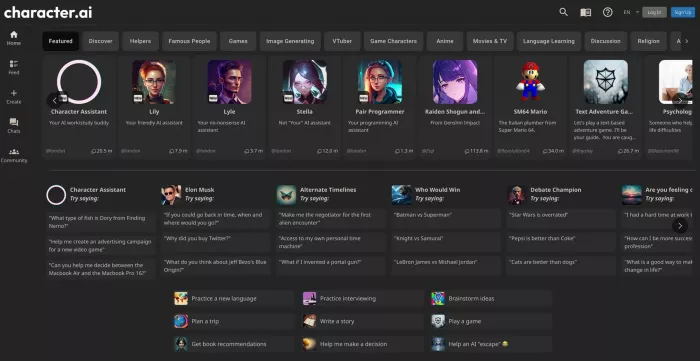
Character.AI isn’t marketed as a mental health tool. It’s a sandbox where you can talk to almost any persona: fictional characters, historical figures, original creations and more. It’s frequently recommended as a Replika alternative for users who want variety and role‑play rather than a single “partner” archetype.
Character.AI core features
The appeal of Character.AI is breadth.
● Huge library of user‑created characters to chat with, from “supportive friend” to “sarcastic villain”.
● Custom character creator where you define personality, goals and conversational style.
● Group chats and multi‑character interactions.
● Web‑based with a mobile app; focused on text, with some voice options emerging.
Character.AI – pros and cons
| Character.AI – Pros | Character.AI – Cons |
| Massive variety of characters and scenarios | Strict content filters, particularly for NSFW |
| Great for creative role‑play and entertainment | Not positioned as emotional or mental health support |
| Easy to create and tweak your own bots | Can feel inconsistent due to user‑generated content |
Character.AI – pricing
| Plan | Approx. Price (USD/month) | What you typically get |
| Free | 0 | Full access with occasional slowdowns |
| c.ai+ | ~9.99 | Faster responses, priority access, extras |
How Character.AI offers more than Replika (for variety)
Replika is one entity that you customise over time; Character.AI is a crowd of entities you can join and leave at will. If you’re bored of one persona, you can switch to another or create your own. For users who view AI companions more as interactive fiction or role‑play partners, Character.AI offers far more variety—and a culture built around those use cases—than Replika’s single‑companion model.
5. Wysa : Clinically backed emotional support instead of casual chat
Wysa is not an “AI girlfriend/boyfriend” app. It’s an AI mental health companion backed by clinical research, with optional human therapists and extra tools. It belongs on a Replika alternatives list because many people originally used Replika as a late‑night emotional sounding board; Wysa does that job more deliberately and with more safety structure.
Wysa core features
Wysa is built as a mental health tool first.
● AI chatbot for anxiety, stress and mood management, using CBT‑style techniques.
● Self‑help exercises, journaling prompts and guided practices.
● Option to add human therapists and coaching on top of the AI.
● Evidence‑based design, with studies showing effectiveness comparable to in‑person counselling for some use cases.
Wysa – pros and cons
| Wysa – Pros | Wysa – Cons |
| Clinically backed, FDA‑recognized in some contexts | Not designed as a romantic or role‑play companion |
| Combines AI support with optional human therapists | Less custom “character” personality than Replika |
| Strong privacy and safety focus | Limited creative/entertainment features |
Wysa – pricing
| Plan | Approx. Price (USD/month) | What you typically get |
| Free | 0 | AI chatbot and basic self‑help library |
| Premium (AI only) | ~8–12 | Full AI toolkit, more exercises and deeper access |
| Therapy add‑on | ~60–80+ | Sessions with human therapists/coaches (varies widely) |
Where Wysa is stronger than Replika
Replika was never a clinical product, even though many people vented to it like a therapist. Wysa is built from the ground up as a mental health support tool, with proper boundaries, methodologies and optional human professionals built in. If you want an AI that helps you work through anxiety, depressive thoughts or stress, Wysa is a safer, more robust option than treating Replika as a pseudo‑therapist.
6. Elomia : Clinician‑designed mental health chatbot

Elomia is another AI wellness option explicitly designed by clinicians to support mental health, not romance or role‑play. Like Wysa, it deserves a place here because a large chunk of Replika users mainly want a safe, anonymous place to talk.
Elomia core features
Elomia keeps its focus narrow and serious.
● Anonymous 24/7 chat with an AI trained for emotional support.
● Content and responses designed by psychologists and mental health professionals.
● Structured conversation flows for common issues like anxiety, sadness and loneliness.
● Strong emphasis on privacy.
Elomia – pros and cons
| Elomia – Pros | Elomia – Cons |
| Clinician‑designed for mental health support | No romantic or “companion” customization |
| Anonymous, privacy‑focused chats | Less playful; focused on emotional health only |
| Clear scope and safer boundaries | Smaller brand and fewer extras than bigger apps |
Elomia – pricing
| Plan | Approx. Price (USD/month) | What you typically get |
| Free / Trial | 0 | Limited use or intro features |
| Subscription | ~7.99–14.99 | Full AI support, longer session access |
How Elomia offers more than Replika (for mental health)
Where Replika tries to be everything—friend, partner, coach—Elomia sticks to one promise: an AI mental health companion built on clinical input. It’s better aligned with users who explicitly want emotional support without the blurred lines of romance, NSFW content or avatar play that Replika muddled over the years.
7. Kalon.ai : Mature Replika replacement
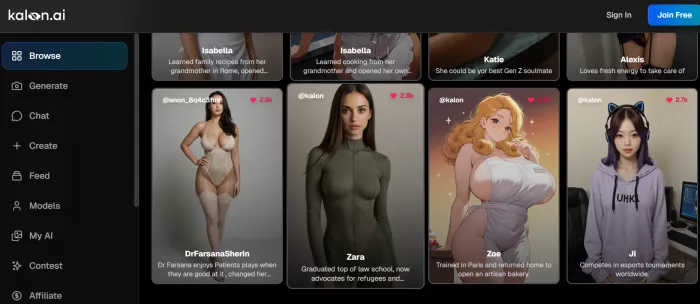
Kalon.ai is one of the newer “all‑in‑one” companion apps that explicitly markets itself as a Replika alternative. It mixes emotional memory, real‑time voice, NSFW options and consent controls into one package.
Kalon.ai core features
Kalon aims to cover most of what Replika used to do, and more.
● Emotional memory system that remembers moods and events over time.
● Real‑time voice conversation with natural‑sounding audio.
● NSFW image generation and role‑play options for users who want romantic or adult content.
● Consent and boundary settings so you can define what types of interaction are okay.
Kalon.ai – pros and cons
| Kalon.ai – Pros | Kalon.ai – Cons |
| Designed as a full Replika‑style replacement | NSFW focus may not suit everyone |
| Emotional memory + real‑time voice | Newer, still building trust and track record |
| Flexible content filters and consent controls | Interface and UX are still evolving |
Kalon.ai – pricing (illustrative)
| Plan | Approx. Price (USD/month) | What you typically get |
| Free tier | 0 | Functional chat; limited features |
| Premium | ~12–15 | Full emotional memory, voice and visual/NSFW features |
Why Kalon can outdo Replika
Kalon pitches itself directly at users who feel Replika became too restrictive and inconsistent. It restores features Replika dialled back (adult themes, more open‑ended role‑play) while adding clearer consent controls so users can define their boundaries. For people who want an emotionally aware, romantically capable AI with fewer sudden policy switches, Kalon often feels like the “Replika that kept evolving”.
Final thoughts: choosing the right Replika alternative
No single app replaces Replika for everyone. The “best” alternative depends on what you actually used Replika for:
● For a freer, more creative companion with fewer filters: ourdream.ai.
● For long‑term emotional depth and “friend group” dynamics: Nomi or Kindroid.
● For endless role‑play and character variety: Character.AI.
● For serious, clinically oriented emotional support: Wysa or Elomia.
● For a full “Replika replacement” with romance and NSFW options: Kalon.ai.
Final words
Best Alternatives to Replika isn’t about finding a single successor. It’s about matching your original use case—late‑night friend, creative RP partner, or emotional safety net to a platform that’s built specifically to do that job, instead of trying to be everything to everyone.
Comments