There is a folder on my desktop called logo-graveyard. It holds just over 300 files: rejected marks for two client MVPs, a friend's coffee cart, a dead newsletter, and a bookkeeping firm that ended up hiring a human anyway. Exactly two logos from that pile are live today, and that ratio is the point. AI logo tools do not hand you a finished brand. They hand you a firehose of raw material, and the entire skill is in the filtering.
The filtering, though, can be learned in an afternoon. The process below is what separates the two keepers from the 300 corpses. It costs between nothing and about $65 and needs no software you do not already have.
The short version Pick a generative model (Recraft, Ideogram) for an original icon, or a template maker (Looka, LogoAI) to have fonts and layouts handled for you. Generate 30+ options, kill everything that fails at 16 pixels or in grayscale, rebuild the lettering in a real font, export an SVG master, and run a trademark search before print. $0 to $65 TYPICAL SPEND 3 to 4 hrs HONEST TIME COST 30+ OPTIONS TO GENERATE 2 colors MAXIMUM, IDEALLY |
Two kinds of AI logo tools, and the choice most guides skip
Every "AI logo generator" sits in one of two camps that produce completely different things. Knowing your lane prevents the most common frustration here: asking one type of tool to do the other's job.
Template assemblers
Looka, LogoAI, Canva
These combine a licensed icon library with fonts and palettes, then arrange the pieces around your business name. Output arrives print-ready.
• Text always renders perfectly, because it is real type
• You get matched extras: cards, social kits, letterheads
• Weakness: the icon pool is shared, so overlap with other businesses in your niche is a real risk
Generative image models
Recraft, Ideogram, Midjourney
These draw a genuinely new image from a text prompt. The results can be striking and original, but they arrive as raw pixels, not a packaged brand.
• Original marks nobody else will generate exactly
• Recraft outputs true vector SVG, which is rare and valuable
• Weakness: most models mangle lettering, so plan to add the name yourself
Five tools I keep coming back to
I have run real projects through each of these. The table sticks to what actually decided my choices: free tier reality, file costs, and the one job each tool wins.
| TOOL | TYPE | FREE PLAN REALITY | PAID FROM | FILES YOU GET | WINS AT |
|---|---|---|---|---|---|
| Looka | Template | Generate and preview only, downloads are paid | $20 one-time (1 PNG), $65 for the full set | PNG, SVG, EPS, PDF on Premium | Full brand kits in under an hour |
| LogoAI | Template | Design free, pay to download | $29 / $59 / $99 one-time | Vector file included even on Basic | Cheapest route to a vector file |
| Canva | Template | Genuinely free, with a big trademark catch (below) | Free, Pro adds assets | PNG, SVG on paid | Speed and zero cost |
| Ideogram | Generative | ~10 slow credits weekly, images are public | Around $8/mo | JPG/PNG raster | Readable text inside generated logos |
| Recraft | Generative | 50 credits daily, public and non-commercial | $10/mo billed annually, ~$12 monthly | Native SVG vectors | Original icons that scale cleanly |
Prices checked against official pages and current reviews, July 2026. Billing shifts, so confirm at checkout.
Two field notes. Looka's $20 tier buys one low-resolution PNG, a preview rather than a package, so treat $65 as the real price. Midjourney still makes lovely illustrative marks, but with no free tier (plans start at $10 a month) and no vector output it rarely earns a spot in my logo runs.
Designing a logo with AI in 7 steps
The order matters: most bad AI logos come from opening a generator at step 1 instead of step 4.
Step 1. Write a one-line brand brief
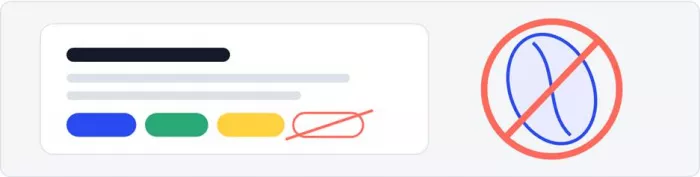
Before touching any tool, write a single sentence: your name, what you sell, three adjectives, and one thing to avoid. For the coffee cart it was "Fernway Coffee, specialty espresso cart, warm, handmade, unfussy, nothing that looks like a generic coffee bean." That last clause did the most work. Generators default to cliches; naming the one you refuse steers around it.
TEMPLATE [Name], [what you sell], [adjective, adjective, adjective], avoid [the obvious cliche in your industry]. |
Step 2. Pick the logo type before the tool picks for you
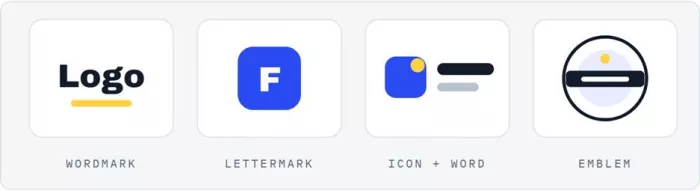
Four basic shapes exist, and deciding upfront halves your generation waste. A wordmark is styled text alone, the safest choice for unusual names. A lettermark uses initials, handy when the name runs long. An icon plus wordmark is the standard combo most small businesses want. An emblem locks text inside
Four basic shapes exist, and deciding upfront halves your generation waste. A wordmark is styled text alone, the safest choice for unusual names. A lettermark uses initials, handy when the name runs long. An icon plus wordmark is the standard combo most small businesses want. An emblem locks text inside a badge, which photographs well on merch and terribly in a website header. If your name is distinctive, a plain wordmark sidesteps the whole icon lottery.
Step 3. Choose your lane
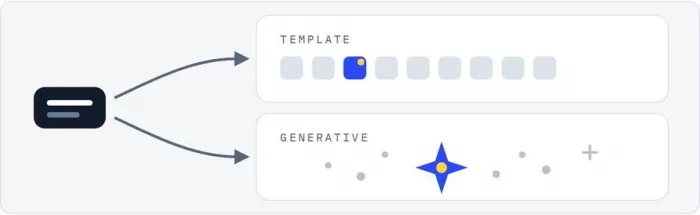
Now match the brief to a tool type. Want a complete, done-tonight package with business cards? Template assembler: Looka for quality, LogoAI to save money on the vector file. Want an original mark no competitor can stumble into? Generative model, and Recraft is my default because it hands you an SVG instead of pixels. On a zero budget, Canva is the honest answer; just read the trademark section before you fall in love with anything.
Step 4. Generate 30 options, not 3
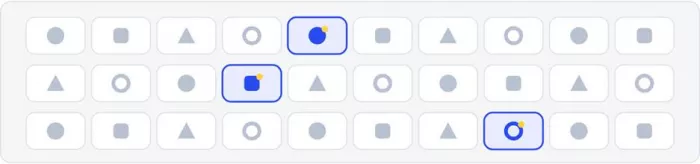
This is where people undercook it. The first batch is always the worst, because you have not learned the tool's habits yet. I generate in rounds of four, changing one variable per round: style word, then color, then composition. By round eight you have 32 candidates and you know what the model does when you say "geometric" versus "hand drawn." Note the prompt behind anything decent; you will re-roll variations of it later.
ROUND DISCIPLINE One variable per batch. Change the style word and the palette together and you learn nothing about why a result improved. |
Step 5. Filter with the small, gray, and far tests
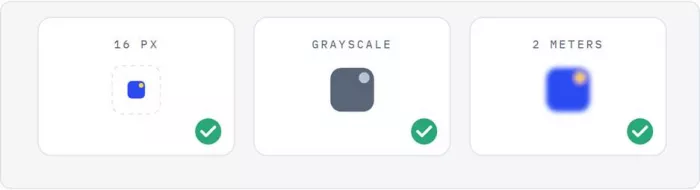
Now kill your darlings. Every candidate faces three checks; in my last full run, 27 of 32 died here. That is normal.
• The 16 pixel test. Shrink it to favicon size. If it turns to mud, it fails. This single test eliminates most generative output, which loves fine detail.
• The grayscale test. Screenshot it and desaturate. A mark that needs color to be legible will betray you on invoices, stamps, and one-color printing.
• The far test. Stand two meters back, or shrink the browser to 25%. Can you still tell what it is? Signage and sponsor banners live at this distance.
Step 6. Edit the survivors by hand
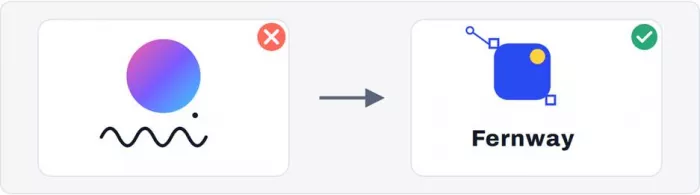
No raw AI output should ship untouched, for quality and for the ownership angle covered below. The edits that matter most: replace generated lettering with real type you set yourself, cut the palette to two flat colors, and add breathing room, because generators crowd elements. Template tools have built-in editors for this; for generative output, rebuild the text layer in Canva, Figma, or Inkscape, all free. One personal rule: if the tool suggests a font you have seen on three other local businesses, change it. Font sameness is the loudest tell of a template logo.
Step 7. Export real files and clear the name
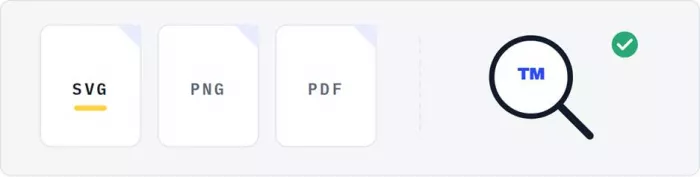
A logo you cannot reproduce is worthless, so leave with the right files (table below), starting with an SVG master. If your tool only gave you a PNG, vectorize it: Recraft can regenerate in vector, Illustrator's Image Trace works, and Inkscape's Trace Bitmap is free. Then spend 20 minutes on clearance: search the USPTO trademark database for your name and mark description, search your industry plus icon concept on Google Images, and check the matching domain and handles. Twenty minutes now beats a cease-and-desist later.
The prompt formula that stopped wasting my credits
Generative models reward boring, structured prompts. Poetic briefs produce posters, not logos. After burning more credits than I want to admit, everything I run follows one skeleton:
THE SKELETON flat vector logo mark of [one concrete subject] , [2 style words] , [color] on white background, minimal, geometric, centered, no text "No text" is the highest-value phrase here. Models invent broken letterforms, and every fake letter wastes visual budget. Add the name yourself in step 6. The exception is Ideogram, which renders real words well enough that wordmark experiments are viable. |
Three real prompts from recent projects, each of which produced a shortlist candidate:
| flat vector logo mark of a moka pot, mid-century, single burnt orange on white background, minimal, geometric, centered, no text |
| flat vector logo mark of a ledger book forming a mountain, trustworthy, modern, deep navy on white background, minimal, geometric, no text |
| flat vector logo mark of a winding trail inside a circle, energetic, clean, forest green on white background, minimal, flat, no text |
The files you actually need
Cheap tiers quietly hold these hostage, which is how a $20 purchase becomes $65. Before paying for any plan, confirm it includes at least the first two rows.
| FILE | WHAT IT IS | WHERE YOU WILL NEED IT |
|---|---|---|
| SVG | Vector master, scales infinitely with no quality loss | Everything: this is the source of truth for print shops, signage, and every other export |
| PNG, transparent | Raster with no background, at 1000px+ wide | Website header, documents, presentations, overlays on photos |
| Monochrome versions | All-black and all-white variants of the mark | Invoices, embroidery, engraving, dark-mode interfaces |
| PDF (vector) | Print-friendly wrapper around the vector art | Commercial printers and merch vendors often ask for this first |
| Favicon set | 16, 32, and 180px squares of the icon alone | Browser tabs, app icons, social profile pictures |
Ownership, copyright, and the trademark question
This is where AI logos genuinely differ from designer logos, and where founders get surprised. Three facts, current as of mid-2026:
Copyright: probably not yours
The US Copyright Office's position is that purely AI-generated work lacks the human authorship copyright requires, and typing a prompt does not count. Meaningful human edits can protect the parts you changed, which is one more reason step 6 is not optional.
Trademark: yes, with homework
Trademark law protects marks that identify your business in commerce, and the USPTO does not ask who or what drew the design. An AI logo can be registered if it is distinctive, actually in use, and clear of existing marks. Run the search before you commit.
Tool terms: read them
Canva states that logos built from its templates and library elements are non-exclusive and cannot be trademarked (fonts, simple shapes, and lines excepted). Looka transfers full ownership only on the Premium package. Recraft's free tier is non-commercial. The fine print is the product.
None of this is legal advice. If the brand matters, an hour with a trademark attorney costs a fraction of a forced rebrand, and I have watched one happen to a company that skipped the search.
Where AI logos go wrong
Gradient soup
Generators adore glossy multi-color gradients, which die in embroidery, engraving, and single-color print. Two flat colors is the ceiling for a small business mark; one is often better.
Letter salad
Ask most models for your name and you get glyphs from an alien alphabet. Never ship generated lettering. Set the name yourself in a licensed font and kern it by eye.
The sameness trap
Template libraries recycle a shallow pool of icons per industry. Before committing, search your niche plus icon concept and count your neighbors. My bookkeeping client's first pick had four near-twins in one search.
Falling for the mockup
Tools present every candidate on foil business cards and sunlit storefronts, and the staging flatters weak marks. Judge the mark naked on a white screen. If it only looks good staged, it is the mockup you like.
Final VerdictWorth it, with clear eyes After a year of real launches through these tools, my position is this: AI logo generation is now genuinely good enough for a side project, a local business, a market stall, or any MVP that needs to look credible by Friday. For roughly $65 and one focused afternoon, I have repeatedly gotten results that would have cost twenty times that five years ago. The two survivors from my graveyard folder still hold up, and clients have never once guessed their origin. What the tools still cannot do is think. They do not know that your competitor already owns green, that your name reads differently in another language, or that your ambitions in three years should shape the mark today. That strategy layer is what a good designer actually sells, and no prompt replaces it. My working rule now: Recraft or Ideogram when I want to explore original directions, Looka when someone needs the complete kit tonight, and a human professional the moment a brand has to carry serious weight for years. Use the machine for volume. Keep the judgment for yourself. |
Comments