Table of Contents
- Meet Blaze AI: The “Team of One” That Doesn’t Sleep
- How Blaze Thinks About Marketing: From Blank Page to Calendar
- The Engine Room: Writing, Repurposing, and the Repetitive Work
- Brand Voice: Blaze’s Approach to Sounding Like the Brand
- Workflows, Approvals, and Maintaining Human Oversight
- Editor Experience: Playful Rather Than Intimidating
- Content Quality: A Clear‑Eyed Assessment
- Pricing: What Blaze Costs to Keep on the Team
- Blaze AI vs Other Tools: Position in the Landscape
- Real‑World Performance Snapshot
- Pros and Cons: A Consolidated View
- Overall Verdict: Where Blaze AI Fits
Blaze AI functions like the overworked marketer that keeps getting postponed to “next quarter.” It sits in the browser, quietly building strategies, generating content, and nudging brands toward a publishing schedule that would normally require an agency retainer in the four‑figure range. The central question is not whether Blaze can write copy that is now table stakes for AI but whether Blaze can run a substantial portion of the marketing machine without reducing the brand to generic AI output.
Meet Blaze AI: The “Team of One” That Doesn’t Sleep
Blaze AI is an AI‑powered marketing and content platform designed around a specific profile: solo founders, compact marketing teams, and small agencies juggling blogs, social media, emails, and ad copy from a single overworked browser. Instead of acting as “just another AI writer,” Blaze combines planning, creation, repurposing, scheduling, and workflow into a single environment.
Conceptually, Blaze functions less like “ChatGPT with a UI” and more like a lightweight, opinionated marketing operating system: strategy blueprints, a document editor, repurposing engines, calendars, Kanban boards, and approval workflows all sit under one roof. The focus is not massive corporate marketing departments; the emphasis is on freelancers, two‑person startups, and small businesses that require consistent output without assembling and maintaining multiple tools.
Typical scenarios where Blaze fits well include:
● A solo creator posting across LinkedIn, Instagram, and email while simultaneously delivering client work.
● A small business owner aware that content drives growth but lacking bandwidth for detailed strategy documents.
● A small agency standardizing client workflows without building custom internal systems.
How Blaze Thinks About Marketing: From Blank Page to Calendar
Most AI tools are prompt‑driven assistants that remain passive until instructed. Blaze is designed to be more proactive, suggesting not only how to phrase content but also what to discuss and when.
Strategy Mode: “Provide a Website, Receive 12 Months”
When provided with a website or concise business description, Blaze generates a content strategy and a long‑term content plan, often structured as months of themes, topics, and campaign ideas. This does not replace deep strategic consulting, but it goes far beyond isolated prompts and offers a coherent narrative arc for ongoing publishing.
The strategy is anchored in workspaces that house projects, databases, Kanban boards, and calendars. This design moves ideation, planning, and drafts from scattered documents into a structured system that can be tracked and executed.
Workspaces: A Compact Marketing Command Center
Within a workspace, Blaze centralizes ideas, briefs, drafts, approvals, and publish‑ready assets. Tasks can be organized by project or campaign, tracked using board views, and tied directly to calendar slots so that vague goals like “post more” become scheduled deliverables with concrete drafts.
As a result, the environment behaves less like an experimental AI tool and more like a streamlined marketing stack contained within a single pane.
The Engine Room: Writing, Repurposing, and the Repetitive Work
If the strategy layer provides the map, Blaze’s content engine acts as the factory. This is where the platform demonstrates whether it truly extends beyond a polished interface sitting on top of generic text generation.
Multi‑Format Generation
Blaze is equipped to generate a broad range of marketing assets, including:
● Long‑form blog posts and guides.
● Social posts (hooks, captions, carousels) for major platforms.
● Email newsletters, nurture sequences, and sales emails.
● Ad copy, product descriptions, and website sections.
Content can originate from scratch via prompts, or from a “hero asset” such as a blog, landing page, or transcript that Blaze then expands into multiple social posts, emails, and ads. This repurposing capability aligns with the work marketers most frequently postpone: turning one strong idea into a multi‑channel presence.
Repurposing: One Idea, Many Outputs
Blaze treats repurposing as a core concept: one idea is handled as a campaign, not a single asset. A single blog post can be transformed into:
● A week of LinkedIn posts.
● Story‑style snippets for Instagram.
● A newsletter summary.
● Multiple ad variations testing different hooks.
For workflows where blogs are created and then under‑promoted, this design turns each published piece into a broader, structured footprint.
Brand Voice: Blaze’s Approach to Sounding Like the Brand
Brand voice consistency is one of Blaze AI’s central design priorities.
Voice Profiles in Minutes
By ingesting website content or representative samples, Blaze analyzes style, tone, and structural patterns to build reusable voice profiles (Brand Kits). Additional controls such as banned phrases and preferred terminology enforce internal language standards and avoid unwanted wording.
Once configured, this voice profile is applied across blogs, email campaigns, social posts, and repurposed assets that may never have passed through a human editor’s initial draft.
How Close the Match Gets
In practice, Blaze’s voice modeling delivers a high‑quality approximation suitable for most day‑to‑day marketing content. The system tends to capture:
● Overall tone and level of formality.
● Typical sentence rhythm and structure.
● Common stylistic tendencies.
However, certain nuances still benefit from manual refinement:
● Very specific cultural references or in‑jokes.
● Fine‑grained pacing and rhetorical signals.
● Regional nuances such as spelling variants and local idioms.
The resulting output behaves like a competent “junior writer” version of the brand, handling the bulk of drafting while leaving detailed voice nuance to final human edits.
Workflows, Approvals, and Maintaining Human Oversight
Blaze is built on the assumption that AI should operate inside well‑defined workflows rather than publishing autonomously.
Human‑Reviewed by Design
Workflows can be configured so each asset moves from draft to review to approval before being marked ready for distribution. This enforces a clear operating model:
● AI generates and repurposes content.
● Human reviewers handle factual verification, tone decisions, and compliance.
● Approved content is queued for posting or export.
This configuration ensures Blaze functions as a powerful assistant rather than an unsupervised publisher and keeps editorial judgment where it belongs.
Collaboration Without Enterprise Overhead
On Team‑level and higher tiers, multiple collaborators can comment, edit, and assign tasks in real time inside each document. This setup removes version chaos and keeps all discussion tied directly to content, which is especially useful in small agencies and compact in‑house teams.
For organizations that have moved beyond single‑user AI tools but do not require the complexity of large enterprise marketing suites, these collaboration and workflow features provide a balanced level of structure.
Editor Experience: Playful Rather Than Intimidating
Interface design is a key adoption factor. Blaze deliberately avoids a “dashboard overload” approach and instead offers a bright, branded, and approachable workspace.
The editor behaves similarly to a modern document app, with:
● A clean writing surface without technical clutter.
● Clear navigation between strategy, projects, and individual content pieces.
● A learning curve that remains approachable for non‑technical business owners and subject‑matter experts.
There is still a period of orientation required to fully leverage workspaces and workflows, but the system is structured to help users feel effective rather than overwhelmed.
Content Quality: A Clear‑Eyed Assessment
Content quality determines whether Blaze can be trusted for real workloads.
Strengths in Daily Production
Blaze is particularly strong in several areas:
● Short‑form and repurposed content (hooks, captions, snippets, and summaries) generally emerges close to publish‑ready with minor edits.
● For blogs and email content, Blaze reliably supplies well‑structured outlines, coherent sections, and logical transitions.
● As an ideation partner, Blaze provides angles and variants that dramatically reduce time spent on initial brainstorming.
From a practical standpoint, Blaze often delivers a structurally robust first draft, leaving teams to add proprietary data, narratives, and brand‑specific detail.
Where Manual Work Remains Essential
Certain aspects of content still require human involvement:
● Verification of factual accuracy and inclusion of up‑to‑date or proprietary data.
● Integration of internal case studies, unique stories, and original insights.
● Refinement of introductions and conclusions for emotional resonance and narrative impact.
Since Blaze operates on large language models, outputs can be identified as AI‑generated by detectors such as Originality.ai, which is expected of this technology category and must be considered in contexts that scrutinize AI usage. The most effective framing is to treat Blaze as a time‑saving engine and structural assistant, not as an invisible replacement for expert authorship.
Pricing: What Blaze Costs to Keep on the Team
Blaze is priced to sit between low‑end hobby tools and the high cost of human‑only content production, while delivering more than simple text boxes.
Core Subscription Tiers
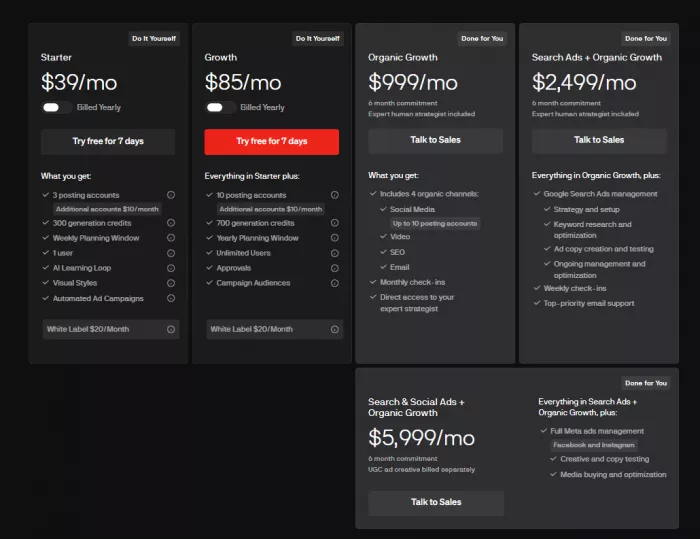
Enterprise arrangements with SSO, SCIM provisioning, and dedicated support are available for larger organizations requiring more governance. A free tier and a 7‑day free trial give access to core capabilities with posting limits and watermarking so the platform can be evaluated in live workflows before committing.
Value Considerations
For creators and small businesses publishing consistently across multiple channels, Blaze’s monthly cost is comparable to a small number of outsourced articles and routinely offsets its price by compressing the planning and drafting stages. For occasional publishers, the subscription can feel heavy relative to usage, making the free tier or shorter campaigns a more appropriate entry point.
Transparent trials and billing practices reduce the risk of long‑term commitments without adequate evaluation time.
Blaze AI vs Other Tools: Position in the Landscape
Blaze sits alongside tools such as Jasper, Writesonic, Copy.ai, Surfer SEO, and Social Pilot but occupies a distinct position.
Blaze vs Jasper: Different Operating Environments
Jasper is tailored toward larger teams and enterprise environments where integrations, governance, and multi‑language support remain central. Blaze is tuned to smaller setups that prioritize integrated workflows and speed over extensive configuration.
Key distinctions:
● Blaze centers on unified strategy, content creation, and repurposing within one environment.
● Jasper emphasizes advanced templates, broad language support, and enterprise‑level features.
For compact teams operating primarily from a laptop‑first workflow, Blaze tends to be the more straightforward fit, whereas Jasper often suits organizations with established marketing operations and complex requirements.
Other Tool Archetypes
In broader context, Blaze sits between specialized categories:
● Blog‑centric AI writers (e.g., Writesonic and Jasper) excel in long‑form and SEO‑driven content, often relying on separate schedulers and analytics tools.
● SEO platforms (e.g., Surfer SEO) prioritize keyword research, scoring, and optimization rather than workflow integration.
● Social schedulers (e.g., Social Pilot, Buffer) focus on scheduling, analytics, and approvals assuming content is created elsewhere.
Blaze is engineered as an “all‑in‑one” marketing assistant: not the deepest specialist in a single area, but a strong choice when a unified place for planning, writing, and repurposing is more valuable than best‑in‑class performance in one silo.
Real‑World Performance Snapshot
On Trustpilot, Blaze AI holds an “Excellent” rating in the high‑4s.
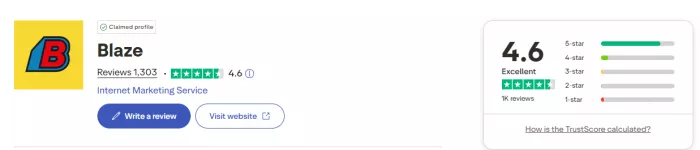
Customers repeatedly praising how much time it saves and how easy it is to get started. Many highlight the relief of having social media “on autopilot,” the ability to plan and schedule everything in one place, and the fact that posts look polished and on‑brand with minimal tweaking.

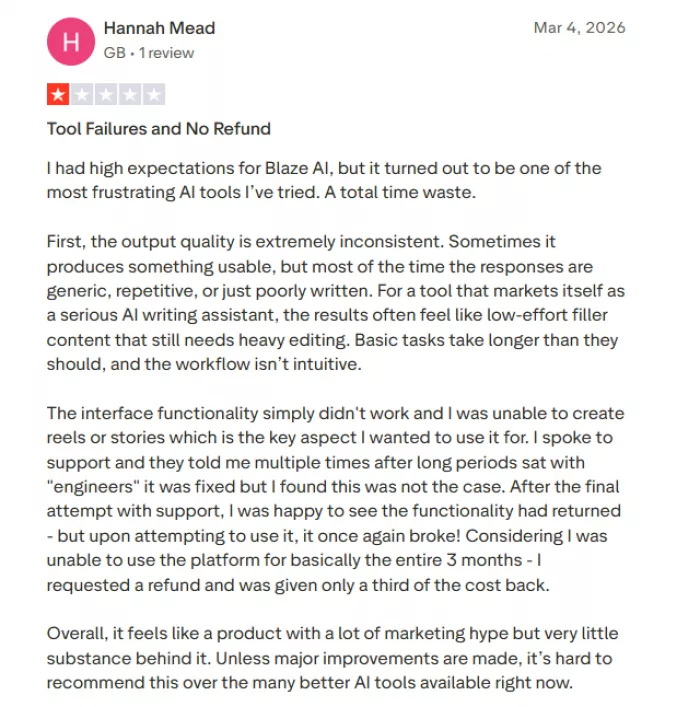
Critical comments focus on speed and usability quirks, such as sluggish performance, clunky bulk edits, and a desire for “better and faster AI.” Some customers also feel the AI can still sound generic without human polishing and mention cancelling when expectations of a fully hands‑off solution were not met. Overall, real‑world feedback frames Blaze as a powerful “almost autopilot” assistant that still benefits from thoughtful setup and occasional human refinement.
Pros and Cons: A Consolidated View
Key Advantages
Blaze’s core strengths can be summarized as follows:
● Robust brand‑voice modeling and Brand Kits that maintain consistent tone across channels.
● Repurposing capabilities that treat each idea as a campaign, not a single deliverable.
● Workflow and approval tools aligned with real marketing processes.
● An approachable, non‑intimidating interface suitable for both marketers and non‑technical business owners.
● Pricing and features optimized for solo marketers, startups, and small agencies rather than exclusively for large enterprises.
Key Trade‑Offs
The main limitations to factor in are:
● Human editing remains necessary for nuance, accuracy, and high‑stakes communication.
● Text quality is competitive with leading AI tools but not radically different in raw generation.
● AI‑detectable outputs require considered use in sensitive contexts.
● Subscription cost is best justified when content is produced regularly across multiple channels.
● Workflow features do not replace full‑scale enterprise marketing automation suites.
Overall Verdict: Where Blaze AI Fits
Blaze AI operates effectively as a capable junior marketing partner embedded in the browser. The platform does not replace strategic planning, creative direction, or editorial judgment; instead, it compresses the time required for planning, drafting, and repurposing so that those higher‑value skills can be applied more frequently and more effectively.
Blaze aligns best with creators, founders, and small teams producing multi‑channel content on a consistent basis, particularly when brand voice matters and workflows benefit from structure. Large enterprises requiring deep integrations and complex automation, or organizations focused on a single specialized function, may find greater value in narrower or more enterprise‑focused tools.
Positioned correctly as a structured, always‑on assistant that removes a large portion of marketing busywork Blaze AI earns a durable place in a modern content and marketing stack.
Comments