THE SHORT ANSWER Yes, technology is still one of the strongest career paths you can choose in 2026, but it's no longer the easy, guaranteed path it looked like a few years ago. The field pays well above the national average, is projected to keep growing faster than almost any other sector, and rewards people who keep learning. The honest catch is that the on-ramp got steeper: entry-level roles are harder to land, and AI has raised the bar for what a beginner needs to show. The good news for you is that these skills are more learnable than they've ever been, and you don't need anyone's permission or a fancy degree to start building them. If you're willing to make real things and get comfortable working alongside AI, this path is genuinely open to you. |
$106K Median tech wage, over 2x the U.S. median | 318K Projected tech and IT job openings every year |
7.0M Forecast U.S. tech workforce by 2035, up from 6.1M | 84% Of developers now use AI tools in daily work |
What people really mean when they ask this
When you ask whether technology is a good career path, you are usually asking three quieter questions underneath: Will there be jobs? Will they pay well? And is it worth the effort to get in, especially now that AI can write code?
Those are fair questions, and the honest answer to all three is encouraging, with an asterisk. Technology remains a huge, well-paid, and still-expanding part of the economy. But the headlines about layoffs and AI are not imaginary either. The truth lives in the space between the hype and the doom, and that is exactly where this guide will keep you. We will walk through the growth, the salaries, the real challenges, the roles worth aiming for, and how to actually break in, so you can make a decision that fits your life rather than someone else's fear or optimism.
The case for tech: the numbers are on your side
Let's start with the big picture, because it's genuinely good news for you. According to the U.S. Bureau of Labor Statistics, computer and information technology occupations are projected to grow much faster than the average for all jobs between 2024 and 2034. While total U.S. employment across every industry is expected to rise only about 3% over that decade, tech roles are set to expand several times faster, generating roughly 318,000 openings a year once you account for both new positions and people leaving the field.
The industry group CompTIA reaches a similar conclusion from a different angle. Its workforce research projects the U.S. tech workforce climbing from about 6.1 million workers in 2025 to just over 7 million by 2035. That is the kind of steady, structural growth that outlasts any single hiring cycle, and it is driven by forces that are not going away: cloud computing, cybersecurity, data, and the enormous build-out around AI itself.
The tech workforce keeps climbing
Projected U.S. net tech employment, 2025 to 2035 (CompTIA forecast).
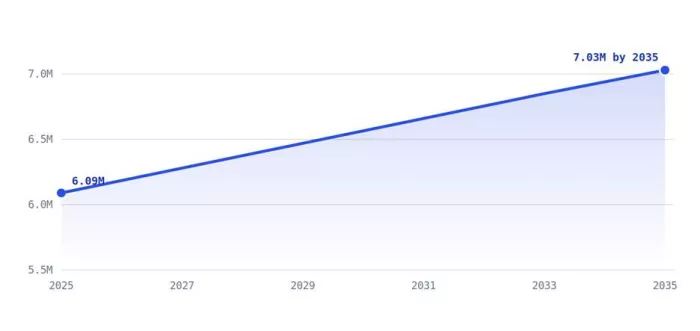
Source: CompTIA State of the Tech Workforce. Figures are projections; the trend line is illustrative.
What matters here is direction and durability. Individual companies will keep hiring and trimming as the economy moves, but the underlying demand for people who can build, secure, and operate technology is expanding across the whole economy, not just inside Silicon Valley.

Healthcare, finance, manufacturing, logistics, and government all now run on software, and they all need talent to keep it running. That breadth is part of what makes tech resilient: even when one sector slows, another is usually hiring.
The money: still one of the best-paid fields there is
If you're weighing whether all the effort is worth it, pay is usually what settles the question, and this is where technology quietly separates itself from most other careers. The BLS puts the median annual wage for computer and IT occupations at about $106,000, compared with roughly $49,500 across all U.S. jobs. In other words, the typical tech worker earns more than double the typical American worker, and that gap holds up even after the recent hiring slowdown.
Zoom into specific roles and the range is wide, which is actually good news: it means there is both a high ceiling and an accessible floor. Entry points like IT support let people get into the field without a four-year computer science degree, while specialists in AI, cloud, and security command some of the highest salaries in the entire job market. The chart below maps typical U.S. base-pay ranges for popular roles in 2026.
What tech roles pay in 2026
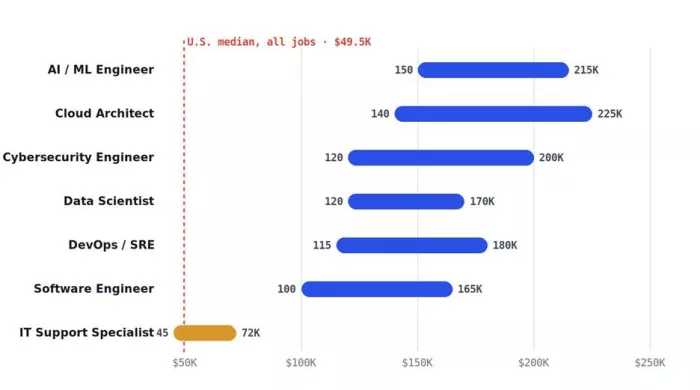
Sources: BLS, Robert Half 2026 Salary Guide, and aggregated market data. Ranges vary by location, company and seniority.
The whole field sits above the national median. That is the clearest single argument for choosing tech.

Data and analytics skills stay in demand as companies turn information into decisions.
Two things stand out. First, even roles at the lower end still clear the national median comfortably, so the field as a whole pays a premium. Second, the roles tied to AI, cloud, and security are pulling salaries up fastest, because companies are competing for a limited pool of people who can do this work. Certifications in cloud (AWS, Azure, Google Cloud) and security tend to move the needle most for pay, especially early in a career.
The honest part: why it feels harder to break in
Here is the tension you have probably sensed. If tech is growing and paying so well, why are there so many stories of new graduates sending out hundreds of applications with no reply? Both things are true at once, and understanding why is the most useful thing in this whole article.
The tech sector shed a large number of jobs across 2023, 2024, and 2025 as companies corrected for pandemic-era over-hiring and higher interest rates. On top of that market correction came a genuine technological shift. Generative AI tools now handle much of the routine work that entry-level developers were traditionally hired to do: boilerplate code, simple bug fixes, basic testing. Roughly 84% of developers report using AI tools in their day-to-day work, according to Stack Overflow's developer survey, and that has changed what a beginner job even looks like.
The clearest evidence comes from Stanford's 2026 AI Index. It found that employment for the youngest software developers, those aged 22 to 25, fell sharply from its 2022 peak, precisely the group whose early tasks AI now absorbs. Meanwhile, employment for more experienced developers at the same companies actually grew. The chart below shows that split.
Same field, opposite directions
Change in software developer employment since the 2022 peak, by age group.
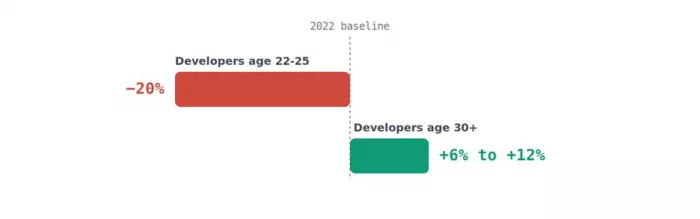

So the door is not closed, it has just moved. Experienced people are more valuable than ever, because AI multiplies what they can produce. Beginners face a steeper first step, because the tasks that used to be a gentle on-ramp are now automated. The encouraging counter-signal: some large employers, including IBM, have begun expanding entry-level hiring again, while shifting junior roles toward judgment, problem-solving, and working alongside AI rather than churning out routine code. And smaller companies and startups still hire juniors who can contribute quickly. The path exists. It just rewards preparation more than it used to.
Which tech careers are worth aiming for in 2026
Not every corner of tech is equally hot right now. If you are choosing where to point your energy, these are the areas with the strongest combination of demand, pay, and staying power.
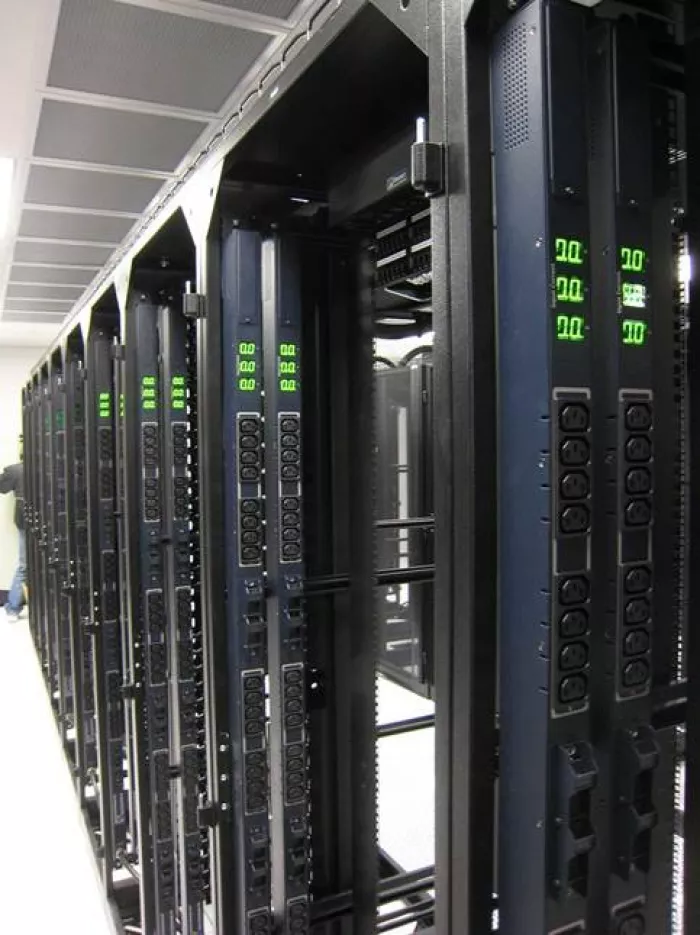
Cybersecurity and cloud infrastructure are among the most resilient specialties.
HIGHEST UPSIDE AI and Machine Learning The fastest-growing pay in the field. You build, tune, and deploy the models companies now depend on. Steeper learning curve, biggest reward. | MOST RESILIENT Cybersecurity A global shortage of millions keeps demand high even in downturns. Every company needs it, and the threats never pause. |
BACKBONE ROLE Cloud and DevOps Someone has to design and run the infrastructure everything else lives on. Cloud certifications turn into strong offers fast. | DATA-DRIVEN Data Engineering and Science AI runs on data, so people who can move, clean, and make sense of it stay in demand across finance, health, and retail. |
STILL CORE Software Engineering The classic path, now reshaped. Work shifts toward architecture, judgment, and directing AI rather than typing every line. | THE ON-RAMP IT Support and Systems The most accessible way in, often without a degree. A proven launchpad toward cloud, security, or engineering later. |
A useful rule of thumb: the roles that involve complexity and ownership are the ones AI strengthens rather than threatens. Anything that is mostly repetitive is getting automated; anything that requires understanding a messy problem and making a call is becoming more valuable.
Do you need a degree, and how do you break in?
Short answer: a computer science degree helps, but it is not the only route, and it is not a golden ticket on its own. Employers in 2026 care most about demonstrated skill, evidence that you can actually build and ship something, not just pass exams. That is genuinely good news, because it means the field is more open to self-taught developers, bootcamp graduates, and career switchers than most professions.

The fastest way in today is proof of real skills, backed by continuous learning.
Here is what tends to work regardless of your starting point:
• Build real projects, not just tutorials. A small portfolio of things you designed, built, and can explain beats a stack of certificates. Employers want to see you can take something from idea to working product.
• Learn to work with AI, not around it. Fluency with AI coding tools is now a baseline expectation. Show that you can use them well and, crucially, spot when they are wrong.
• Pick one specialty and go deep. Cloud, security, and data all have clear certification paths that employers recognize. Depth in one area stands out more than a thin layer across many.
• Get real-world reps. Internships, apprenticeships, freelance work, and open-source contributions all close the experience gap that trips up new grads.
• Target smaller companies early. When big firms pull back on junior hiring, small and mid-sized businesses often step in, and they value people who can contribute right away.
Coding bootcamps and self-study can work, but outcomes depend heavily on effort and on building a real portfolio. Graduates of computer science programs still tend to start at higher salaries and land jobs at higher rates, so if a degree is realistic for you, it remains a solid foundation. If it is not, skills plus proof can still get you there.
Who technology is (and is not) a great fit for
A career being good in the abstract does not make it good for you. Technology tends to suit people who genuinely enjoy solving problems, are comfortable being a permanent beginner as tools keep changing, and get satisfaction from building things that work. The pace of change that intimidates some people is exactly what keeps others engaged for decades.
It is a harder fit if you want a field that stays completely stable and never asks you to relearn your craft. Tech does not offer that, and it never really has. What it offers instead is high pay, strong long-term demand, flexibility including plenty of remote and hybrid roles, and the ability to work in almost any industry on earth. If continuous learning sounds exciting rather than exhausting, that is a strong signal this path will reward you.
It is also worth saying plainly: you do not have to become a hardcore programmer to work in tech. Product management, design, technical writing, data analysis, sales engineering, and IT operations are all real, well-paid careers inside the industry that lean on different strengths.
The bottom line
Technology is still a very good career path in 2026, arguably one of the best available when pay, growth, and flexibility are considered together. The field pays roughly double the national median, is projected to keep expanding for at least the next decade, and offers opportunities across nearly every major industry.
What has changed is the terms of entry. The days of walking into a well-paid junior role with minimal preparation are largely over, and AI is reshaping everyday work faster than at any previous point in the field’s history. That makes it more useful to follow practical technology coverage from platforms such as TimTis, especially when comparing new tools, emerging roles, and changes in the skills employers expect.
This shift rewards people who build real things, continue learning, and treat AI as a tool to master rather than a threat to fear. If that sounds like you, technology is more than a good career path. It is one worth committing to.
Comments