Table of Contents
- Two Similar Tools, Very Different Priorities
- Core Positioning and Ideal Use Cases
- User interface and Workflow Experience
- Content Quality, Brand Voice, and Control
- Long‑Form Content and Blogging
- SEO Features and Integrations
- Integrations and Ecosystem
- Collaboration, Teams, and Scaling
- Ratings and Social Proof
- Pricing and Value
- Final Verdict: Jasper vs Writesonic
Jasper and Writesonic are two of the most popular AI writing platforms and both can dramatically speed up how you plan, draft, and optimize content. Jasper leans toward brand voice, creativity, and collaboration, while Writesonic focuses more on SEO, speed, and scalable content production.
Two Similar Tools, Very Different Priorities
As AI writing moves from “nice-to-have” to “core infrastructure” for content teams, the platform you pick will affect brand perception, traffic, and workflow efficiency. Jasper and Writesonic both generate blogs, ads, emails, and social copy, but they are built with different priorities and target users. Jasper positions itself as a premium co-writer that understands your brand, while Writesonic behaves like a powerful content engine tuned for SEO and output at scale.
The sections below break down both tools across positioning, UX, content quality, SEO, integrations, collaboration, pricing, and overall value so you can clearly see where each one shines.
Core Positioning and Ideal Use Cases
Jasper is branded as a creative assistant for marketers, copywriters, brands, and agencies that care deeply about voice and narrative quality. Writesonic is aimed at growth-focused teams, SEO specialists, and founders who want to produce search-optimized content quickly and in large volumes.
How Jasper Is Positioned
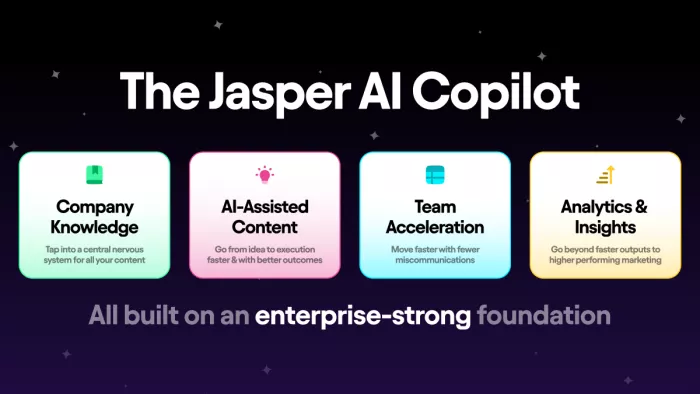
Jasper emphasizes brand voice, creativity, and cross-channel consistency. Its branding features, templates, and “Recipes” make it feel like a flexible co-writer that you can direct with natural language commands. It fits especially well when you need thought-leadership pieces, campaigns where landing pages, ads, and emails share a unified tone, or agency workflows with multiple distinct brands.
How Writesonic Is Positioned
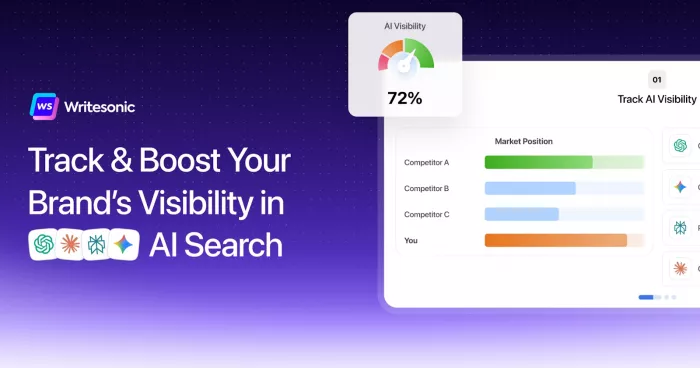
Writesonic markets itself as an all-in-one AI content suite with strong SEO capabilities and a wide range of templates. It is particularly attractive when you need to ship SEO blogs and programmatic pages at scale, prefer guided templates over free-form prompting, and want built-in tools for keyword usage, topic ideas, and bulk creation.
Positioning overview
| Dimension | Jasper | Writesonic |
| Core focus | Brand voice, creative quality, collaboration | SEO, speed, content volume at scale |
| Best suited for | Brand teams, agencies, pro copywriters | SEO teams, growth marketers, founders |
| Content emphasis | Narrative, persuasive copy, campaigns | Informational, SEO articles, landing pages |
| Workflow style | Co-writing and refinement in one editor | Template-driven, task-specific flows |
User interface and Workflow Experience
Both platforms offer modern dashboards, but their workflow philosophies are quite different.
Jasper uses a clean, document-first editor where you guide the AI with instructions and inline commands. You can highlight passages, ask for rewrites, change tone, expand sections, and iteratively shape the draft. Long-form workflows move you from topic to title, outline, and full article while keeping everything in a single, focused workspace.
Writesonic presents a busier, template-first dashboard that foregrounds tools and “AI agents” for specific tasks such as Instant Article Writer, Article Rewriter, LinkedIn posts, and more. You usually start by choosing a template, filling in fields like topic, tone, and keywords, and then generating content step by step, which is very friendly for non-writers and beginners.
UX and workflow comparison
| Aspect | Jasper | Writesonic |
| Interface style | Clean, document-first editor | Template-heavy, tool-packed dashboard |
| Main workflow | Command-driven co-writing in one doc | Task-specific, multi-step flows |
| Learning curve | Moderate, powerful once mastered | Easy for beginners via templates |
| Best for | Writers, editors, agencies | Marketers and operators wanting speed and structure |
Content Quality, Brand Voice, and Control
For teams that care about how the content sounds, Jasper has the edge in brand voice and fine-grained control, while Writesonic prioritizes consistent, on-topic output at scale.
Jasper’s Brand IQ (formerly Brand Voice) lets you feed in brand guidelines, examples, and product details so the AI can generate content aligned with your tone and messaging. Combined with granular editing commands shorten, expand, change tone, simplify, this makes it easier to polish drafts until they feel like they were written in-house.
Writesonic offers tone controls and many templates, which helps maintain a reasonably consistent style across content types, but its brand modeling is not as deep. You typically get solid, generic brand-friendly content that often needs an editorial pass to match a very specific voice, especially for high-stakes copy.
Quality and voice table
| Factor | Jasper | Writesonic |
| Brand voice modeling | Advanced (Brand IQ, style guides) | Basic tone settings, less brand-specific |
| Line-by-line control | Strong: inline commands and edits | Moderate: edit after generation |
| Best for | Persuasive and creative brand copy | Standard marketing and informational copy |
| Repurposing content | Built-in multi-channel reuse workflows | Multiple templates, more manual stitching |
Long‑Form Content and Blogging
Long-form blogging is a major use case for both tools, but the way they create drafts differs.
Jasper’s long-form tools are designed for collaborative drafting. You generate an outline, then expand each section while giving the AI instructions about angle, examples, or tone. Because everything stays in one editor, refining a piece feels similar to working with a human editor who can rewrite and improve paragraphs on command.
Writesonic’s long-form flows emphasize speed and structure. You define topic, main keywords, and sometimes headings, and the platform generates a full article that can reach several thousand words in a single run. This is powerful for quickly building out content libraries, but usually requires more post-editing to add nuance and adapt the article to your brand.
SEO Features and Integrations
SEO is where Writesonic is more opinionated natively, while Jasper fits best into a broader, integration-based stack.
Jasper supports SEO through optimized templates and integrations with external SEO tools like Surfer SEO and similar platforms. You draft in Jasper and rely on the SEO tool’s recommendations—keywords, headings, structure—to refine your article, which suits teams already using dedicated SEO suites.
Writesonic packs more SEO logic directly into its content flows. It can weave primary and secondary keywords into drafts, help you generate topic clusters and content ideas, and produce bulk SEO articles that follow consistent structures and keyword strategies.
SEO-oriented comparison
| SEO Aspect | Jasper | Writesonic |
| Native SEO guidance | Limited, template-based | Strong SEO-focused flows |
| Third-party SEO tools | Integrates well with external tools | Less dependent on external tools |
| Bulk SEO content | Possible but less automated | Designed for bulk SEO generation |
Integrations and Ecosystem
Integrations are important if you want your AI writer to plug smoothly into an existing stack.
Jasper integrates with popular marketing and writing tools on higher plans, including SEO platforms, grammar checkers, and publishing workflows, making it a natural fit for established teams with a clear toolchain. Writesonic connects with tools like WordPress, Zapier, and SEO platforms, and bundles Photosonic for image generation and Audiosonic for text-to-speech, turning it into more of a “content suite” than just a writer.
Collaboration, Teams, and Scaling
Both platforms support teams, but Jasper leans more “agency-grade,” while Writesonic emphasizes flexible usage and add-ons.
Jasper offers more advanced team features and role management on higher tiers, which is helpful if you manage multiple brands and need shared style guides, knowledge, and review workflows. Writesonic provides lighter collaboration but allows you to scale usage with extra word or token bundles and additional users, which can be cost-effective for growing content teams.
Ratings and Social Proof
Both tools are mature and well reviewed on major software review platforms.
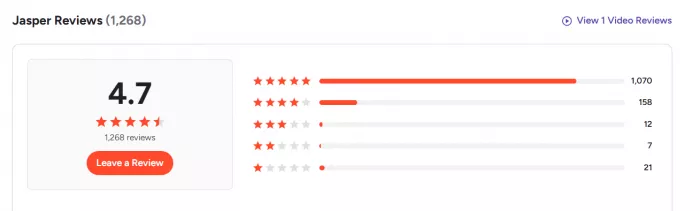
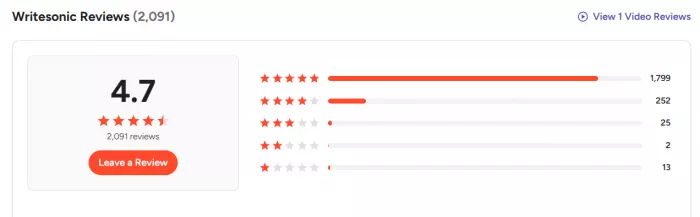
They typically sit in the high 4‑star range (often around 4.7–4.8/5) on sites like G2 and Capterra, with Jasper often praised for quality and brand consistency, and Writesonic praised for value and SEO-focused capabilities. This suggests you are choosing between two proven products rather than an untested newcomer.
Pricing and Value
Pricing evolves, but the general pattern is stable: Writesonic is usually more budget-friendly, while Jasper positions itself as a premium solution.
Writesonic typically offers lower-cost plans and a free or trial-style entry tier, with generous usage limits relative to price. Jasper tends to charge more per seat or workspace, reflecting its focus on branding, collaboration, and higher-end creative capabilities. For teams that value brand consistency and polished copy, the higher price can be justified by better conversions and less time spent editing.
Pricing and value snapshot
| Aspect | Jasper | Writesonic |
| Typical pricing level | Mid-to-high tier | Lower-to-mid tier |
| Free plan availability | Usually trial-based | Often free or very low-entry tier |
| Best value for | Brands & agencies focused on quality | SEO-driven, budget-conscious teams |
Final Verdict: Jasper vs Writesonic
Both Jasper and Writesonic are capable, mature AI writing platforms, but they serve different priorities. Jasper is the better choice if brand voice, creative control, and cross-channel consistency sit at the heart of your content strategy. Its Brand IQ, command-driven editor, and team features make it feel like a genuine co-writer rather than a basic generator.
Writesonic is the stronger option if your main goal is to produce SEO-focused content quickly and at scale on a tighter budget. Its template-first interface, built-in SEO flows, Photosonic and Audiosonic, and flexible pricing make it a practical workhorse for blogs, landing pages, and programmatic SEO projects.
In simple terms: pick Jasper when you are building a distinctive brand and need premium-quality copy; pick Writesonic when you are building traffic machines and need a fast, affordable content engine that can turn topics and keywords into a steady stream of publishable drafts.
Comments