Choosing a haircut has always been a mix of instinct and risk. What looks sharp in a reference photo often translates differently when applied to your own face. Subtle differences in hairline, texture, and facial structure can turn a confident decision into an unexpected outcome.
This is the gap that BarberGPT.ai attempts to solve. Instead of relying on imagination or generic inspiration, it introduces a system where users can visualize potential hairstyles directly on their own image before making a real-world change.
The idea is not to replace the barber or guarantee perfection. It is to provide clarity before commitment, turning uncertainty into a more informed decision-making process.
From Guesswork to Visualization
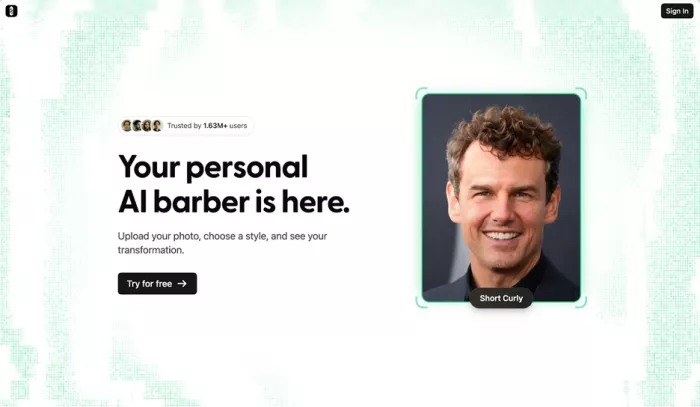
Traditionally, haircut decisions are guided by approximation. People rely on celebrity images, vague descriptions, or quick consultations that leave room for interpretation. This creates a disconnect between expectation and outcome.
BarberGPT.ai replaces this process with visual simulation grounded in personal context. By mapping hairstyles onto a user’s own photo, the platform allows individuals to see how a cut interacts with their specific features, including face shape, proportions, and lighting conditions.
This shift transforms the decision from abstract thinking into something tangible. A hairstyle is no longer just an idea. It becomes a preview that can be evaluated, compared, and refined before any real change is made.
How the System Actually Works
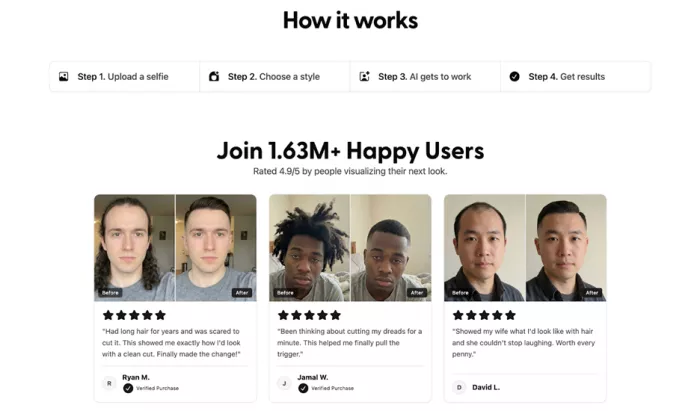
The workflow behind BarberGPT.ai is intentionally simple, but it reflects a carefully designed balance between automation and user control. The system begins with a user-uploaded image, followed by a manual masking step that defines the hair region. This step is critical because it guides the AI in understanding where to apply transformations.
Once the input is defined, a generative model reconstructs the hairstyle while preserving the original facial features and environmental lighting. This creates outputs that feel more integrated and realistic than basic overlay filters.
The process is fast, often producing results within seconds, which encourages experimentation without making the experience feel heavy or technical.
Feature and Capability Overview
| Functional Layer | System Behavior | User Value |
| Image Mapping | Aligns hairstyles with facial structure and lighting | Produces more realistic previews |
| Manual Masking Control | User defines hair region for accuracy | Improves precision of results |
| Style Generation | Applies curated haircut styles to user image | Enables quick experimentation |
| Processing Speed | Generates outputs in seconds | Keeps experience fluid and engaging |
| Privacy Handling | No mandatory login and optional image removal | Reduces user concerns around data |
This structure shows that BarberGPT.ai is designed as a focused utility rather than a complex platform, prioritizing clarity and usability over feature overload.
Where the Experience Feels Strongest
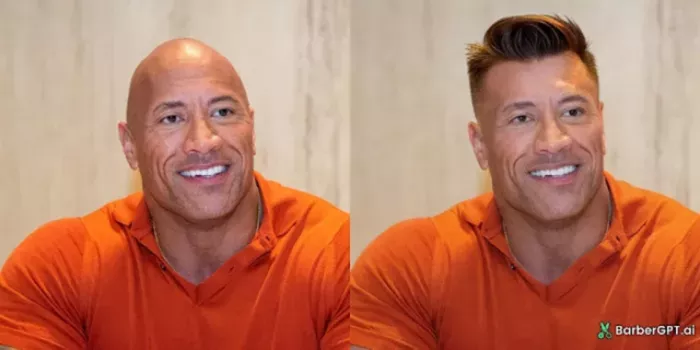
The platform performs best when working within its core domain of short to medium hairstyles. Styles such as fades, buzz cuts, and classic trims tend to produce results that feel visually convincing and aligned with real-world expectations.
This is largely because simpler styles involve fewer variables in terms of volume, movement, and texture. The AI can map these styles more reliably, creating outputs that users can confidently use as references.
Another area where the platform stands out is in communication enhancement. By providing a visual reference based on the user’s own face, it reduces ambiguity when discussing preferences with a barber. This often leads to more accurate results in real-life haircuts.
Where Limitations Become Noticeable
Despite its strengths, BarberGPT.ai is not without constraints. The system’s reliance on a manual masking step introduces variability. Small inaccuracies in defining the hair region can significantly affect the final output.
More importantly, the platform struggles with complex or highly textured hairstyles, particularly those involving long hair, curls, or intricate layering. In these cases, the generated results may appear less natural or slightly disconnected from the original image.
These limitations are not unique to this tool but reflect broader challenges in AI-based image synthesis, especially when dealing with detailed physical structures like hair.
Pricing Model and User Control
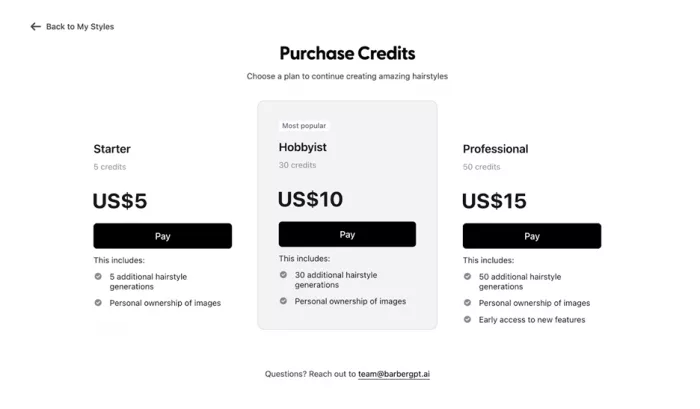
One of the most distinctive aspects of BarberGPT.ai is its credit-based pricing structure, which differs from the subscription-heavy models seen in many AI tools.
Instead of committing to a recurring plan, users purchase credits that are consumed with each generation. This aligns well with the episodic nature of haircut decisions, where users engage with the tool only when needed.
| Pricing Aspect | System Design | User Impact |
| Entry Access | Free trial with limited generations | Allows risk-free testing |
| Payment Structure | Credit-based, pay-as-you-go | No long-term commitment |
| Cost Control | Users decide how many credits to purchase | Flexible spending |
| Usage Pattern Fit | Designed for occasional use | Matches real-world behavior |
This model offers a sense of transparency and control, though frequent experimentation can increase costs over time.
Position in the AI Tool Landscape
BarberGPT.ai occupies a very specific niche within the broader AI ecosystem. It is not a general-purpose image editor, nor is it a comprehensive grooming platform. Instead, it focuses on a single problem and attempts to solve it effectively.
Compared to broader tools, it offers greater precision within its domain, but less versatility overall. This specialization is both its strength and its limitation.
The platform is best understood as a decision-support tool rather than a transformation engine, helping users explore possibilities rather than delivering final outcomes.
Final Perspective: A Practical Tool with Defined Boundaries
BarberGPT.ai represents a subtle but important shift in how AI is applied to everyday decisions. It does not aim to automate choice but to improve confidence through visualization.
For users who want to reduce uncertainty before a haircut, it provides meaningful value. It allows experimentation without consequence and helps bridge the gap between imagination and reality.
At the same time, it is important to approach the tool with realistic expectations. It performs best within a defined scope and should be used as a guide rather than a guarantee.
In that role, BarberGPT.ai succeeds. It turns a traditionally uncertain decision into a more informed and controlled experience, which is where its true value lies.
Comments