Table of Contents
- FLUX and Midjourney Are Not Quite the Same Product
- The “Open Model” Label Needs Context
- Image Quality Is Now a Very Close Fight
- Prompt Following Exposes the Difference
- Midjourney Still Has a Taste Advantage
- FLUX Pulls Ahead in Production Control
- Editing Is No Longer an Easy FLUX Win
- Typography and Brand Work Favor Control
- Speed Depends on What You Count
- Pricing Rewards Different Habits
- Privacy Can Change the Winner
- Where Each One Wins in 2026
- Verdict: Has FLUX Caught Up?
A year ago, choosing between FLUX and Midjourney was mostly a question of priorities. Midjourney was the easier recommendation for people who wanted striking images with minimal setup, while FLUX appealed more strongly to developers and users who valued model access and control. In 2026, that division is much less tidy.
Midjourney V8.2 is now the platform’s default image model, with stronger aesthetics and deeper personalization. FLUX has meanwhile expanded into the FLUX.2 family, covering high-end generation, precise editing, API production, local deployment and sub-second models. The useful comparison is no longer simply “open versus closed.” It is whether FLUX has matched Midjourney as a creative tool while preserving the technical flexibility that made it different in the first place.
FLUX and Midjourney Are Not Quite the Same Product
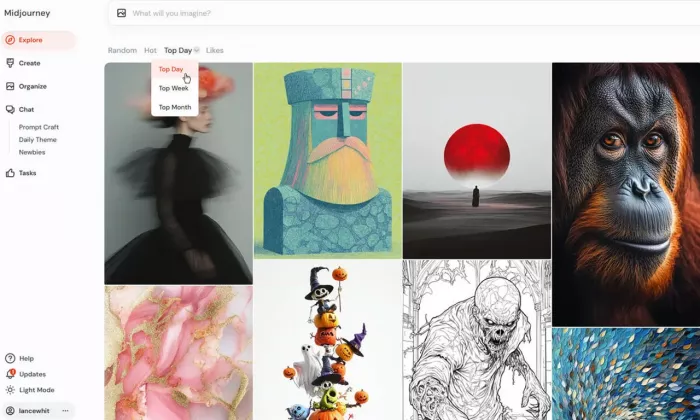
The first thing I would clear up before comparing image quality is the word “model.” Midjourney is effectively a complete creative environment. You subscribe, generate through its web or Discord interface, build personalization profiles, use style references and moodboards, and increasingly edit inside the same system. V8.2 became the default on July 24, 2026, and Midjourney describes it as a release focused on aesthetics, image quality and better understanding of individual taste.
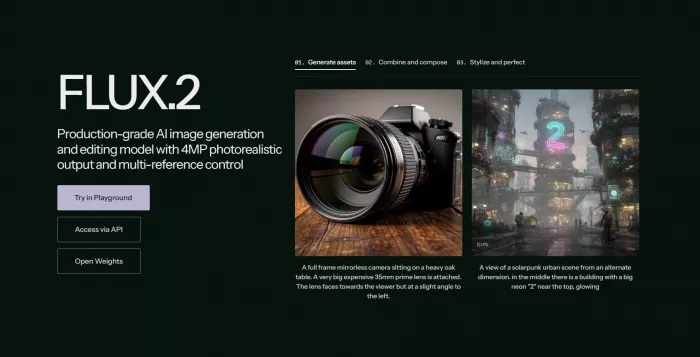
FLUX.2 is broader. Black Forest Labs currently offers [max], [pro], [flex], [klein] and [dev], and they are not simply quality presets of one product. [max] is aimed at the highest-quality finished assets, [pro] at production, [flex] at controllability and typography, [klein] at real-time or high-volume generation, and [dev] at local development.
| Comparison Point | FLUX.2 | Midjourney V8.2 |
| Product shape | Model family, APIs, playground and selected downloadable weights | Hosted creative platform |
| Main strength | Control, deployment choice and production integration | Aesthetic direction and creator workflow |
| Local use | Available with selected FLUX variants | Not available |
| Personalization | Depends on model and workflow | Built deeply into the product |
| API use | Central to the ecosystem | Not the main way people use Midjourney |
| Best suited to | Developers, production teams and advanced creators | Designers, artists, marketers and visual ideation |
This distinction is not technical trivia. It changes what “better” means. A model that wins a single prompt test can still be the worse choice if it cannot fit into the workflow where those images actually need to be produced, revised and delivered.
The “Open Model” Label Needs Context
The title uses “open model” because that is how FLUX is commonly discussed, but in 2026 the reality is more complicated. Not every FLUX.2 variant has the same license or distribution model, so describing the entire family as unrestricted open source would be misleading.
FLUX.2 [klein] 4B has open weights under Apache 2.0 and can run on consumer hardware with roughly 13GB of VRAM. The 9B version uses Black Forest Labs’ Non-Commercial License, while [dev] is positioned for local, non-commercial development. The commercial [pro], [max] and [flex] offerings are primarily accessed through the API and playground.
That nuance actually strengthens FLUX’s case rather than weakening it. The advantage is not that every FLUX model is unrestricted. The advantage is choice. Depending on the job, users can move between local inference, open weights, fixed API endpoints and higher-end hosted models.
Midjourney makes almost the opposite bargain. You give up that infrastructure control in exchange for a much more coherent product where model access, visual exploration, personalization and asset management live in the same environment.
Image Quality Is Now a Very Close Fight
Looking only at polished showcase images, it is difficult to argue that FLUX still sits a generation behind Midjourney. FLUX.2 is designed around photorealism, detailed materials, lighting, faces and product imagery, with support for output up to 4 megapixels. Midjourney V8.2, however, is deliberately pushing beyond clean rendering toward images it describes as more creative, sophisticated and visually distinctive.
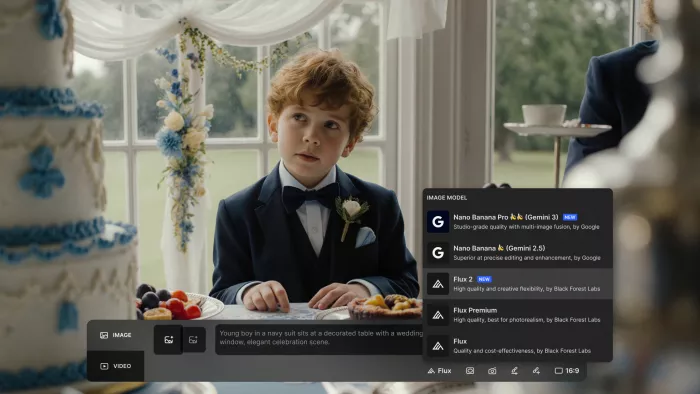
Figure: Image generated by Flux
The practical difference is often visible in what each system optimizes for. FLUX is especially convincing when the prompt behaves like a specification. Product photographs, controlled portraiture, interiors, packaging concepts and scenes with exact colors or object relationships suit its strengths. Midjourney becomes particularly compelling when the brief leaves more room for interpretation, where a fashion, editorial or cinematic idea may benefit from art direction rather than literal rendering.
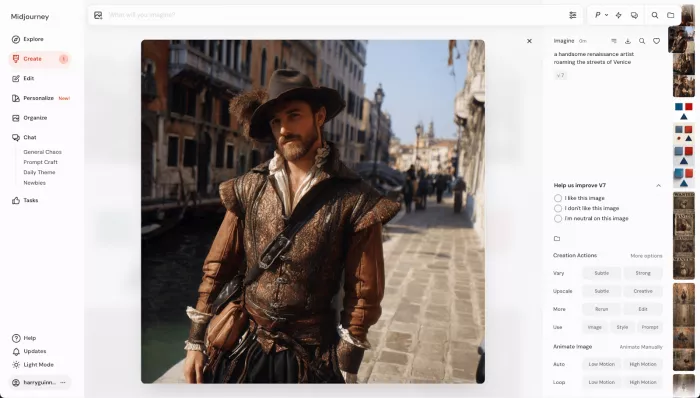
Figure: Image generated by Midjourney
When I compare image generators, I find it more useful to separate four questions: Did the system follow the brief? Is the image structurally coherent? Does it feel visually considered? Would the result actually be usable without several more generations? An image can perform brilliantly on three of those questions and still fail the fourth.
That is why “photorealism” alone no longer settles this comparison.
Prompt Following Exposes the Difference
Simple prompts hide model weaknesses. Difficult prompts expose them.
Ask for “a luxury perfume bottle on marble” and both systems can make something attractive. Add a matte-black cylindrical bottle, pale-green label, five-word headline, hard light from the upper left, two reflected objects in the background and a specific camera angle, and the comparison becomes considerably more revealing.
FLUX.2 supports structured prompting and exact hex-color instructions, while [flex] gives users additional control over generation steps and guidance. That makes it particularly useful when each element of an image has a job to do. Midjourney has also improved prompt adherence substantially across the V8 generation, and its Raw setting can reduce default styling when closer adherence matters.

Figure : Flux output on prompt a luxury perfume bottle on marble
The important distinction is not “FLUX follows prompts while Midjourney ignores them.” That would be outdated. The difference is subtler: Midjourney still benefits from creative latitude, while FLUX gives technical users more ways to narrow that latitude.

Figure : Midjourney output on prompt a luxury perfume bottle on marble
For early concept work, I often prefer the first philosophy because unexpected interpretation can improve an idea. For a campaign asset containing six non-negotiable details, the second approach is easier to trust.
Midjourney Still Has a Taste Advantage
Midjourney’s strongest feature is difficult to capture in a benchmark because it is not a single rendering capability. It is the way the platform builds taste into the workflow.
Personalization profiles learn from images a user selects, Style References can transfer visual qualities such as lighting, medium, texture and color treatment, while Moodboards give creators another way to communicate aesthetic direction without translating every visual preference into words. Midjourney says V8.2 improves personalization further, particularly for profiles with substantial preference data.
This matters because creative briefs are often incomplete. “Make it less commercial,” “I want something quieter” or “this feels too polished” are perfectly reasonable pieces of art direction, but they are poor technical specifications. Midjourney is unusually well suited to working in that fuzzy territory.
FLUX can reproduce styles and can be built into highly controlled reference workflows, but it feels more like a system whose behavior you define. Midjourney increasingly feels like a system whose visual instincts you shape.
For an individual creator, that distinction is significant.
FLUX Pulls Ahead in Production Control
Once the task grows beyond one image, FLUX’s advantages become more concrete. FLUX.2 supports multi-reference generation and editing, with [max], [pro] and [flex] accepting up to eight references through the API and up to ten through the BFL playground. Those references can help preserve a person, product, pose or visual element while the surrounding composition changes.
This becomes valuable in workflows where consistency is worth more than one spectacular generation:
● E-commerce campaigns need products to remain recognizably the same while backgrounds, lighting and surrounding objects change across many assets.
● Character-based content depends on identity surviving multiple scenes, because a beautiful portrait is not much use if the same character becomes a different person in the next generation.
● Automated marketing systems may create hundreds of variants from fixed inputs, making manual correction of every generation impractical.
● Brand workflows often require repeatable colors and predictable model behavior, especially when assets are being produced programmatically rather than one at a time.
Black Forest Labs also provides fixed FLUX.2 API snapshots alongside preview endpoints. The fixed versions do not automatically change as newer model improvements arrive, which is a minor detail for casual generation but an important feature for applications that depend on reproducibility.
This is where FLUX has moved beyond “alternative image generator” territory. It can become part of the infrastructure behind another product.
Editing Is No Longer an Easy FLUX Win
Older comparisons often give FLUX a comfortable lead in editing, but that assessment now needs updating.
Midjourney opened broader testing of its first V8.2 image-edit model on August 27, 2026. It supports instruction-based editing, inpainting, outpainting and generation with up to four image references. Midjourney followed that release with another image-quality update on August 29, which also tells us something important: this is a very new part of the V8.2 experience and is still changing rapidly.
FLUX.2 currently has the clearer production-oriented editing story, particularly for multi-reference work and API integration. Midjourney, however, is bringing modern editing much closer to its central creative workflow, removing one of the historical differences between the platforms.
The meaningful test is therefore no longer whether each one can replace a background or change an object. It is how well identity, composition, lighting and unaffected parts of the original image survive after several consecutive edits.
That is the kind of reliability professional users notice quickly.
Typography and Brand Work Favor Control
Text inside generated images has improved enough that it deserves serious attention rather than being treated as a novelty benchmark. FLUX.2 [flex] is specifically positioned around typography and preservation of small details, while the broader FLUX.2 system supports precise hex-color instructions for color-sensitive generation.
Midjourney can also render text when wording is placed inside quotation marks, although its own guidance recommends shorter words and phrases for the best chance of accurate rendering.
Text becomes an even bigger consideration when the image itself is expected to carry the finished message rather than serve as a background for later design work. A closer Ideogram vs Midjourney comparison shows why this deserves to be judged separately from general image quality: a model can produce an excellent poster composition while still becoming unreliable once exact wording, placement and readable typography are part of the brief.
The difference becomes clearer in practice. If a designer is exploring twenty poster directions, Midjourney’s willingness to reinterpret composition can be useful. If an automated system needs campaign graphics that repeatedly use defined colors, product details and controlled text placement, FLUX’s more specification-driven approach becomes easier to justify.
I would still move final typography into dedicated design software whenever spelling, kerning, disclosures or legal copy must be exact. Image generators have become much better at text, but “usually correct” is still different from production-grade typesetting.
Speed Depends on What You Count
Raw generation time makes for an impressive benchmark, but it is rarely the whole productivity story. Midjourney V8.1, the generation immediately preceding V8.2, made standard jobs roughly four to five times faster than earlier versions according to Midjourney. FLUX.2 [klein] takes a different approach, targeting sub-second inference and high-volume use.
For me, the more useful metric is time to an acceptable asset. If a system renders in one second but repeatedly misses an important object relationship, the nominal speed advantage disappears. A slower generation can still save time if it requires fewer prompt corrections.
Developers should also care about throughput, concurrency and predictable cost at scale. Individual creators are more likely to care about how quickly they can move from a rough idea to something worth keeping.
Those are different definitions of speed, and they should not be compressed into a single generation-time number.
Pricing Rewards Different Habits
Midjourney’s pricing remains straightforward. Basic, Standard, Pro and Mega currently cost $10, $30, $60 and $120 per month respectively. Standard and higher plans include unlimited image generations in Relax Mode, while Pro and Mega include Stealth Mode for users who do not want their work publicly visible through Midjourney.
FLUX.2 uses a different economic model. Current API pricing starts around $0.014 for [klein] 4B and $0.015 for [klein] 9B, while [pro] begins at $0.03, [flex] at $0.05 and [max] at $0.07, with pricing for the higher-end models scaling according to output resolution.
| User Type | Midjourney Makes More Sense When | FLUX Makes More Sense When |
| Casual creator | A predictable subscription is easier to budget | Generation volume is low enough for pay-per-use |
| Heavy creator | Relax Mode absorbs large amounts of experimentation | Work requires deeper technical control |
| Agency | Most projects are visually exploratory | Assets need repeatability, privacy or automation |
| Developer | Images are manually produced by a creative team | Generation needs to live inside an app or service |
| Local power user | Hosted convenience matters more than infrastructure | Hardware, privacy and model access justify local deployment |
The real unit of cost is not price per generation. It is price per usable image. Cheap outputs that require six retries are not cheap, while unlimited generations can still be expensive if a person spends hours repairing inconsistency.
Privacy Can Change the Winner
Privacy is easy to overlook until the images involve an unreleased product, client campaign or confidential reference material.
Midjourney operates as an open-by-default platform, and Stealth Mode is currently restricted to the Pro and Mega subscriptions. For many individual creators this will make little difference, but it can matter to agencies and companies working with material that should not enter a public-facing creative ecosystem.
Selected FLUX models can run locally, which changes the equation substantially. Local deployment does not automatically make the workflow simpler because hardware, security, maintenance and inference management become the user’s responsibility, but it provides a level of infrastructure control Midjourney is not designed to offer.
This is another reason a universal winner would be misleading. The same feature can be irrelevant to one reader and decisive to another.
Where Each One Wins in 2026
After separating image quality from workflow, the comparison becomes much clearer. I prefer this kind of category judgment to giving both systems arbitrary scores such as 9.2 and 8.8, because those decimals suggest a level of precision that simply does not exist for creative tools.
| Category | Current Edge | Why |
| Aesthetic exploration | Midjourney | Strong personalization and creative interpretation |
| Photorealistic production | Very close | Both can produce convincing photographic output |
| Precise prompt control | FLUX | Structured prompting and controllable variants |
| Typography and exact color | FLUX | [flex] and hex-color controls target these tasks |
| Multi-reference work | FLUX | Higher reference limits across major FLUX.2 workflows |
| Editing maturity | FLUX, currently | Midjourney’s V8.2 editor has only just entered broad testing |
| Personal visual style | Midjourney | Profiles, Moodboards and Style References are integrated |
| Local deployment | FLUX | Selected open-weight variants can run locally |
| Beginner experience | Midjourney | Less infrastructure and fewer deployment decisions |
| API and automation | FLUX | Designed to operate inside larger products and pipelines |
| Predictable creator pricing | Midjourney | Subscription structure is simple to understand |
| High-volume custom systems | FLUX | Multiple models target scale, speed and reproducibility |
What stands out in this table is how few decisive differences are now about whether one model can create a visually impressive image. Most of the meaningful separation happens before and after generation.
Verdict: Has FLUX Caught Up?
Yes, but not in the simplistic sense that FLUX has finally learned to make images as attractive as Midjourney. By 2026, FLUX.2 is capable enough that image quality alone is a weak reason to dismiss it, and in prompt control, local deployment, API integration, reproducibility, typography and multi-reference production, it can be the stronger system.
Midjourney still has a convincing advantage for a different kind of user. V8.2 combines strong image generation with personalization and a creative environment that makes visual exploration unusually fluid. When I think about someone starting with an idea rather than a specification, Midjourney remains the platform I would expect to reach an interesting result with less technical friction.
FLUX becomes more compelling as requirements harden. The moment an image needs to preserve a product, respect an exact color, fit into an automated pipeline, combine several references or run inside infrastructure you control, its flexibility stops being an abstract technical benefit and starts saving real work.
That is the more useful answer to the title. FLUX has caught up closely enough that this is no longer a race between the “beautiful” model and the “open” model. Midjourney is developing into a more personalized creative studio, while FLUX is developing into a configurable image platform that can disappear inside other products and workflows.
For creators, Midjourney may still be the more satisfying place to make images. For developers and production teams, FLUX may already be the more useful technology. In 2026, choosing between them depends less on which system produces the prettiest first result and much more on what needs to happen to that image next.
Comments