There is a particular kind of exhaustion that arrives around the fortieth job application. The resume is polished, the cover letter is ready, and then up pops another Workday portal demanding that every line of that resume be typed out again by hand. Anyone who has lost a Sunday evening to that loop knows the feeling. It stops resembling a career move and starts feeling like unpaid data entry.
That frustration is exactly what a new wave of AI career assistants promises to erase, and two names keep surfacing in the conversation. They could not be more different in philosophy. Leeco AI wants to take the wheel completely, scanning boards around the clock and applying on a candidate's behalf. Simplify wants to hand the wheel back, only faster, filling the tedious fields so a human stays in control of every click.
Both tools have devoted users, both carry real limits, and both sit inside a crowded 2026 market of auto-apply bots and trackers. After working through their features, live pricing, independent accuracy tests, and how they measure up against the wider field, a clear picture emerges of who each one is genuinely built for.
| Bottom line up front: Simplify is the better free autofill assistant for most job seekers, while Leeco is the stronger pick for developers who want interview coaching and hands-off automation in one place. The right answer depends entirely on the search. |
Why AI job tools suddenly matter
The rise of these assistants is not a coincidence. It tracks an enormous shift in how people look for work.
In the space of a single year, generative AI went from curiosity to standard equipment in the job hunt. ZipRecruiter found the share of new hires who used AI during their search jumped from 25 percent to 53 percent between mid-2023 and early 2024. Indeed's 2025 research put the number at over half of all job seekers, with roughly 70 percent leaning on AI for company research and cover letters.
More applicants using AI meant far more applications. LinkedIn reported submissions climbing more than 45 percent year over year, reaching about 11,000 every minute. The funnel did not speed up to match. Average time to hire stretched from 31 days to 44, and by most estimates around three quarters of resumes are screened out by applicant tracking software before a recruiter ever reads them.
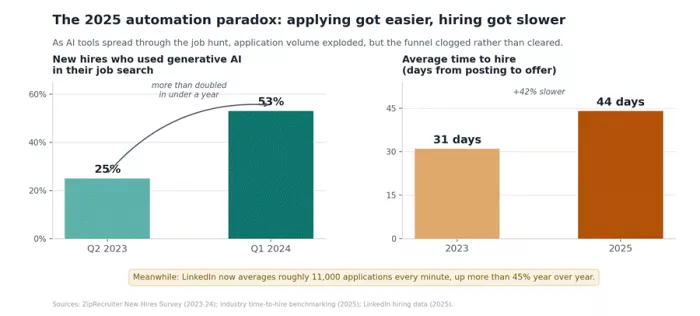
Figure 1. The job-search AI surge and its side effects, 2023 to 2025.
That is the paradox both tools are built to solve. Applying became effortless, so effortless that volume alone stopped being an advantage. For job seekers, the practical takeaway is uncomfortable but clarifying: standing out now depends less on raw output and more on the judgment behind each application. The real question in 2026 is no longer whether to use AI, but whether the edge comes from doing more, which is Leeco's bet, or doing it more precisely, which is Simplify's.
What Leeco AI does
Leeco AI is really two products wearing one name, both aimed squarely at software developers. The first is a coding and interview mentor that lives inside the browser, sitting beside LeetCode, YouTube tutorials, and technical blogs to offer context-aware hints rather than finished answers, run mock interviews with feedback, and track progress through data structures and algorithms. Its Interview Mode is now free for every user. The second is a genuinely hands-off job-search autopilot: a candidate sets target roles, and the agent scans platforms such as LinkedIn, Naukri, Indeed, and Glassdoor in real time, verifies that listings are still active, and pushes matches through WhatsApp for one-tap approval.

Three features define the experience. Resume tailoring by example reshapes a user's document to mirror the resumes of candidates who previously landed interviews, with a demo showing an ATS score climbing from 47 to 95 percent, a figure best read as marketing since scoring differs wildly between employers. Company intelligence surfaces hiring and firing trends plus culture flags before applying, and referral automation, the boldest and most divisive feature, finds working professionals at a target company and sends personalized referral requests. Built by a Bangalore-based team with roughly 20,000 users, Leeco is the younger, developer-first option, which means the ideas are ambitious but outcome data is thin and support runs only on desktop Chrome.
| Leeco AI | at a glance |
|---|---|
| What it is | Developer-focused AI job agent plus in-browser interview coach |
| Best for | SDE candidates, students, and DSA learners |
| Standout | LeetCode mentoring and automated referral outreach |
| Automation | High: 24/7 scanning, auto-apply after WhatsApp approval |
| Resume AI | Tailors resumes to interview-winning patterns |
| Free tier | Yes; Interview Mode is free for all users |
| Paid pricing | Tiers revealed at onboarding; 7 to 30-day trial |
| Platform | Chrome, desktop only |
| Users and rating | Roughly 20,000 users; about 4.8 stars |
| Main limitation | Thin outcome data, Chrome-only, referral spam risk |
Table 1. Leeco AI profile, verified against its live listing, mid-2026.
What Simplify does
Simplify takes almost the opposite stance. It is not trying to replace the applicant; it is trying to make the applicant faster. At its heart is the Copilot extension, a free tool for Chrome and Firefox that autofills applications across more than 100 applicant tracking systems, including Workday, Greenhouse, Lever, Ashby, iCIMS, and Taleo. Open a supported application and Copilot reads the form, then drops in saved contact details, work history, education, and answers to common screening questions, collapsing what normally eats 15 to 25 minutes into a minute or two. Around that core sit an aggregated job board that checks 50,000-plus company career pages hourly, an AI resume builder, and an automatic tracker.
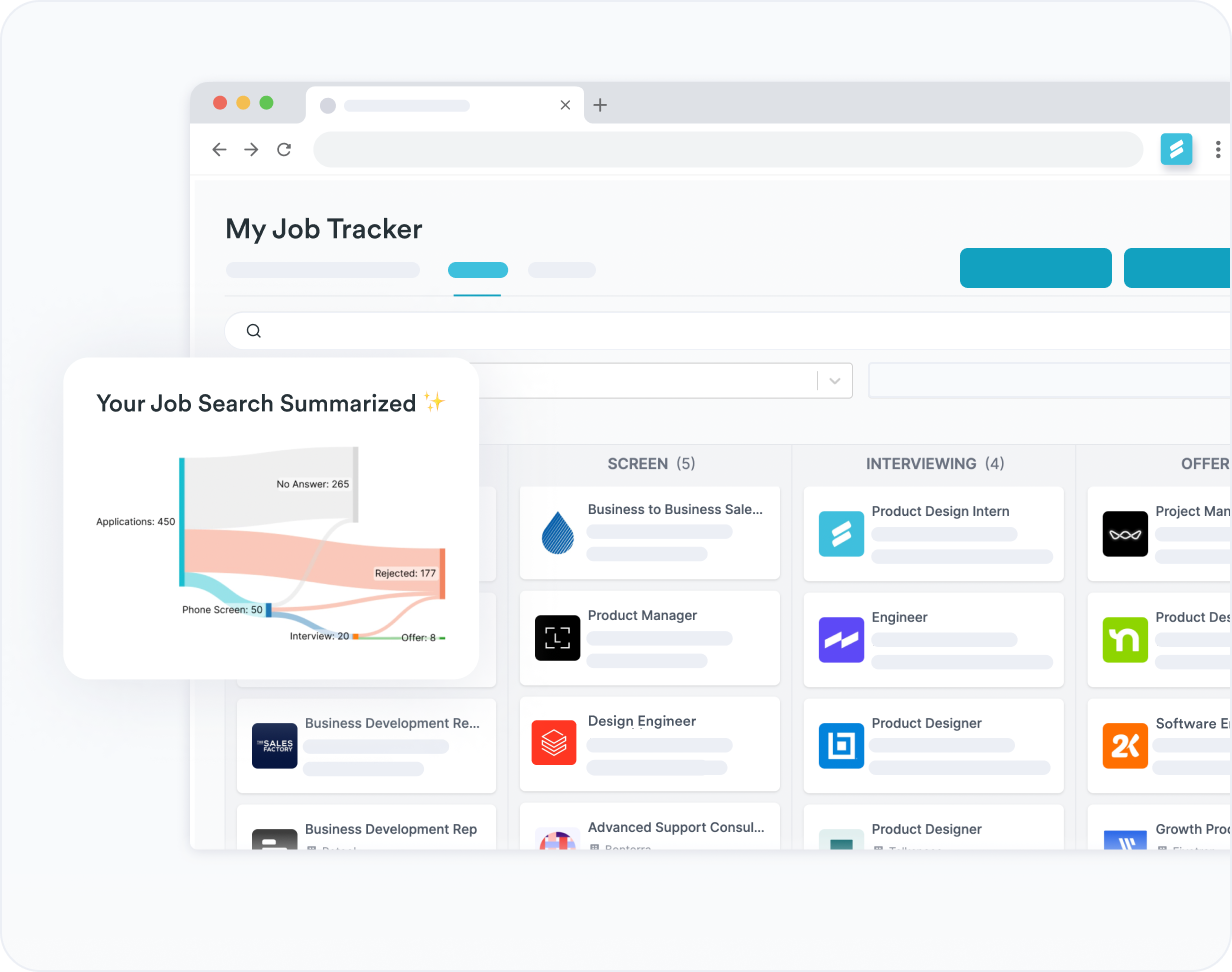
The AI writing tools, meaning tailored resumes, one-click cover letters, drafted answers to open-ended prompts, and networking suggestions, sit behind the paid Simplify+ tier, while the free core carries no volume cap and asks for no credit card. Founded through Y Combinator's W21 batch and run by a small San Francisco team, Simplify is the mature choice, with a 4.9-star Chrome rating across thousands of reviews and 500,000-plus users. One point deserves emphasis, because the marketing blurs it: despite the AI agent language, Simplify does not apply for anyone. As one detailed 2026 review put it, the tool makes the Submit click faster but never removes it.
| Simplify | at a glance |
|---|---|
| What it is | Free autofill copilot with a job board and application tracker |
| Best for | Hands-on applicants; high-volume tech and startup roles |
| Standout | Autofill across 100-plus applicant tracking systems |
| Automation | Low: the human clicks Submit on every application |
| Resume AI | Tailored resumes and cover letters (Simplify+) |
| Free tier | Yes; no volume cap and no credit card |
| Paid pricing | Simplify+ at 19.99 wk, 39.99 mo, 89.99 per 3 mo |
| Platform | Chrome and Firefox |
| Users and rating | 500,000-plus users; 4.9 Chrome, 3.0 Trustpilot (paid tier) |
| Main limitation | Not auto-apply; paid AI needs editing; no public pricing page |
Table 2. Simplify profile, verified against its live listing, mid-2026.
Head to head: where each pulls ahead
Plotting documented capabilities across the dimensions that actually decide a job search makes the trade-off visible at a glance.
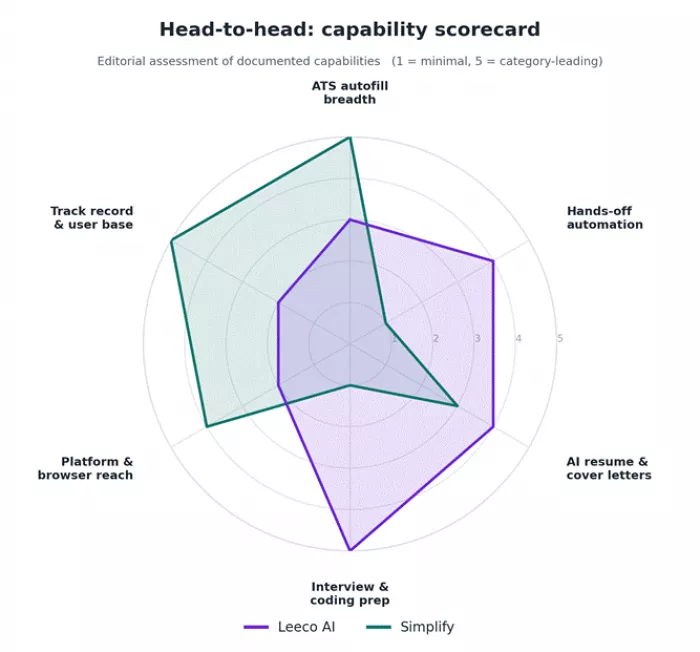
Figure 2. Capability comparison across six decision factors.
Broken down factor by factor, the two trade wins almost evenly, and the balance tips based on what a given search actually needs.
| Factor | Leeco AI | Simplify | Edge |
|---|---|---|---|
| Core approach | Autonomous agent plus coach | Autofill copilot | Different |
| Auto-submit applications | Yes, after WhatsApp approval | No, manual Submit | Leeco |
| ATS autofill breadth | LinkedIn-focused | 100-plus systems | Simplify |
| Interview and coding prep | LeetCode hints, mock interviews | Not offered | Leeco |
| Resume and cover-letter AI | Modeled on winning resumes | Tailoring via Simplify+ | Even |
| Referral outreach | Automated and native | Suggestions (Simplify+) | Leeco |
| Job discovery | 24/7 multi-board scanning | Aggregated board, hourly | Leeco |
| Application tracker | Unified dashboard | Automatic and integrated | Even |
| Platform support | Chrome, desktop only | Chrome and Firefox | Simplify |
| Free tier generosity | Interview Mode free | No cap, no card | Simplify |
| Pricing and trial | Onboarding tiers, 7 to 30-day trial | 19.99 to 89.99, no trial | Leeco |
| Track record | Roughly 20,000 users | 500,000-plus users | Simplify |
Table 3. Factor-by-factor head to head. Edge reflects which tool leads on that capability.
In short, Simplify leads on breadth, reach, and maturity, while Leeco leads on automation, coaching, and referrals. Neither wins outright, which is exactly why the choice comes down to the search.
| Simplify makes the Submit click faster; it does not remove it. Leeco tries to remove the click altogether. That single difference decides which tool fits. |
Autofill accuracy, the detail that decides everything
Averages hide the truth about autofill, so specifics help. Independent 2026 testing found Simplify's Copilot filling roughly 85 to 90 percent of fields on modern startup systems like Greenhouse, Lever, and Ashby. On Workday, the largest enterprise platform, accuracy sits closer to 70 percent, and on older systems such as iCIMS and Taleo it slips to 40 to 50 percent, with long government forms effectively unsupported. For anyone applying mostly to tech and startup roles, autofill is close to seamless; for public-sector or legacy enterprise applications, both tools leave real work on the table.
Reputation check
Reputation splits along the same fault line as philosophy. Simplify's free extension is genuinely loved, and its 4.9-star Chrome rating across thousands of reviews reflects a tool that does exactly what it promises at no cost. The paid tier tells a rougher story, sitting near 3.0 stars on a small Trustpilot sample, with complaints clustering around AI output that reads as templated and needs heavy editing. Leeco's feedback runs warmer but thinner: reviewers praise the coding mentor for nudging rather than spoon-feeding, while staying honestly skeptical about whether automated applications truly convert to offers. With only around 20,000 users, its automation claims remain largely unproven by outcome data.
How they compare to the wider market
Neither tool exists in a vacuum, and placing them against the field is the fastest way to understand what each really is. The 2026 landscape sorts into three camps. Assisted autofill tools like Simplify and the tracker-first platforms Teal and Huntr speed up applications a human still submits. Autonomous auto-apply agents such as JobCopilot, LazyApply, and LoopCV, along with Leeco's autopilot, submit on a candidate's behalf. And human concierge services like Scale.jobs hand the whole task to a real assistant. Simplify anchors the free-autofill end of that spectrum; Leeco pushes into automation with a developer specialization, interview prep plus referrals, that almost none of its rivals attempt.
| Tool | Approach | Auto-submit | Pricing model |
|---|---|---|---|
| Simplify | Free autofill copilot | No | Free core; Simplify+ from 19.99 per week |
| Leeco AI | Dev agent plus interview coach | Yes | Free tier; paid plans shown at onboarding |
| JobCopilot | Background auto-apply agent | Yes | No free tier; roughly 28 to 56 per month |
| LazyApply | High-volume bulk apply | Yes | Annual only, 99 to 999 per year; no free tier |
| Teal | Tracker plus resume builder | No | Free; paid from around 9 per week |
| Huntr | Job application tracker | No | Free; paid from around 6 to 13 per week |
| Scale.jobs | Human assistant concierge | By a person | Flat fee from 199 for 250 applications |
Table 4. Where Leeco and Simplify sit in the 2026 AI job-tool market. Pricing from public listings, mid-2026.
The market also delivers a warning that reframes both tools favorably. More applications is not more interviews. A Q1 2026 analysis found that targeted batches of 11 to 20 applications converted at 9.25 percent, against just 2.58 percent for people firing off 100 or more. High-volume bots carry a second cost too: sending hundreds of generic applications has gotten candidates' LinkedIn accounts restricted, and human-review services report callback rates near 47 percent precisely because a person checks the work. Seen against that backdrop, Simplify's insistence on a human click and Leeco's approval-gated, tailored applications both look far more sensible than pure spray-and-pray automation.
Which one fits which job seeker
The honest answer is that the winner depends on the search itself. The two tables below cut the decision two ways, first by immediate goal and then by the kind of candidate doing the searching.
| If the goal is | Better pick | Because |
|---|---|---|
| Landing an SDE role and prepping coding interviews | Leeco AI | It pairs DSA and interview coaching with job automation in one place |
| Applying faster to many tech and startup jobs | Simplify | Best-in-class autofill on Greenhouse, Lever, Ashby, and Workday |
| Staying fully in control of every application | Simplify | Nothing is submitted without a deliberate human click |
| Running the search on autopilot while busy | Leeco AI | Round-the-clock scanning and WhatsApp approvals keep the funnel moving |
| Spending nothing at all | Simplify | Unlimited free autofill and tracking, no card required |
| Automated referral outreach | Leeco AI | Referral automation is a core, native feature |
| Government or legacy enterprise forms | Neither, with care | Both struggle here; manual review stays essential |
Table 5. Matching the tool to the immediate goal.
| Job seeker | Recommended | Reasoning |
|---|---|---|
| New-grad software developer | Leeco AI | Interview and DSA coaching plus automation in a single tool |
| Experienced engineer switching jobs | Leeco AI, plus free Simplify | Automation on tech roles, autofill on everything outside LinkedIn |
| Non-technical professional (marketing, ops, design) | Simplify | Broad ATS autofill with no coding features to pay for |
| Career changer on a tight budget | Simplify (free) | Full autofill and tracking at zero cost |
| Senior or executive candidate | Simplify (free) plus manual review | Low volume and high stakes reward complete control |
| Anyone too busy to apply | Leeco AI | Autopilot keeps the funnel moving in the background |
Table 6. Matching the tool to the kind of job seeker.
Final verdict
Spend enough time with both, and the choice stops feeling like a contest and starts feeling like a question of temperament.
Simplify is the tool to reach for when the search feels manageable but tedious. It strips out the busywork, keeps the applicant firmly in charge, and asks for nothing until real AI writing help is needed. Even then, the free tier carries most people surprisingly far. Its one weakness is honesty in packaging: it is a superb autofill assistant sold with the vocabulary of an autonomous agent, and the paid upgrade rarely earns its price.
Leeco is the tool to reach for when the search has turned overwhelming and the target is a developer role. Its willingness to scan, tailor, apply, and even chase referrals around the clock is exactly what a burned-out candidate fantasizes about at application number forty. The catch is trust. Automation at this level demands careful review of everything it sends, and its real-world results are still waiting on more evidence.
If a single recommendation is unavoidable, most job seekers in 2026 should start with Simplify's free Copilot today, because the value is immediate, proven, and costs nothing. Developers staring down technical interviews, and anyone truly ready to hand off the grind, should test Leeco alongside it and judge by one honest measure: whether it produces real interviews rather than just impressive activity. In a market drowning in applications, and one where targeted effort beats volume by a wide margin, the tool that earns its place is the one that turns effort into conversations, not the one that simply manufactures more noise.
Comments