Spend enough time writing with AI and a quiet frustration tends to surface. The draft arrives fast, the structure holds, and yet something about it still reads like a machine. That gap between speed and soul is exactly where Grubby AI and Jasper AI live, and it is also where most comparisons go wrong by treating the two as direct rivals.
They are not. Jasper generates content from scratch. Grubby rewrites content that already exists so it sounds human and slips past detectors. Lining them up is less a duel and more a fork in the road, and picking the wrong branch costs both money and a week of disappointing output. The visual below shows where each one belongs.
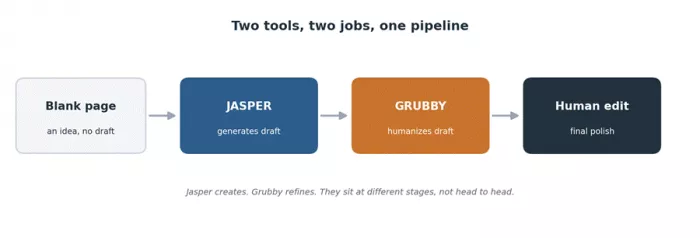
Figure 1. Jasper writes the draft; Grubby smooths it. Different stages of one content pipeline.
The short version, before the detail
Jasper wins when content needs to be created: blogs, ad copy, email sequences, and on brand marketing at scale. Grubby earns its keep at a later stage, humanizing AI text, though user reviews suggest its results swing between useful and frustrating. The real question is simple: does the content need to be written, or rewritten?
Detailed side by side
| Attribute | Grubby AI | Jasper AI |
|---|---|---|
| Category | AI humanizer and rewriter | Full content generation platform |
| Launched / origin | Indie tool by a developer known online as Brad | Founded 2021, Austin (formerly Jarvis) |
| Core function | Rewrites existing AI text to sound human | Writes original copy from prompts and briefs |
| Templates | None, single rewrite box | 50+ marketing templates (ads, emails, blogs) |
| Brand voice | Basic tone and style sliders | Saved, reusable Brand Voices across a team |
| Languages | English only (per its FAQ) | 25+ languages |
| Detector focus | Built to bypass GPTZero, Turnitin | Not a goal; output can read as AI |
| Integrations | Standalone web app | Surfer SEO, Chrome extension, API on Business |
| Input limit | ~400 to 1,500 words per pass by tier | No fixed word cap on paid plans |
| Free access | Small free word allowance | 7 day trial, card required, no free tier |
| Entry price (annual) | $6.99/mo (Essential) | $39/mo (Creator) |
| Best fit | Students, solo writers polishing drafts | Marketing teams and agencies at volume |
Pricing reflects published annual rates as of mid 2026. Monthly billing is higher on both, with Grubby Essential near $14.99 and Jasper Creator at $49.
What Grubby AI actually does
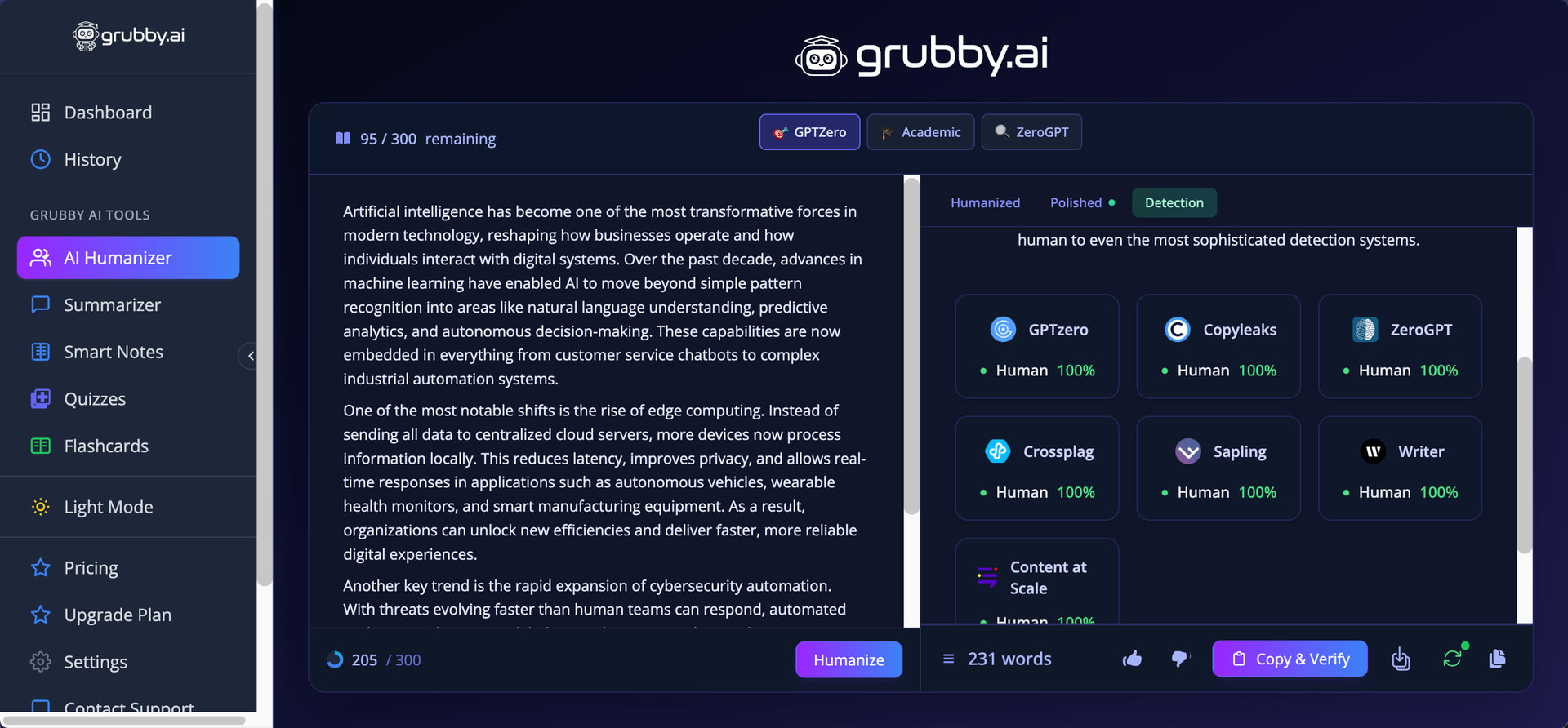
Grubby is narrow on purpose. Trained on a library of human written college essays, it takes machine produced text and reworks the rhythm, word choice, and cadence so it reads as if a person wrote it. The pitch centers on one promise: helping content slip past detectors like GPTZero and Turnitin. There is no template gallery and no campaign planner, just a box, a paste, and a rewrite.
Strengths and weaknesses at a glance
| What works | What holds it back |
|---|---|
| Very low price, often a quarter of QuillBot | Cannot create; needs an existing draft to work |
| Dead simple interface, near zero learning curve | Detector bypass is inconsistent across tools |
| Fast single click rewrites | Reviewers report it can distort meaning |
| Helps on light academic and blog cleanup | English only, weak on long form structure |
| Useful for quick, low stakes experiments | Billing and word count complaints recur |
What Jasper AI actually does

Jasper sits at the opposite end. It is a mature platform built for teams producing a steady stream of on brand material, with three tiers in 2026: Creator, Pro, and Business. Beyond raw text it offers Brand Voices, SEO mode, a browser extension, knowledge assets, and agent style automation higher up. It reached a $1.5 billion valuation within 18 months of launch and shows up in nearly every market report alongside Grammarly and Copy.ai.
Strengths and weaknesses at a glance
| What works | What holds it back |
|---|---|
| Strong, on brand drafts across many formats | Premium price that climbs fast per seat |
| Brand Voices keep tone consistent at scale | Real SEO workflow needs paid Surfer add on |
| 50+ templates and 25+ languages | Brand Voice caps push teams to custom pricing |
| Team features: roles, knowledge, audiences | No built in humanizer; output can read as AI |
| Deep ecosystem and integrations | No permanent free tier; trial auto converts |
What Trustpilot and Reddit users really say
Marketing pages stay optimistic, so independent review platforms carry more signal. The scores tell two different stories, and the gap itself is informative.
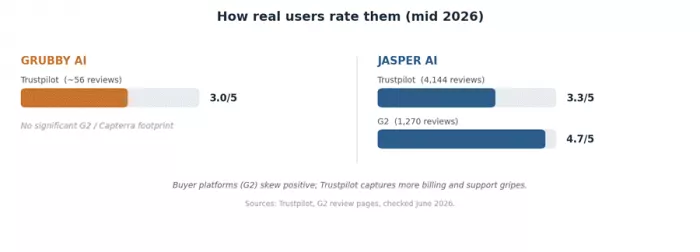
Figure 2. Review scores across platforms, checked June 2026.

| Source | Grubby AI sentiment | Jasper AI sentiment |
|---|---|---|
| Trustpilot | 2.9/5 from ~59 reviews. Split between cheap and time saving versus broken output | 3.3/5 from 4,147 reviews. Praise for templates, frustration over billing and support |
| G2 / Capterra | No meaningful presence | 4.7/5 (1,270) on G2, 4.8/5 (1,851) on Capterra; 84% five star |
| Divided. Some pass GPTZero, many report odd or AI flagged results | Power users praise it, solo creators question the price | |
| Top praise | Cheaper than QuillBot, saves essay time | Brand voice consistency, clean interface, fast drafts |
| Top complaint | Distorts meaning, double charges word credits, support gaps | Generic output risk, cost, occasional repetitive copy |

The pattern is telling. Jasper draws far more reviews and a wide platform gap, with buyer sites like G2 skewing positive while Trustpilot surfaces billing and support gripes. Grubby has a thin, polarized record: one Reddit tester ranked it best of six free humanizers, while a Trustpilot reviewer warned the paid output devolved into incoherent text. Both signals are real, which is why testing on a real draft matters more than any star average.
One market reality worth seeing
The reason these tools should not be judged as rivals becomes clear once the market is mapped. Humanizers like Grubby are a fast growing niche inside the much larger AI writing space, not a replacement for generators like Jasper. The humanizer segment sat near $520 million in 2026, roughly 11% of the wider market, and it is growing because humanization is becoming a standard production step rather than an optional extra.
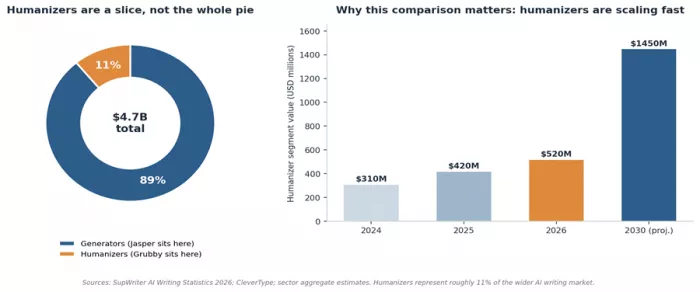
Figure 3. Jasper competes in the 89% generator block; Grubby plays in the smaller, faster growing humanizer slice.
Pricing and the real cost of ownership
Headline prices hide the full bill. The table below lays out each tier on annual billing, plus the extras that tend to surprise buyers.
| Tier | Grubby AI | Jasper AI | Suited to |
|---|---|---|---|
| Entry | $6.99/mo (Essential), small word cap | $39/mo (Creator), 1 seat, 1 Brand Voice | Solo creators, students |
| Mid | Pro, ~30k words/mo, 1,500 word input | $59/mo (Pro), Canvas, 2 Brand Voices | Freelancers, small teams |
| Top | $11.99/mo (Unlimited) | Business, custom, unlimited voices, API | Agencies, enterprises |
| Hidden cost | Manual review and re runs to fix output | Surfer SEO ~$99/mo for the SEO workflow | Budget planning |
| Free / trial | Small free word allowance | 7 day trial, card required, auto converts | First look only |
For SEO content, Jasper Pro plus Surfer Standard runs closer to $158 a month per seat than the $59 headline.
Which tool fits which person
| Choose Jasper if | Choose Grubby if |
|---|---|
| A team needs steady on brand output | Drafts already exist and feel stiff |
| Several writers must sound like one voice | The worry is detector scores, with caveats |
| SEO structure and long form matter | Budget is tight and the need is polish |
| Brand consistency outweighs price | The job is quick, low stakes cleanup |
The honest answer for many: generate with Jasper, then run the draft through a humanizer when tone or detection is on the line, and edit by hand before publishing. They slot together more naturally than they compete.
Final verdict
After weighing the pricing, the test results, and the review data, the original question turns out to hide a false choice. Asking which tool produces better content is like asking whether a camera or a photo editor takes better pictures. Jasper produces the content. Grubby refines it.
Forced to crown one content engine, Jasper takes it. Creation is the harder problem, and it solves that problem at a level Grubby never attempts, backed by thousands of reviews and a long track record. Grubby is the finishing touch: cheap, occasionally sharp, but inconsistent enough that some users walked away describing the output as gibberish. A draft still flagged by detectors, or rewritten into nonsense, is not a finished draft.
So the smart move is rarely either or. Let Jasper do the heavy lifting, keep a humanizer on standby for the moments tone or detection matters, and always reserve the last edit for a person. That last edit, it turns out, is still the part neither tool can fully replace.
Comments