Table of Contents
- What each tool actually is
- The free tier, examined honestly
- Model library and output quality
- Control and workflow
- Ease of use and the learning curve
- Commercial use and licensing
- Feature scope beyond images
- When you outgrow the free tier
- Head-to-head scorecard
- Which should you actually use?
- Final Take
Every AI image tool calls itself free, and technically most of them are. The interesting question is not whether you can generate images without paying you can, on both PicLumen and SeaArt. It is what the free tier quietly costs you: watermarks, public galleries, credit caps, slow queues, or licensing terms that make your images awkward to actually use. That is where these two parts ways. PicLumen is the curated, simple, commercially clean option. SeaArt is the sprawling, powerful, community-driven one. Which is worth using depends entirely on which of those two things you need so this comparison is built around the differences that matter once the price tag stops being the deciding factor.
THE SHORT VERSION Pick PicLumen if you want to open a tab, type a prompt, and get a clean, usable image with commercial rights and no watermark especially for client or brand work. Pick SeaArt if you want a huge model library, real control (ControlNet, LoRA, node workflows), and do not mind a steeper learning curve to get there. If you only remember one thing: SeaArt wins on raw capability, PicLumen wins on being genuinely usable for free without catches. |
What each tool actually is
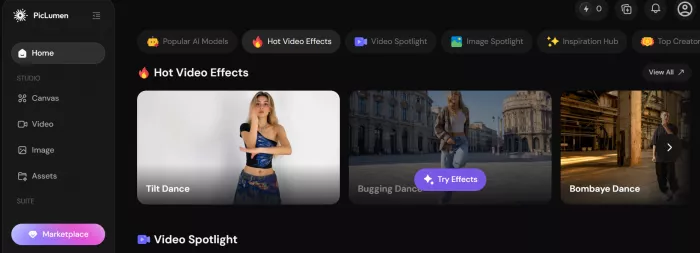
PicLumen is a free-first, web-based generator built around a small, curated set of models Realistic V2, Anime V2, Lineart, FLUX.1-schnell, and Pony Diffusion among them. The whole product is designed to get a non-technical person from prompt to result with as little friction as possible, and it leans noticeably strong on photorealism. It is the kind of tool you can hand to someone who has never generated an image before and they will produce something decent in their first five minutes.
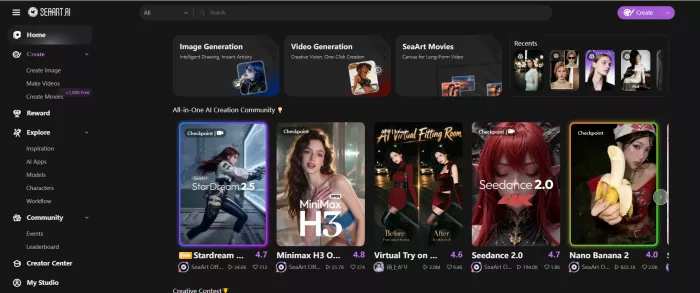
SeaArt is a different animal. Built on Stable Diffusion architecture, it has grown into one of the largest AI art communities anywhere, with a model library running into the hundreds of thousands of community-trained checkpoints and LoRAs. It supports FLUX, Stable Diffusion 3, and SDXL, and bundles in tools most competitors do not touch LoRA training on your own images, ComfyUI-style node workflows, face swap, and even video and audio generation. It is less a single-purpose image generator and more a full creative workspace, with all the power and all the complexity that implies.
The free tier, examined honestly
This is the section most comparisons skip, and it is the one that actually answers the question in the title. Both platforms give you real capability for free, but they draw the line in different places, and a couple of those lines matter far more than the marketing pages let on.
| Factor | PicLumen (free Basic) | SeaArt (free) |
| Daily allowance | Daily Lumens (credits), replenished each day | ~150 daily Stamina credits |
| Unlimited "relax" generation | Limited on free; unlimited only from Standard tier up | Available, but on a slower free queue |
| Watermark on exports | Generally clean; verify current terms | Watermark on free exports |
| Are your images private? | Can be kept private | Public by default on free |
| Resolution | Model-dependent | Up to 2048x2048; higher res burns more credits |
Two rows in that table deserve more than a glance. The first is the public-by-default gallery on SeaArt's free plan: unless you are on a paid tier, your generations are visible to the community. For hobby work that is harmless, even fun. For anything client-facing, confidential, or tied to an unreleased product, it is a real problem, and it is easy to miss until your work is already sitting in a public feed.
The second is the watermark. A watermark on free SeaArt exports is fine for testing ideas, but it means the free tier is not truly deliverable output you are evaluating, not producing. PicLumen's free images do not carry that same asterisk, which quietly makes its free tier more of a finished-work tool than an evaluation sandbox.
The credit systems are worth understanding too, because free does not mean unlimited either. PicLumen meters generations through Lumens and reserves truly uncapped relaxed generation for paid tiers. SeaArt's 150 daily Stamina credits are genuinely generous for casual use, but high-resolution images and heavier models eat through them faster, so the real number of images per day depends heavily on what you are making.
Model library and output quality
On paper, SeaArt's model count obliterates PicLumen's. Hundreds of thousands of community models versus a curated handful is not close. But raw numbers are a misleading way to judge this, because the value of a giant library depends entirely on whether you know what you are looking for.
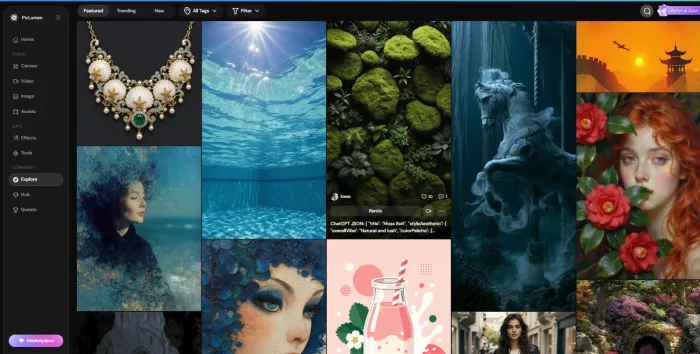
Figure: Piclumen explore feature sections
If you are chasing a specific anime sub-style, a particular artist-inspired look, or a niche aesthetic, SeaArt's breadth is genuinely unmatched there is almost certainly a fine-tuned model for exactly what you want, and the ability to train your own LoRA on top means you can push into territory PicLumen simply cannot reach. If, on the other hand, you mostly want clean, photorealistic images or straightforward illustrations, PicLumen's smaller set is easier to navigate and less likely to leave you paralyzed by choice. The curation is a feature, not a limitation, for that user.
This breadth is also what separates SeaArt from other more curated generators. In a SeaArt vs Leonardo comparison, the same trade-off becomes clear from another angle: SeaArt gives users considerably more room to explore models and styles, while Leonardo puts more emphasis on polished, ready-to-use output. For anyone choosing SeaArt, that helps clarify what you are really buying into: experimentation and control rather than simplicity.
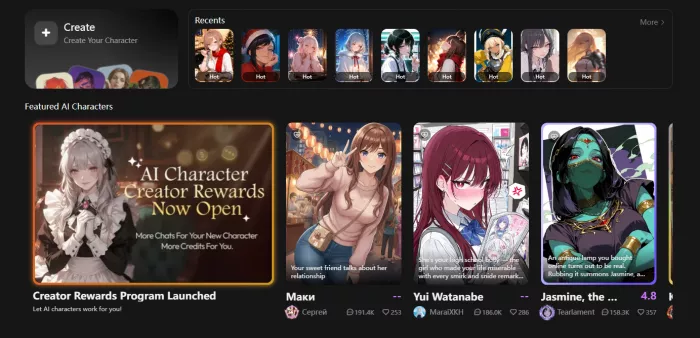
Figure : SeaArt Anime Character Library
Quality-wise, both produce results that hold up well in 2026. The honest generalization: SeaArt tends to shine on anime and stylized work, PicLumen on photorealism and polish out of the box. Neither is a Midjourney-killer on raw fidelity, but both are strong enough that the deciding factor is rarely quality alone; it is control, licensing, and how much friction you are willing to absorb.
Control and workflow
This is where the gap widens the most, and where SeaArt earns its complexity. Its toolkit reads like a checklist of everything power users ask for:
• ControlNet for guiding pose, composition, and structure so you are not just rolling the dice on where a figure ends up, you are directing it.
• LoRA training on your own images, which lets you build a consistent character or a signature style and reuse it across generations. For anyone producing a series rather than one-off images, this is the difference between a toy and a production tool.
• ComfyUI-style node workflows for building repeatable, multi-step pipelines overkill for casual use, invaluable for anyone running a real volume of work.
• Face swap and partial repainting for targeted edits without regenerating the whole image.
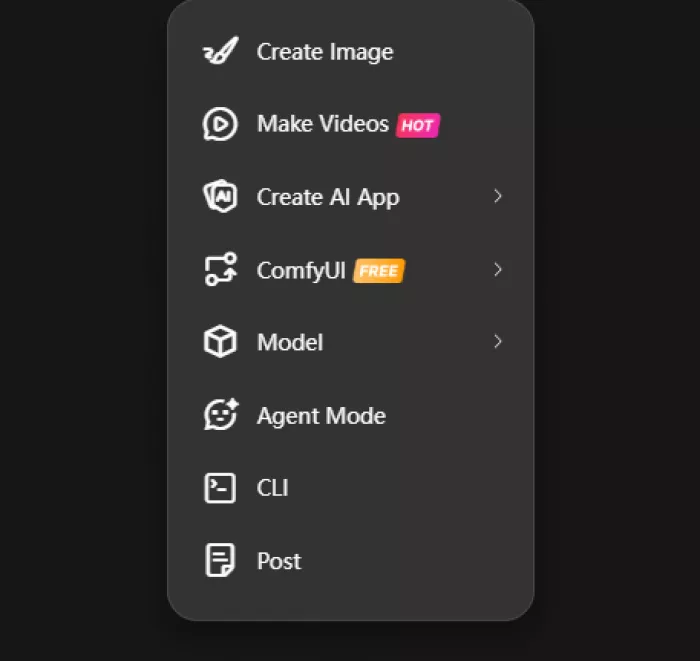
PicLumen's editing suite is deliberately more modest: a background remover, an AI upscaler, inpainting, colorize, and outpainting. It covers the edits most people actually reach for, without asking them to understand nodes or model weights. The trade is clear and it cuts both ways. SeaArt gives you a workshop full of tools and expects you to know which to pick up; PicLumen hands you the few you will use most and gets out of the way.
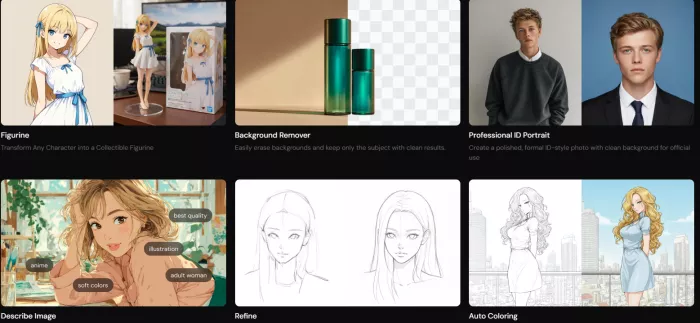
Figure: Piclumen Editing Suites
Ease of use and the learning curve
The two tools sit at opposite ends here, and it is the fastest way to predict which one you will be happier with. PicLumen is genuinely beginner-friendly, the interface is clean, the defaults are sensible, and there is very little to learn before you are producing usable images.
SeaArt is more capable and, as a direct result, more overwhelming. The same interface that gives a power user ControlNet, LoRA, and node graphs can bury a newcomer in options they do not yet understand. That is not a flaw so much as a positioning choice, but it does mean SeaArt rewards patience and punishes a five-minute trial, while PicLumen is built to reward exactly that five-minute trial.
Commercial use and licensing
For anyone using these images to make money, this section quietly outranks everything above it, and it is the area most reviews barely mention. PicLumen includes a commercial license on its free Basic tier, which means images you generate without paying can go into client work, advertising, monetized social channels, and commercial products. That is an unusually open stance for a free-first platform, and for a freelancer or marketer it can settle the whole decision before image quality even enters the conversation.
SeaArt's free tier complicates commercial use in two practical ways: the watermark on free exports, and the public-by-default gallery that is not ideal for confidential or client work. Its commercial terms are workable, but the free plan reads more like a place to experiment than a place to produce deliverables, with the cleaner commercial path sitting behind a paid tier.
One caveat applies to both, and it is worth stating plainly. AI platform licensing shifts periodically, and what is permitted this quarter can carry new restrictions the next. Beyond the tool's own license, the platform where you publish ad networks, stock sites, app stores may apply its own rules on AI-generated and disclosed content. Verify the current terms at sign-up before you build anything commercial on top of them.
| The free-tier licensing difference is the single most underrated factor in this comparison. Two tools can produce equally good images, and only one of them lets you actually use those images to get paid without upgrading first. |
Feature scope beyond images
SeaArt keeps expanding outward. Alongside image generation it offers video, audio synthesis, face swap, and AI character chatbots, edging toward an all-in-one creative suite. PicLumen stays deliberately narrow, focused on generating and editing images and little else.
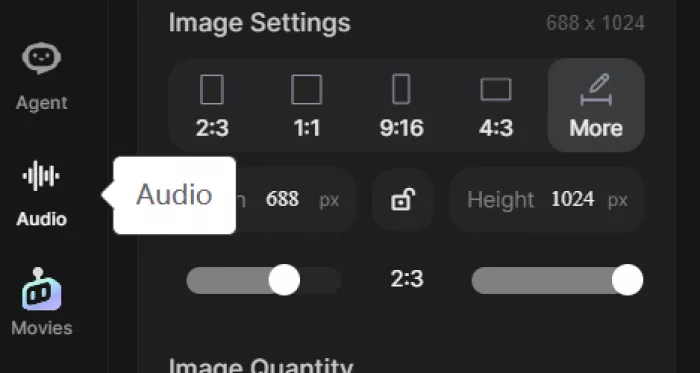
Figure: SeaArt has Audio Synthesis option
Whether that breadth is a strength depends on how you work. If you want one login that handles images today and video tomorrow, SeaArt's range is a real draw. If you would rather have a focused tool that does one job cleanly and loads fast, PicLumen's restraint is the feature: an all-in-one suite you use ten percent of is often more friction than a single-purpose tool you use fully. Breadth impresses in a feature list; focus tends to win the daily habit.
When you outgrow the free tier
The article's question is about free tiers, but it is worth knowing what next costs, because the upgrade path differs in character. PicLumen's paid ladder Mini, Standard, and Pro is aggressively affordable, with Standard landing around six dollars a month on annual billing and unlocking unlimited relaxed generation. SeaArt's paid plans run roughly ten to fifty dollars a month and buy you faster queues, watermark-free and private exports, more credits, and access to premium models.
The pattern is telling. On PicLumen you are mostly paying for more volume and speed of a tool that was already fully usable for free. On SeaArt you are often paying to remove the free tier's real constraints, the watermark and the public gallery which turns the upgrade into less of a luxury and more of a requirement for serious work.
Head-to-head scorecard
| Category | PicLumen | SeaArt |
| Free-tier usability | Strong clean, deliverable output | Good but watermarked and public |
| Output quality | Strong on photorealism | Strong on anime and stylized |
| Model variety | Curated, limited | Vast the clear winner |
| Control and depth | Basic editing suite | ControlNet, LoRA, node workflows |
| Ease of use | Beginner-friendly | Steeper learning curve |
| Free commercial rights | Included on free tier | Cleaner path is paid |
| Feature breadth | Image-focused | All-in-one (video, audio, more) |
Which should you actually use?
There is no single winner here, and pretending otherwise would be the generic answer. The right pick depends on who you are and what you are making:
• The total beginner or casual creator. PicLumen. It is forgiving, fast, and you will have something usable before SeaArt's interface has finished intimidating you. The lower ceiling will not matter until much later, if ever.
• The anime or stylized artist. SeaArt, without much hesitation. The model library and LoRA training are exactly what this work needs, and no amount of PicLumen polish substitutes for that breadth of style.
• The freelancer or marketer doing commercial work. PicLumen, in most cases. Free commercial rights, no watermark, and private outputs matter more than raw capability when the images are going to a client tomorrow.
• The tinkerer or power user. SeaArt. If you actively want ControlNet, custom LoRAs, and repeatable node pipelines, the learning curve is not a cost it is the point, and PicLumen will feel limiting fast.
Final Take
Frame the choice correctly and it mostly answers itself: this is not a contest for the better free generator, it is a fork between two philosophies. SeaArt is the more powerful tool by a wide margin with more models, more control, more range and if capability is what you are optimizing for, it is the answer, provided you will tolerate the learning curve and the free-tier catches. PicLumen is the more usable free tool: it produces clean, commercially clear images with almost no friction, and for a large share of people that is worth more than a feature list they will never fully use.
If you are still unsure, the honest advice is to spend twenty minutes in each with your own real prompts rather than trusting any comparison, this one included. And keep in mind that free tiers in this space shift constantly; credits, watermarks, and licensing terms all move quarter to quarter so whatever you decide today is worth re-checking before you commit anything serious to it.
Comments