Table of Contents
- Round 1: What you actually get per day
- Round 2: Image quality and resolution
- Round 3: The watermark, and whether you can actually use what you make
- Round 4: Model and style variety
- Round 5: Everything beyond making a single image
- Round 6: Speed and queue
- Round 7: Ownership, privacy, and commercial rights
- The scorecard
- So who should start with which
- Before you pay: the upgrade math
- The verdict
Both of these tools will let you make AI images for free, forever, without ever handing over a card. That's not the interesting part. The interesting part is that "free" means something completely different on each one and if you pick the wrong one for the way you work, you'll hit a wall in an hour and assume the whole category is a letdown.
So I did the boring, useful thing: I ran both free plans side by side for a week, same prompts, no upgrades, until each one told me to pay. Below is the actual head-to-head round by round, with a winner called each time and a straight answer to the question in the title. No "it depends" cop-out at the end.
First, the two tools in one breath. Leonardo is a polished, image-focused generator built around a curated set of strong models and a genuinely good real-time canvas. SeaArt is a sprawling all-in-one creative platform with an enormous community model library and tools for image, video, audio, and character chat crammed into one workspace. That difference in personality drives almost everything that follows.
Round 1: What you actually get per day
Both plans run on a daily fuel gauge that resets every 24 hours and doesn't roll over. Neither headline number is an image count, which is the first thing that trips people up.
Leonardo gives you 150 Fast Tokens a day. A token is a unit of compute, not an image, and it's spent at different rates depending on the model and settings. On Leonardo's own first-party models I got roughly 10 to 15 images before the pool emptied. Switch to a heavier premium model or start upscaling and that number collapses fast.
SeaArt runs on Stamina a daily allowance that refills each day and doesn't stack plus a separate Credits system layered underneath, where credits can be earned or bought and can accumulate. Stamina gets spent first; when it's gone, SeaArt dips into credits automatically. On a normal free day I landed in the low twenties of standard images before running out, more than Leonardo gave me, though it swung hard with resolution and model choice.
| Metric | Leonardo (Free) | SeaArt (Free) |
| Daily fuel | 150 Fast Tokens, no rollover | Daily Stamina, no stacking |
| Rough daily images | ~10–15 on first-party models | ~20 standard images |
| Extra economy | None | Separate Credits that can accumulate |
| Drains fastest on | Premium models, upscaling | Video, high-res work |
On pure quantity, SeaArt let me generate more times per day, and it has that extra credit pool as a buffer. Leonardo's allowance is tighter and vanishes into thin air at midnight.
Winner: SeaArt. More generations per day, plus a credit system that gives you somewhere to fall back to.
Round 2: Image quality and resolution
Volume is only half the story: a hundred small, soft images lose to four sharp ones if you actually need to use them.
Leonardo's free output came out at a noticeably higher resolution ceiling (up to roughly 1536×1536 in my runs) and simply looked more finished. When I ran a moody test prompt on a rain-slicked neon street, lone figure under an umbrella Leonardo's versions had cleaner detail and held up when I zoomed in. SeaArt's free output leaned toward standard resolution, closer to the 512×768 range, and it showed on close inspection, especially on faces and fine texture.
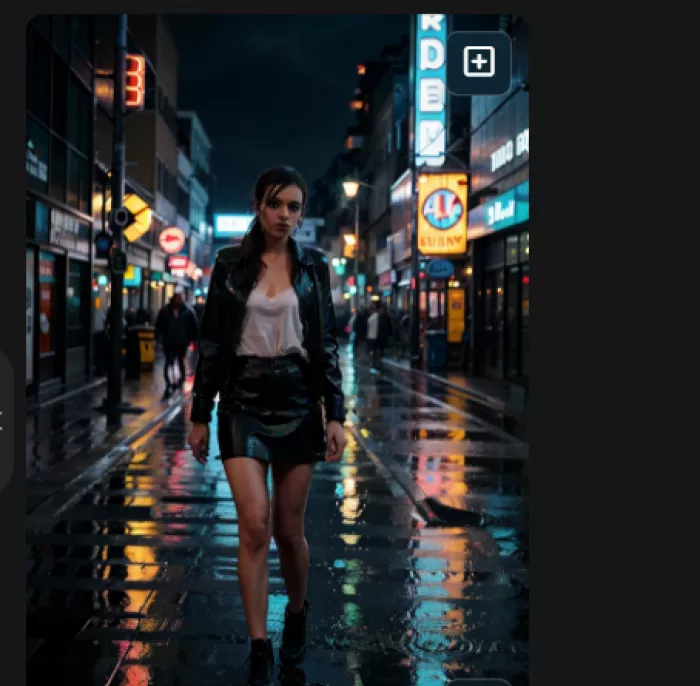
Leonardo AI image Result
That said, "quality" isn't only pixels. SeaArt's massive model selection meant that for certain styles anime especially a well-chosen community model produced a more characterful result than Leonardo's cleaner but more general output. For raw fidelity and resolution, though, Leonardo was ahead on the free tier.
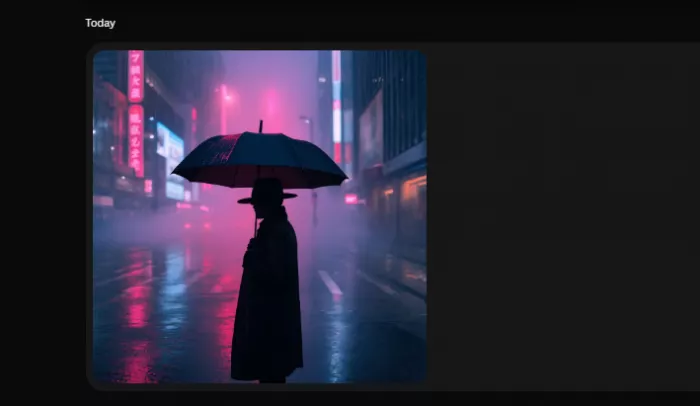
SeaArt AI image result
Winner: Leonardo. Higher resolution and more polished, share-ready output straight out of the box.
Round 3: The watermark, and whether you can actually use what you make
This is the one that decided more of my week than any other single factor.
Leonardo's free images came out clean with no branding stamped across them. SeaArt puts a visible watermark on free-tier output. The second I imagined sending a SeaArt free image to anyone, a client, a collaborator, or just posting it somewhere public that the watermark screamed "unfinished demo," and there is no polite way around it except paying. For private hobby work it's a non-issue. For anything meant to be seen, it's a hard limit baked into every single image.
Winner: Leonardo. A clean, watermark-free image you can share immediately beats a stamped one every time.
Round 4: Model and style variety
Here's where SeaArt stops competing and starts running away.
SeaArt's free tier opens the door to a staggering library of community-built models and LoRAs hundreds of thousands of them, covering every style people have bothered to train, from anime and painterly looks to hyper-specific niche aesthetics. I lost an entire evening just trying different models on one prompt. It's less a generator and more a bottomless style catalog.
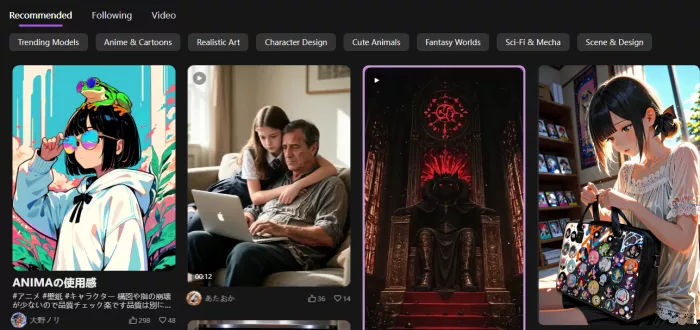
SeaArt AI models options
Leonardo's models are curated and high quality Phoenix, Lucid Origin, Flux and that curation has real value: less junk, more consistency. But it's a shortlist next to SeaArt's buffet. If discovering a weirdly perfect style someone fine-tuned last week is part of the fun for you, this round isn't close.
Winner: SeaArt. By a mile. Nothing on the free market matches that breadth of models and styles.
Round 5: Everything beyond making a single image
Leonardo is deliberately image-focused. SeaArt is a whole creative suite, and even the free plan reflects that.
On SeaArt's free tier I could, without leaving the tab:
● Generate images across thousands of community and foundation models, then fix mistakes with image-to-image and inpainting instead of regenerating the whole scene.
● Try short video, face swap, background removal, and upscaling all in one place rather than across five separate tools and logins.
● Train LoRAs and mess with AI character chat, which turns the platform into part generator, part playground, part social space.
Leonardo counters with focus rather than breadth. Its real-time canvas where the image updates as you sketch and type was the single feature I enjoyed using most on either platform, because iterating started to feel like drawing rather than rolling dice. But as a count of what the free tier lets you do, SeaArt does far more.
If Leonardo’s more focused creative workflow appeals to you, the comparison changes again when it is placed beside a more prompt-driven platform. I’ve explored that difference in a separate Midjourney vs Leonardo AI comparison, looking specifically at which one fits different image-generation workflows better.
Winner: SeaArt on sheer range. (Leonardo takes a quiet consolation point for having the single best individual feature.)
Round 6: Speed and queue
Free users get whatever compute is left after paying customers, and I felt that on both, differently.
SeaArt processes free generations through a shared queue that visibly backed up in the evenings a few times "generate" just meant "wait a while," and that wait is clearly engineered to make you consider paying. Leonardo capped my free concurrency tightly, so I ran one job at a time with a short queue rather than firing off big batches, but individual images came back promptly and predictably.
Neither was painful for light use. But SeaArt's peak-hour queue was the more frequent source of friction, while Leonardo's limit was more of a steady, quiet ceiling.
Winner: Leonardo, narrowly. More predictable, less waiting around at peak times.
Round 7: Ownership, privacy, and commercial rights
The costs that never appear on the pricing page, and where "free" gets genuinely tricky.
On Leonardo, free-plan creations are public by default; they land in the community feed where others can see, save, and remix them and Leonardo retains rights to reuse and reproduce that output. For throwaway experiments it's harmless. For anything commercial or confidential, it's a real problem: you can't generate a client concept on the free plan and treat it as private, owned work. Privacy sits behind the paywall.
On SeaArt, the images are yours to download, but the commercial picture gets murky because of those community models. When you generate with a model someone else trained, its training-data provenance often isn't clear, and that uncertainty flows into whatever you make. "I made this with a random community LoRA" is not the clean licensing story a cautious client wants to hear.
So both stumble here, but for opposite reasons: Leonardo restricts what you own and keep private, SeaArt clouds what you can safely sell. If I had to pick the lesser evil for a casual creator who just wants their images to be theirs to download and post, SeaArt edges it the watermark aside, at least the output isn't public property by default.
Winner: SeaArt, narrowly, for a casual user. (For confidential commercial work, honestly, neither free tier is safe.)
The scorecard
| Round | Winner |
| 1. Daily volume | SeaArt |
| 2. Quality & resolution | Leonardo |
| 3. Watermark / shareability | Leonardo |
| 4. Model & style variety | SeaArt |
| 5. Feature range | SeaArt |
| 6. Speed & queue | Leonardo |
| 7. Ownership & privacy | SeaArt (for casual use) |
Four rounds to three, SeaArt takes the count but read that result carefully, because the rounds aren't equal in weight. Three of SeaArt's four wins (volume, variety, features) reward exploration. Two of Leonardo's three (resolution, watermark) reward finishing something you can actually use. The scorecard doesn't crown a winner so much as tell you what kind of user you are.
So who should start with which
Start with SeaArt free if you make anime or stylized art, you want to dig through hundreds of models to find a look, you like having video, face swap, and character tools in one place, and you're in an exploring-and-learning phase where a watermark on test shots doesn't bother you. It's the most generous free playground in the category, full stop.
Start with Leonardo free if you want a handful of clean, higher-resolution images you'd actually show someone, you care about the interface and that real-time canvas, and you're evaluating the tool seriously with an eye on upgrading. It gives you less to play with but more you can keep.
And the honest caveat that matters: I wouldn't do paid client work on either free tier. Leonardo's public-by-default output and SeaArt's watermark-plus-licensing fog both make the free plans wrong for real deliverables. Free is for evaluation and personal work. Once money is attached to what you make, the real question becomes which paid plan to buy.
Before you pay: the upgrade math
The title says "before you pay," so here's exactly where free stops and what the first dollar buys.
I outgrew Leonardo free when I kept hitting the token wall mid-piece and realized I wanted my generations private instead of public. Its ladder starts at Essential around $12/month, then Premium near $30, then Ultimate near $60, each step roughly tripling the token pool and adding privacy, better queue treatment, and more features. The detail most people miss: if you already pay for Canva, Leonardo's entry tier is bundled in, which quietly makes it one of the cheapest serious upgrades going.
I outgrew SeaArt free when the watermark started undermining anything worth sharing and the daily Stamina ran dry during a busy evening. Its ladder starts strikingly low a Beginner tier around $5.99/month that kills the watermark and roughly doubles the daily allowance then climbs through Standard near $29.99 and Pro near $59.99, up to a Master tier for heavy production.
| Metric | Leonardo | SeaArt |
| Cheapest paid tier | ~$12/mo Essential | ~$5.99/mo Beginner |
| What the first dollar fixes | Privacy, more tokens, IP ownership | Watermark, more Stamina, faster queue |
| Sneaky value | Free if you already pay for Canva | Very cheap route to watermark-free output |
Look at what each first dollar fixes and you understand the whole comparison. Leonardo's cheapest upgrade solves an ownership problem; it makes the tool safe for real, private work. SeaArt's cheapest upgrade solves a presentation problem: it makes your output clean and your queue fast. What you pay to fix is exactly what was holding you back for free.
The verdict
If the question is strictly "which free tool gives you more," the answer is SeaArt has more images per day, vastly more models and styles, and more things to do beyond generating a flat image. For exploring, learning, and stylized or anime work, nothing else comes close to its range, and it's the one I'd hand to most people starting out.
But "more" and "better for you" aren't the same word. If what you need is a few clean, high-resolution images you can share or show without a watermark and without your work sitting in a public gallery, Leonardo's free tier gives you less quantity and more usable output, and it's the smarter start.
The cleanest way to settle it for your own work is to stop reading comparisons including this one and run one prompt you actually care about through both free tiers back to back. Ten minutes in, you'll feel whether you'd rather spend SeaArt's breadth or Leonardo's polish. That gut answer beats any scorecard.
A note on the numbers: AI pricing, token allowances, and free-tier limits change constantly, and SeaArt in particular has reported its free Stamina figures inconsistently across sources. Everything above reflects the picture in August 2026 confirm the live details on each platform's pricing page before relying on them.
Comments