Table of Contents
- What Exactly Is AO3?
- The Origin Story: Why AO3 Was Built
- How Does AO3 Work?
- What Can You Read?
- Finding the Right Stories
- Understanding AO3 Tags
- Reading and Saving Works
- Publishing Stories on AO3
- Why Is AO3 So Popular?
- AO3 Reviews: What Users Think
- Inside AO3's Community
- Content Rules and Safety
- AO3 vs Wattpad
- What Comes Next for AO3?
- Verdict: Why AO3 Matters
What happens when fans love a fictional world so much that they start writing their own stories about it? For millions of readers, the answer is AO3. The website hosts everything from alternative movie endings to novel-length stories about familiar characters. Yet AO3 operates differently from most modern content platforms. It has no advertising, no personalized recommendation feed, and no paid subscription to access its library. So how did this fan-run archive become such a recognizable part of internet culture?
What Exactly Is AO3?
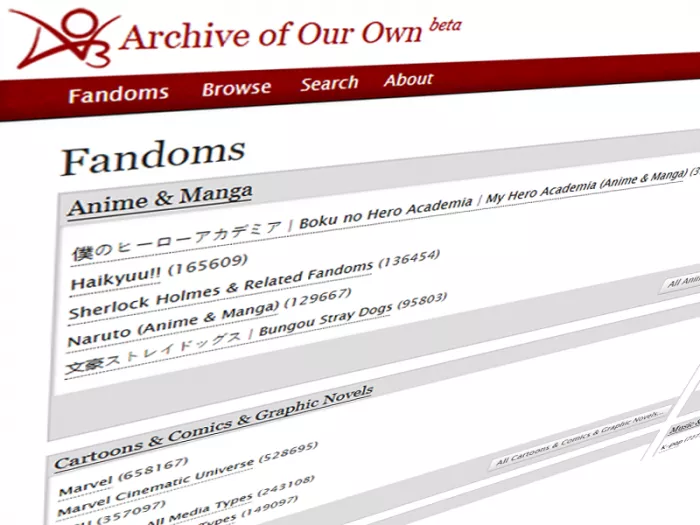
AO3 stands for Archive of Our Own, a nonprofit website where people publish, read, and discover fan-created stories. It is best known for fanfiction, although the archive also supports poetry, fanart, podfics, and certain original creative works.
Fanfiction takes existing characters, settings, or fictional universes and creates something new with them. A Harry Potter fan might imagine a different ending to the series, while a Marvel enthusiast could write a story in which familiar superheroes live ordinary lives. These stories are created independently by fans rather than commissioned by the original copyright holders.
AO3 differs from conventional publishing platforms because it prioritizes collecting and organizing fanworks rather than selling content or promoting individual creators through recommendations. Most publicly available stories can be read without an account, and authors generally share their work for free.
The platform is operated by the Organization for Transformative Works (OTW), a nonprofit established to support and preserve fan culture.
The Origin Story: Why AO3 Was Built
AO3 emerged because fan writers were tired of depending on commercial websites that could suddenly delete stories, introduce restrictions, or close entirely.
The Organization for Transformative Works was established in 2007, and AO3 entered open beta in 2009. Its purpose was straightforward: create an archive controlled by a fan-focused nonprofit rather than an advertising-driven company.
The early archive had just 347 users and 6,598 works. Its audience subsequently expanded into the millions, reflecting the demand for a stable home for fan-created fiction.
In April 2026, AO3 officially exited open beta after more than sixteen years. By that point, it had already grown beyond 10 million registered users and 17 million works. The website also received the 2019 Hugo Award for Best Related Work, recognizing its cultural significance within the broader science fiction and fantasy community.
AO3's history is important because its priorities have remained unusually consistent. Instead of developing into a conventional social network, it has continued investing in an accessible, searchable archive.
How Does AO3 Work?
AO3 functions much like a digital library, except its collection is organized around fictional universes, characters, relationships, and story themes.
Visitors can browse works without registering. After opening a fandom category, they can examine story summaries, word counts, chapter numbers, ratings, and tags before deciding what to read.
A basic reading session usually follows this process:
● Find a fandom: Search for a favorite series, movie, video game, or character to discover related stories.
● Narrow the selection: Use filters to choose preferred relationships, story lengths, ratings, languages, or completed works.
● Check the story details: Read the summary and content warnings to understand the premise and potentially sensitive subjects.
● Start reading: Open the story in the browser, browse individual chapters, or download the work when the option is available.
Registered users receive additional features, including subscriptions, reading history, and private bookmarks. Some authors restrict their stories to logged-in users, meaning visitors may occasionally encounter works that require registration.
The interface is simple rather than visually elaborate. It can feel unfamiliar initially, but its design allows readers to focus on finding and reading stories without navigating advertising or promotional feeds.
What Can You Read?
AO3's library extends well beyond short romantic stories about television characters. It contains everything from brief character studies to complete novels that reinterpret entire fictional universes.
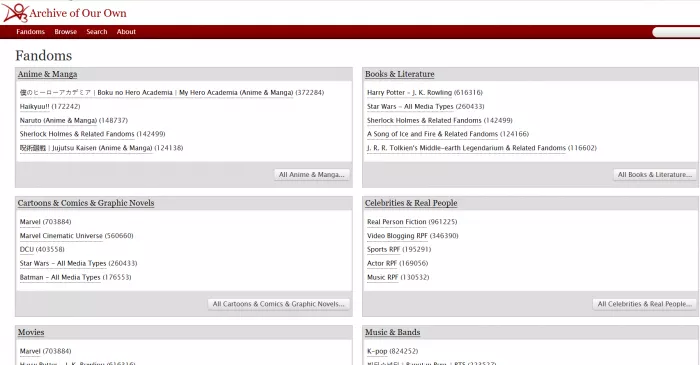
Popular fandoms include Harry Potter, Marvel, Star Wars, anime, video games, and numerous television series. However, smaller fandoms are equally significant because the archive gives lesser-known communities a place to preserve their creative work.
Several storytelling formats appear frequently:
● Alternate Universe (AU): Established characters appear in completely different circumstances, such as superheroes attending college instead of fighting villains.
● Canon Divergence: A writer changes an event from the original story and explores how the consequences might unfold.
● Crossovers: Characters from different fictional worlds interact within the same narrative.
● Character and relationship studies: Stories examine personalities, emotional conflicts, friendships, or romantic relationships in greater detail.
Readers can also discover missing-scene fiction, reader-insert stories, humorous reinterpretations, and experimental narratives. This variety helps explain AO3's appeal. A reader who wants more stories about a favorite character can find interpretations that might never appear in an official sequel.
Finding the Right Stories
Finding an interesting story on AO3 is less about browsing recommendations and more about knowing how to use its search tools.
Suppose someone wants a completed fantasy story featuring two specific characters, written in English, with at least 20,000 words. AO3 allows them to combine those preferences rather than search through unrelated results.
| Search option | What it does |
| Fandom | Limits results to a fictional universe or community |
| Relationships | Finds stories featuring particular character pairings |
| Word count | Separates short fiction from longer stories |
| Completion status | Shows finished or ongoing works |
| Ratings and warnings | Helps exclude certain content categories |
| Sorting | Organizes results by date, kudos, bookmarks, and other criteria |
The exclusion filters are particularly valuable. Readers can remove unwanted relationships, themes, or ratings without abandoning an entire fandom.
One limitation is that popular stories often dominate results sorted by kudos. Exploring newer publications or less familiar tags can reveal overlooked works that better match individual tastes. The search system rewards curiosity and experimentation, although learning its terminology takes practice.
Understanding AO3 Tags
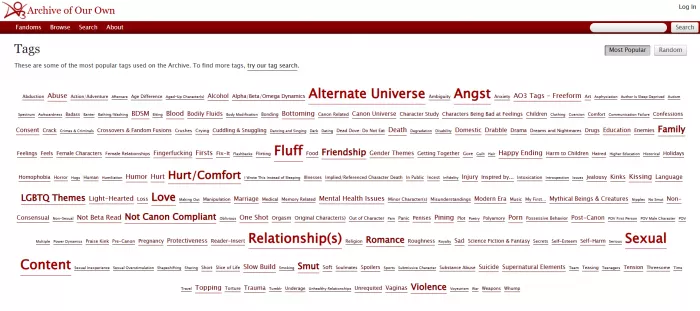
If one feature explains why experienced readers become attached to AO3, it is the tagging system. Tags describe what a story contains before someone opens it. Beyond identifying characters and relationships, they communicate genres, emotional themes, plot devices, and content considerations.
A story might include tags such as Slow Burn, Found Family, Alternate Universe, or Happy Ending. Others describe more specific narrative details that readers might actively seek or avoid.
AO3 organizes this information into several categories, including fandom, relationships, characters, additional tags, ratings, and archive warnings.
Behind the scenes, volunteer tag wranglers connect related terms. This allows searches to recognize different expressions for similar concepts without forcing every writer to use identical language. For instance, a popular relationship might have several commonly used names. Connected tags help readers discover relevant works despite those variations.
The system is not flawless. Some authors use extremely long tag lists, while others choose not to disclose particular warnings. AO3 also permits the designation Creator Chose Not To Use Archive Warnings.
Tags are therefore useful indicators rather than complete descriptions. Checking the summary and warnings together usually provides a better understanding of what to expect.
Reading and Saving Works
AO3 supports different reading habits, from finishing a short story in one sitting to following a long-running series for months. Readers can move through individual chapters or choose to display an entire work on one page. Download options commonly include EPUB, PDF, MOBI, and HTML, making many stories available for offline reading.
The platform also distinguishes between several forms of reader engagement.
● Kudos are the equivalent of expressing appreciation without leaving a written response.
● Comments allow readers to discuss particular chapters or communicate with authors
● while bookmarks help registered users organize stories they may want to revisit.
Subscriptions are useful for unfinished works because users can receive notifications when new chapters appear. AO3 also maintains reading history for logged-in users who have that feature enabled.
These options are practical, although the reading-history system is less advanced than the dedicated tracking features offered by some ebook applications. Readers managing hundreds of stories may find personal bookmarks and notes more dependable for organizing their favorite works.
Publishing Stories on AO3
AO3 is designed to make independent publication relatively accessible. Writers do not need publishing experience, an agent, or a preexisting audience.
Registration generally requires an invitation, which can be requested through AO3's account invitation system. Once registered, writers can create works, add summaries, assign ratings, and organize chapters.
Imagine an author planning a five-chapter mystery involving characters from a familiar television series. They can publish the opening chapter, identify the work as unfinished, and release additional chapters whenever they are ready.
AO3 provides several tools for managing that process. Authors can organize connected stories into series, publish works within collections, moderate comments, and restrict visibility to registered users. Readers who subscribe can receive notifications about updates, allowing ongoing stories to develop returning audiences.
However, publication does not automatically guarantee attention. Stories connected to active fandoms or popular relationships may attract more readers, while smaller communities can produce limited engagement.
AO3 also prohibits certain forms of commercial promotion. It is primarily intended for sharing fanworks rather than building a paid-content business.
Why Is AO3 So Popular?
AO3 reached 11 million registered users in June 2026, only a few months after passing 10 million. Its growth is especially interesting because the website does not follow many familiar strategies used by large content platforms.
There is no conventional personalized recommendation feed telling readers which stories deserve attention. Instead, discovery depends heavily on searchable tags, filters, and user-selected sorting.
This creates a different relationship between the platform and its audience. Readers can actively seek unusual characters, themes, and story combinations rather than depend on what an algorithm promotes.
Its popularity also comes from three connected strengths.
1. First, AO3 gives creators considerable freedom to experiment with fictional material.
2. Second, its archive preserves older stories instead of treating them as irrelevant once public attention shifts elsewhere.
3. Third, its nonprofit structure allows it to prioritize fanworks without relying on advertising revenue.
The platform is also particularly valuable to smaller fandoms. A story written years ago about an obscure television series can remain discoverable even when the original program is no longer popular.
That long-term availability encourages readers and writers to see AO3 as a permanent creative library rather than another temporary posting platform.
AO3 Reviews: What Users Think
Public feedback on Trustpilot and Reddit offers a useful perspective on AO3's strengths and frustrations.
On Trustpilot, the platform has a small collection of public reviews. At the time of review, 52% were five-star ratings and 28% were one-star ratings, based on 25 submissions.
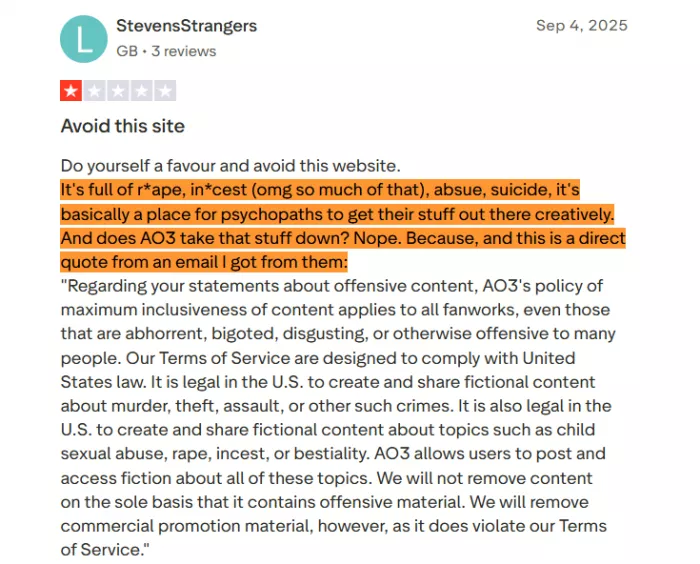
Positive reviewers appreciate its extensive fanfiction collection, free reading experience, and freedom for writers. Negative feedback frequently focuses on disturbing fictional content, account difficulties, and disagreements over moderation.
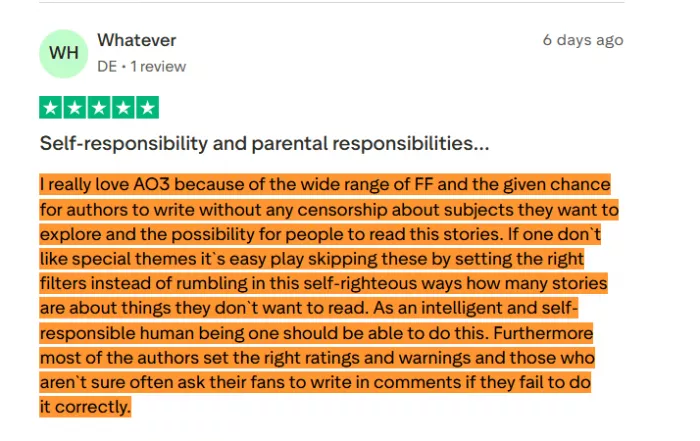
Because the sample is small and self-selected, those ratings should not be interpreted as a reliable measure of overall user satisfaction.
What Reddit users appreciate
Discussions in reddit offer more detailed observations. Many contributors praise the search filters, download options, lack of advertisements, and ability to discover very specific story types.
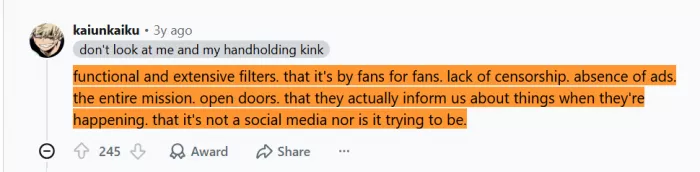
In discussions comparing AO3 with other fanfiction websites, users frequently identify tagging as one of its biggest advantages.
Common frustrations
Other users describe difficulty managing long tag lists, finding stories across complicated crossover categories, and repeatedly excluding unwanted themes. Some newcomers also find the interface less intuitive than commercial reading applications.
The recurring contrast is revealing. AO3 gives experienced users substantial control, but that same flexibility introduces a learning curve.
Its content policies create a similar divide. Readers who value broad creative freedom often appreciate the archive's approach, while others would prefer stronger content restrictions. Overall, the feedback suggests AO3's appeal depends considerably on what a reader expects from a storytelling platform.
Inside AO3's Community
AO3 is a reading archive, but its audience has developed recognizable social customs around stories and fandoms. Readers leave comments discussing character decisions, emotional scenes, and possible plot developments. Authors may respond through comments or include notes explaining writing choices and future updates.
The platform also supports gift exchanges, themed collections, collaborative challenges, and events where writers create stories around shared prompts.
Pseudonymous publishing is common. Writers often use chosen usernames rather than their real identities, allowing them to explore different genres and creative interests without maintaining a public personal brand.
However, AO3 communities are not always harmonious. Disagreements about fictional relationships, content warnings, or interpretations of characters can become heated.
Features such as blocking, muting, and comment moderation give users some control over those interactions. Unlike social media platforms organized primarily around followers and visibility, much of AO3's community activity develops through shared interest in particular works.
Content Rules and Safety
AO3 permits a broad range of fictional themes, including mature and potentially disturbing material. That approach is central to its philosophy of preserving fan-created fiction, but it also means readers need to understand its content warnings.
Works are assigned ratings ranging from General Audiences to Explicit. Archive warnings identify certain sensitive themes, while additional tags may provide further information.
AO3 allows readers to exclude unwanted ratings and tags, but its warning system has limitations. Authors may choose not to use archive warnings, and not every potentially upsetting subject will necessarily be identified.
Readers can make browsing more comfortable by checking ratings carefully, excluding unwanted themes, and reviewing story summaries before opening unfamiliar works. Registered users can also use blocking and muting features to manage interactions or reduce exposure to particular accounts.
The platform has reporting procedures for conduct that violates its policies, including harassment. However, material that some readers find offensive is not automatically prohibited under AO3's rules.
This distinction matters particularly for younger audiences. AO3 should not be treated as a fully child-safe reading environment, and its filters are not a substitute for parental controls.
AO3 vs Wattpad
AO3 is frequently compared with Wattpad because both allow people to share and read stories online. However, their publishing models and discovery experiences are noticeably different.
| Feature | AO3 | Wattpad |
| Main focus | Fanworks and fandom archives | Original fiction and social storytelling |
| Discovery | Detailed tags and search filters | Search and recommendations |
| Business model | Nonprofit, donation-supported | Commercial platform |
| Monetization | No paid-story marketplace | Selected creator monetization programs |
| Reading experience | Archive-focused | Social-reading focused |
| Best for | Readers with specific fandom interests | Readers exploring broader fiction |
Wattpad offers a more commercially oriented storytelling experience and can be appealing to writers interested in building audiences around original fiction.
AO3 provides stronger fandom-specific organization and more detailed filtering, making it especially useful for readers who know the characters, relationships, or themes they want.
Neither platform guarantees better writing. Both host stories from creators with varying levels of experience, and reading preferences ultimately determine which environment feels more comfortable.
What Comes Next for AO3?
AO3's transition out of open beta marked a milestone, but maintaining a large nonprofit archive introduces continuing challenges. Millions of works require dependable servers, ongoing software maintenance, accessibility improvements, and systems for handling reports and user concerns.
Its volunteer-centered structure also creates practical constraints. Technical development depends on available resources, while community expectations continue to grow alongside the audience.
Preservation remains another important responsibility. Through its connection with the OTW and projects such as Open Doors, AO3 contributes to protecting fanworks that might otherwise disappear when older websites close.
Emerging questions surrounding AI-generated writing, authorship, and creative consent may also influence future discussions about online fanfiction archives. AO3's greatest challenge may be maintaining its original identity while supporting an increasingly large and diverse community.
Verdict: Why AO3 Matters
AO3 has earned its place in internet culture by offering something relatively unusual: a large creative archive built around reader choice, fan ownership, and long-term preservation.
Its tagging system makes discovering specific stories easier, while free access and extensive fandom coverage give readers opportunities to explore fictional worlds far beyond their original narratives. There are compromises. The interface takes time to understand, content warnings require attention, and some reader-management features could be improved.
For people interested in fanfiction, AO3 remains a valuable destination. More broadly, its success demonstrates that a community-supported website can attract millions of participants without making advertisements, paid visibility, or algorithmic recommendations the foundation of the experience.
Comments