Table of Contents
- A bucket versus a budget
- How each one actually counts an image
- Head-to-head by how much you generate
- The features that matter once volume is high
- The quality question: models and output
- Ease of use and the learning curve
- What an image really costs
- Past stills: video, API and teams
- Who each tool is really built for
- The fine print that bites
- Do you even have to choose? Running both
- So, which one
- MY VERDICT : Match the meter, not the images
I’ve spent more than I’d like to admit learning the difference between these two tools not in subscription fees, but in the quiet waste of paying for the wrong plan. Both make good pictures; that stopped being interesting a while ago. What actually costs you money is what happens when you generate a lot, and whether the way each tool counts your work matches the way you actually work.
On a spec sheet, Getimg and Leonardo look like rivals. The moment you use both for real, they stop resembling each other. They don’t just charge different prices they count in different currencies, and those currencies reward completely different habits. One sells you a bucket of images. The other sells you a budget that certain features drain far faster than others. I’ve been caught out both ways, so let me save you the tuition.
MY SHORT VERSION
Getimg My pick when output is predictable and I need to know what a single image costs batch work, client deliverables, anything I’m running through an API. |
Leonardo My pick when I’m generating a high volume of ordinary stills and want them effectively unmetered, or I’m leaning hard on video, game assets, and heavy iteration. |
A bucket versus a budget
The one-liner I wish I’d had on day one: Getimg meters with credits, Leonardo meters with tokens, and those aren’t two labels for the same thing. They’re two philosophies.
With Getimg, every image I make subtracts a fixed amount from the same pile. A plan comes with a set number of credits, a given model costs a set number of credits per image, and when the pile runs low I either wait for the reset or top it up. What I like about it is the arithmetic I can look at any plan and know, roughly, how many images it buys. Nothing I click mid-session changes the rules.
Leonardo works the opposite way, and it’s the part that tripped me up longest. On a paid plan, generating an ordinary image on one of Leonardo’s own models, in its standard “relaxed” mode, is effectively unmetered. Tokens are there to gate the expensive fast generation that jumps the queue, upscales, big batches of variations, video, and premium third-party models like Veo, Sora, or Kling. So the token counter on your dashboard isn’t really a cap on how many pictures you can make. It’s a surcharge meter for speed and premium features. Once that clicked, the whole tool made sense.
Sit with that, because it flips the intuition most of us bring in. If you fire off hundreds of straightforward stills a month, Leonardo’s cost per image trends toward nothing on a paid plan while the same run on Getting Marches steadily through a finite balance. But the moment you start upscaling everything, running constant variations, or making video, Leonardo’s tokens evaporate, and Getimg’s flat pricing is suddenly the thing you wish you’d bought.
How each one actually counts an image
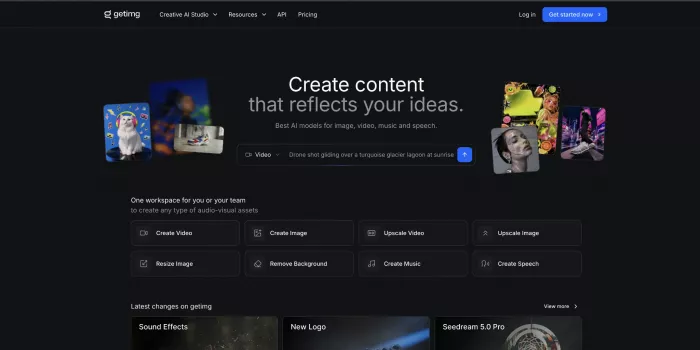
Let me put real numbers on it, because that’s where it clicked for me. Start with the free tiers alone.
Getimg’s free plan gives you 100 credits a month. Basic images cost about one credit each, so that’s roughly a hundred of them but the first time I reached for a heavier model like FLUX, a single image ate several credits and my effective count dropped to something closer to a dozen and a half. It’s a monthly bucket: spend it in one sitting or dribble it across four weeks, the tool doesn’t mind.
Leonardo’s free tier hands you 150 tokens a day, resetting every morning with no rollover. A standard-model image runs about four to six tokens, so you’re looking at roughly 25 to 35 images a day before you’re tapped out then nothing until tomorrow. Turn on higher quality, ask for extra variations, or run an upscale, and that daily allowance collapses to a handful. I learned this by burning a whole day’s tokens on four upscales before lunch.
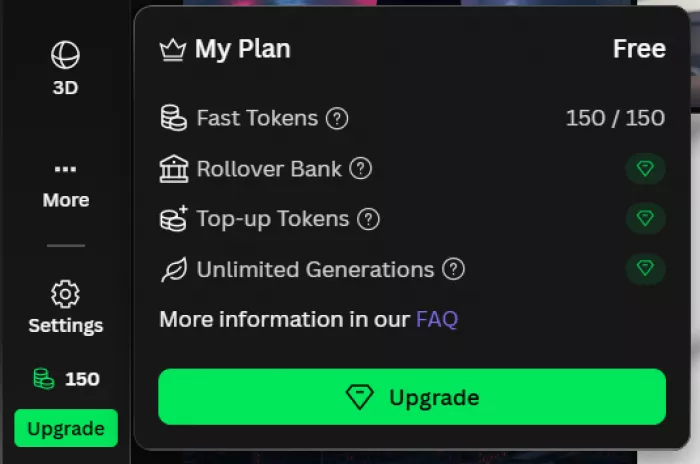
That contrast a monthly pool versus a daily drip was the first thing that told me which tool suited which person:
● If you make a little most days a couple of concepts here, a thumbnail there Leonardo’s daily refill quietly gives you far more over a month than the raw number suggests, because you’re topping up thirty times instead of once. That’s me most weeks, and it’s why I keep the free tier around.
● If you batch sitting down once a week to push out forty images for a campaign Leonardo’s daily cap becomes a cage, while Getimg’s single monthly bucket lets you spend it however and whenever you like.
Neither is better in the abstract. They’re better for different people, which is the whole reason this comparison exists.
Head-to-head by how much you generate
Forget the plan names for a second and find yourself on this scale. It’s the part I’d tattoo on a new user if I could.
| If you’re | Rough monthly volume | My pick | Why |
| An occasional dabbler | a few dozen | Leonardo (free) | The daily 150-token refill outlasts Getimg’s 100-credit month if you spread usage out, and you get more built-in tools to play with. |
| A weekend hobbyist | ~100–300 | Toss-up, I lean Getimg | Predictable cost and commercial rights on every paid plan matter once you’re doing real projects; Leonardo’s entry plan works too if you stay on first-party models. |
| A heavy solo creator | 500–2,000 | Leonardo | This is where “unlimited relaxed generation on first-party models” pays off the same volume would burn through Getimg credits fast unless you keep upgrading. |
| A bulk / production user | thousands, automated | Getimg | Fixed per-image cost, top-ups, a clean API, and a budget you can forecast beat a variable token meter when finance needs one number. |
| Video-first | any | Edge to Getimg | Video drains Leonardo tokens quickly; Getimg draws video from the same shared balance as everything else, which is easier to reason about. |
I’ve watched the “right” answer here flip on me more than once as a project changed shape, a still-image job that suddenly needed video, a hobby that turned into client work. That’s exactly why a single verdict for these two is useless. Your honest answer to “how much, and how, do I generate?” decides more than any feature on either site.
The features that matter once volume is high
Every comparison lists thirty features. Most of them stopped mattering to me the day I started generating at volume. These are the ones that didn’t.
| Feature | Getimg | Leonardo |
| Cost per image | Fixed and predictable | Variable; near-zero for first-party stills on paid plans, higher for premium, fast, and video |
| Hitting a ceiling | Hard credit cap, top-ups available | Soft cap; unlimited relaxed first-party generation on paid plans |
| Bulk / batch | Yes, straightforward | Yes, but variations and speed cost tokens |
| API for automation | Simple REST API, free tier ~100 images/mo | Production API, ~$5 starter credit, token-based, billed separately |
| Commercial rights | On every paid plan | On paid plans, not the free tier |
| Custom models | Yes (DreamBooth-style training) | Yes, plus ControlNet and motion tools |
| Beyond images | Video, music, speech, sound one shared balance | Video, 3D assets (Rodin V2), audio |
| Free-tier privacy | Private generation available | Free creations are public; Leonardo holds the IP |
Two of those rows are worth more than a cell. Getimg keeping image, video, music, speech, and sound on one shared balance is genuinely convenient a whole campaign (a hero image, a short clip, a voiceover, a background track) comes off one meter and one bill, and I’ve stopped juggling four tools because of it. Leonardo’s move into 3D through Rodin V2, plus its ControlNet posing tools, is why the game and asset people I know reach for it instead they’re generating variations against a tight art direction, not one-off marketing visuals.
The quality question: models and output
You’ll notice I’ve dodged image quality this whole time. That’s on purpose. For most of the work I do, it isn’t the tiebreaker. People expect both tools to sit on the same frontier of models, and both make images that are more than good enough for marketing, concepting, and social. Where they split is, again, philosophy: how much choice they hand you.
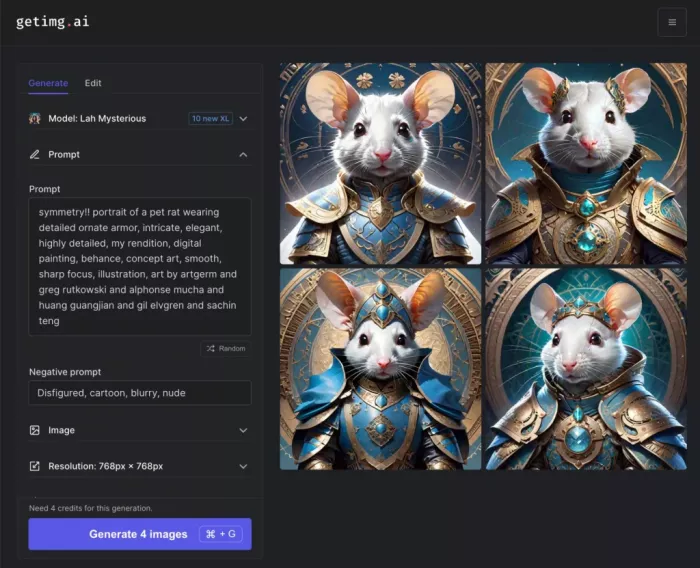
Getimg leans wide. It keeps a big catalogue of models under one roof dozens of them, from Stable Diffusion checkpoints to the newer FLUX family and other current models and lets you switch per generation. When my work benefits from matching a specific model to a specific look, that breadth is the draw; the tool feels more like a workbench than a single-style generator.
Leonardo leans curated and controllable. Its own models, the Phoenix and Lucid lines, plus FLUX are tuned to stay consistent, and the real story is the control layer on top: ControlNet for pose and composition, image guidance, and style references that keep a series looking like a series. Above that sit premium third-party models (the Veo, Sora, and Kling names you know from video), which is where a lot of Leonardo’s ceiling and its token spend lives.
Leonardo’s control-heavy approach becomes even clearer when it is compared with another major generator. A Midjourney vs Leonardo AI comparison shows how Leonardo’s guidance and workflow controls stack up against Midjourney’s stronger focus on polished visual output and style.
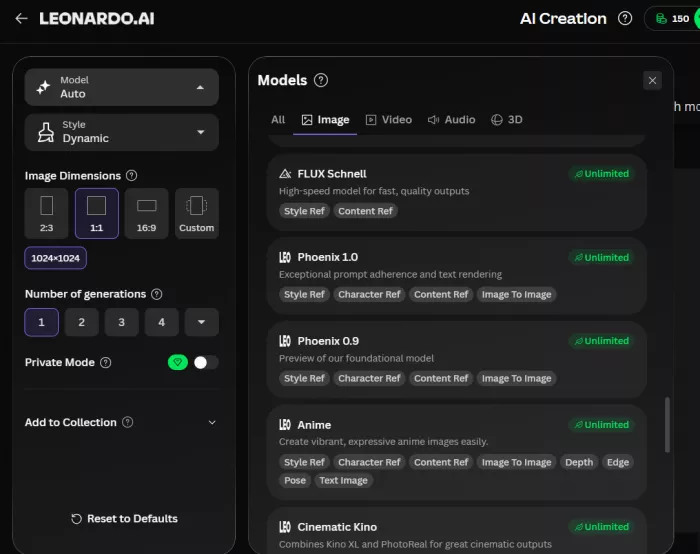
So the quality question folds right back into the volume question. If you generate a high volume of varied, one-off images and like grabbing the right model each time, Getimg’s catalogue fits. If you generate a high volume of related images that have to stay on-model, a recurring character, a product line, a game’s art direction Leonardo’s control tools do more for you than raw model count ever will.
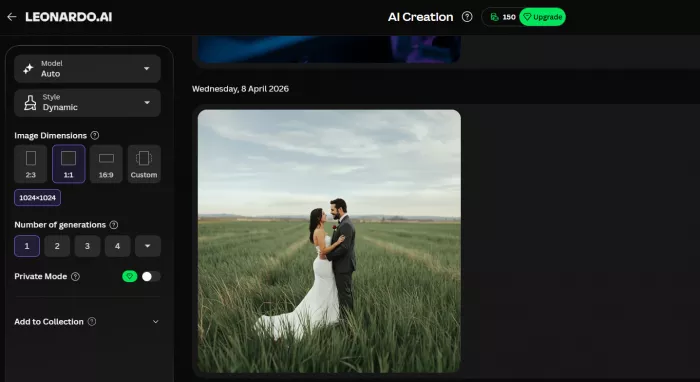
Figure : image generated by Leonardo AI
Ease of use and the learning curve
Predictable pricing has a quieter cousin: a predictable interface. Because a Getimg image always costs the same, the tool has less to explain. I pick a model, type, generate, and the number in the corner drops by an amount I can guess. That flatness is worth real money to anyone who just wants images out the door. It's the tool I hand to teammates who don’t want to think about any of this.
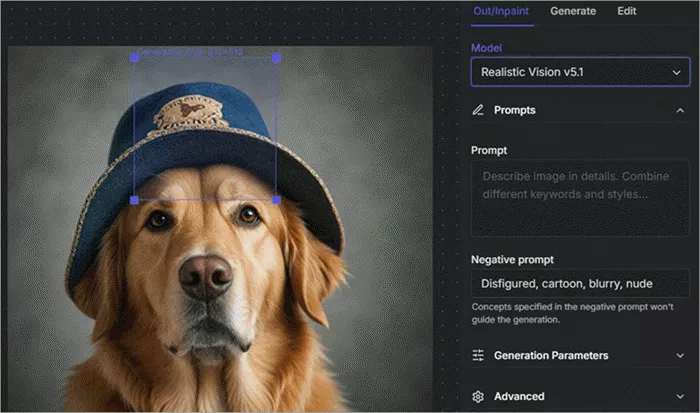
Figure: Images Generated by Getimg
Leonardo asks more of you and gives more back. The controls that make it powerful ControlNet, image guidance, element weights, the quality and variation toggles are the same ones that make its token spend hard to predict until you’ve lived with it a while. I torched a day’s free tokens in my first week without understanding why; it wasn’t greed, it was that every quality bump and extra variation quietly costs more. The learning curve isn’t steep so much as invisible: the tool rarely stops to warn you that the next click costs four times as much.
My practical read: if you’re onboarding a team or you value speed over control, Getimg’s flatness is the feature. If you’re willing to spend a week learning where the tokens go, Leonardo pays that week back with far more command over the output.
What an image really costs
Here’s the rough math, and then the caveat that matters more than the math. .
On a Getting Plan around $30 a month I get a few hundred higher-quality images, which lands near ten cents apiece. Leonardo’s paid tiers start around $12 and climb to roughly $60 for the top solo plan; because ordinary stills on first-party models don’t spend tokens, my honest per-image cost for that kind of work drifts toward zero, with tokens only really biting on premium models, video, and fast mode.
If Leonardo is the one you are leaning toward, it is worth looking at how far its free plan actually gets you before upgrading. The real limits are not only token count; privacy, rollover, personal model training and heavier workflows can matter sooner than expected.
| Plan | Approx. price | Roughly what you get |
| Getimg free | $0 | ~100 credits / month |
| Getimg mid tier | ~$30/mo | A few hundred high-quality images, commercial rights, API access |
| Leonardo free | $0 | 150 tokens/day (~25–35 images), public gallery |
| Leonardo entry | ~$12/mo | Unlimited relaxed first-party generation, priority, private mode |
| Leonardo top (solo) | ~$60/mo | Largest token pool, best for heavy video and premium models |
ONE THING I LEARNED THE HARD WAY Treat every figure here as a snapshot. Both companies revise tiers, names, and token costs often enough that the numbers on review sites including, eventually, the ones in this article drift out of date and disagree with each other. Open both official pricing pages and confirm before you commit a budget. And remember what you’re really buying: these tools bill compute (credits, tokens, GPU time), not finished images, so any per-image figure is an estimate that moves with your settings. |
Past stills: video, API and teams
Three places where the volume question changes shape entirely and where I’ve made the most expensive mistakes.
Video is the clearest divide
On Leonardo, video and premium video models are exactly the premium work tokens exist to charge for, so a heavy video habit is the fastest way I’ve found to blow an allowance and end up staring at the top tier. On Getimg, video comes off the same shared balance as my images, not free, but something I can plan for with one number instead of watching a second meter drain.
The API changes who’s even in the running
If you’re wiring generation into an app or a pipeline, Getimg’s REST API is the road I’d point you down first: text-to-image, inpainting, outpainting, and ControlNet-style workflows through clean endpoints, with a free tier around 100 images a month and pricing that scales without drama. Leonardo has a production API too, with roughly $5 in starter credit and token-based pricing that shifts by model and resolution. On both, the detail that bites people it bit me is that the API is billed separately from your web subscription. That’s a line item you forget exists until it lands.
Teams break the “cheap plan” illusion
Getimg’s higher tiers are priced per seat, so a $30 plan across five people is a $150 line item, not a $30 one. Leonardo lists team and API pricing separately from its solo plans. Whichever you pick, do the multiplication before you fall for the sticker price. I didn’t, once.
Who each tool is really built for
Strip away the feature lists and, from what I’ve seen, each tool has a natural home.
● Marketing and agency teams tend to land on Getimg. The work is high-volume, deadline-driven, and needs a cost you can drop straight into a budget line and having image, video, and audio on one balance means a whole campaign comes from one place and one invoice.
● Developers and product teams building generation into an app lean Getimg too, for the simple, predictable API and pricing that scales without surprises.
● Game studios, concept artists, and asset pipelines tend to land on Leonardo. The control tools, model training, 3D via Rodin, and consistency features are built for people generating many variations against a fixed art direction.
● Hobbyists and exploratory artists can go either way, but Leonardo’s generous daily free tier and deeper controls make it the better sandbox for learning the craft without paying to experiment. It’s where I send people who are just starting out.
None of these are hard walls I know marketers who swear by Leonardo and artists who live in Getimg. But if you’re not sure which camp you’re in, ask whether your work is closer to “many different images, fast and costed” or “many related images, controlled and iterated.”
The fine print that bites
The stuff that never makes it into a feature grid but absolutely makes it into your experience:
● Leonardo’s free tokens don’t roll over, and they reset daily rather than monthly. If your work comes in bursts, you’ll lose most of an allowance you technically “had” I have, plenty of times.
● On Leonardo’s free tier, your creations are public and Leonardo, not you, holds the IP. For anything commercial that one fact means “free” isn’t really a plan you can use you’re paying with ownership.
● The plan you compare is rarely the plan you pay. Token drain on quality runs, per-seat multiplication, and separate API billing all mean the sticker price is a floor, not the total.
● Getimg’s predictability cuts the other way too. If you consistently generate less than your credits allow, you’re subsidizing headroom you never touch, and a smaller plan or Leonardo’s unlimited-stills model would quietly save you money. I ran a plan too big for months before I noticed.
Do you even have to choose? Running both
Here’s the option most comparison articles skip, and the one I actually landed on: you can run both, and plenty of heavy users quietly do. The two are cheap enough at the entry level, and different enough in what they’re good at, that pairing them is a real strategy rather than a fence-sit.
The split I settled on is to use Leonardo’s free or entry tier as the exploration and iteration space where near-unmetered stills and strong control tools let me develop a look without watching a meter and then move production, bulk runs, and anything API-driven to Getimg, where the fixed per-image cost makes the output easy to budget and automate. Leonardo’s the playground, Getimg’s the factory, and I only pay full price for the one I lean on hardest that month.
If your volume is high enough that a single tool keeps forcing an awkward trade-off great control but scary token spend, or predictable cost but a thinner control layer running both is usually cheaper and less annoying than upgrading to the top tier of either.
So, which one
Sort yourself honestly and the answer falls out. Here’s how I’d tell it to a friend:
● You need to know what an image costs, you deliver to clients, you batch, or you’re building on an API. Getimg. Predictability is a feature, and it’s the one you’re actually paying for.
● You generate a high volume of ordinary stills and resent watching a meter. Leonardo, where that exact habit is close to free on a paid plan.
● You live in video, 3D, or game assets and iterate constantly. Leonardo again just size your tier for the token burn, not the headline price.
● You want images, video, and audio on one bill for whole campaigns. Getimg’s shared balance is hard to beat.
MY VERDICT : Match the meter, not the images“Which is better” is the wrong question, and it’s why most write-ups of these two blur together. Getimg sells certainty: a fixed price per image and a number I can hand to a finance team. Leonardo sells volume: generate ordinary stills until your wrist aches and, on a paid plan, the meter barely moves right up until you ask for the premium features it’s built to charge for. So don’t pick the tool with the nicer images. Pick the metering model that matches how you already work. If your generation is predictable and you need to cost it, buy the bucket. If it’s high-volume, exploratory, and mostly stills, rent the budget. Get that match right and both of these are genuinely good tools. Get it wrong and I have and even the better images won’t make up for a plan that fights your habits. |
Comments